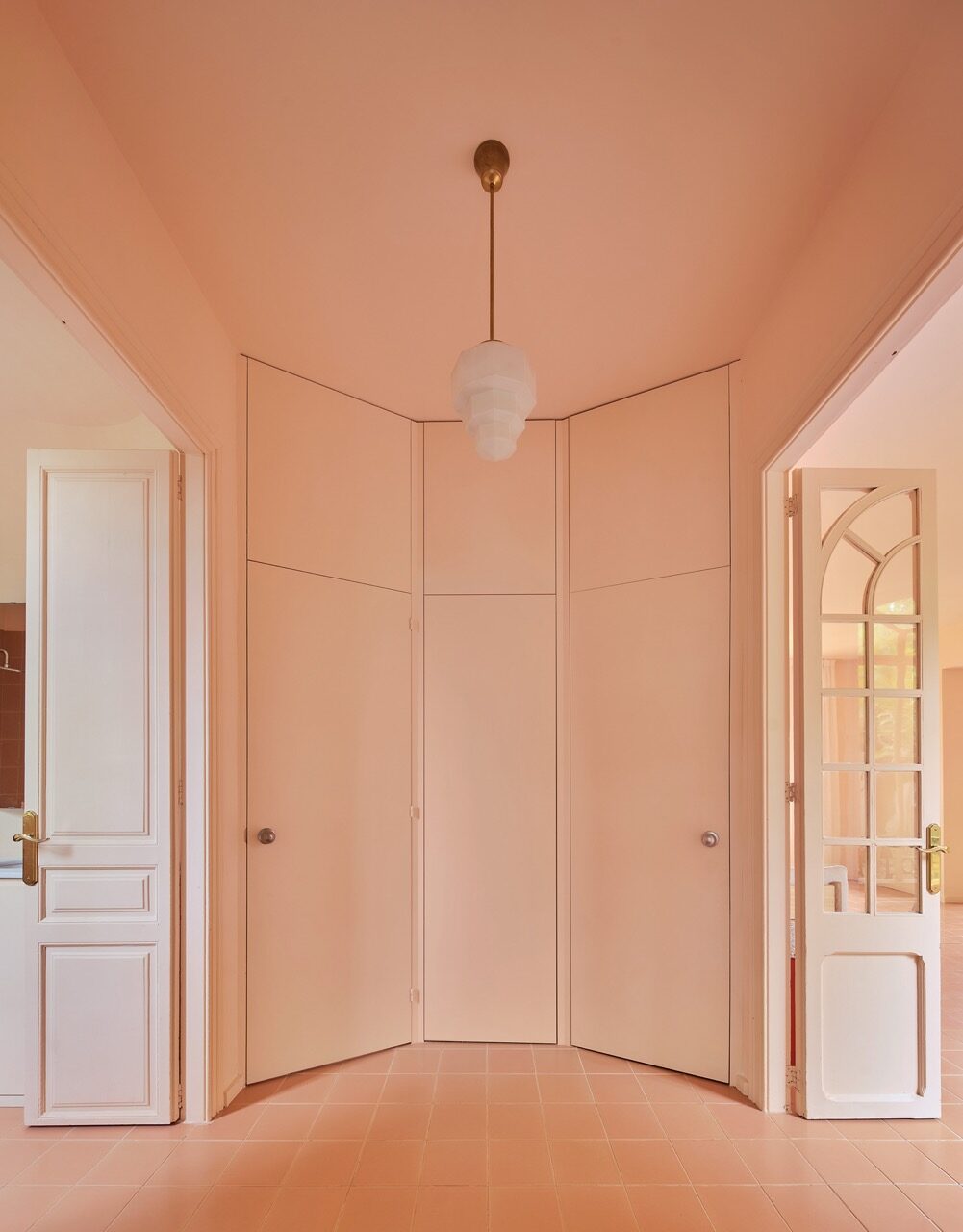
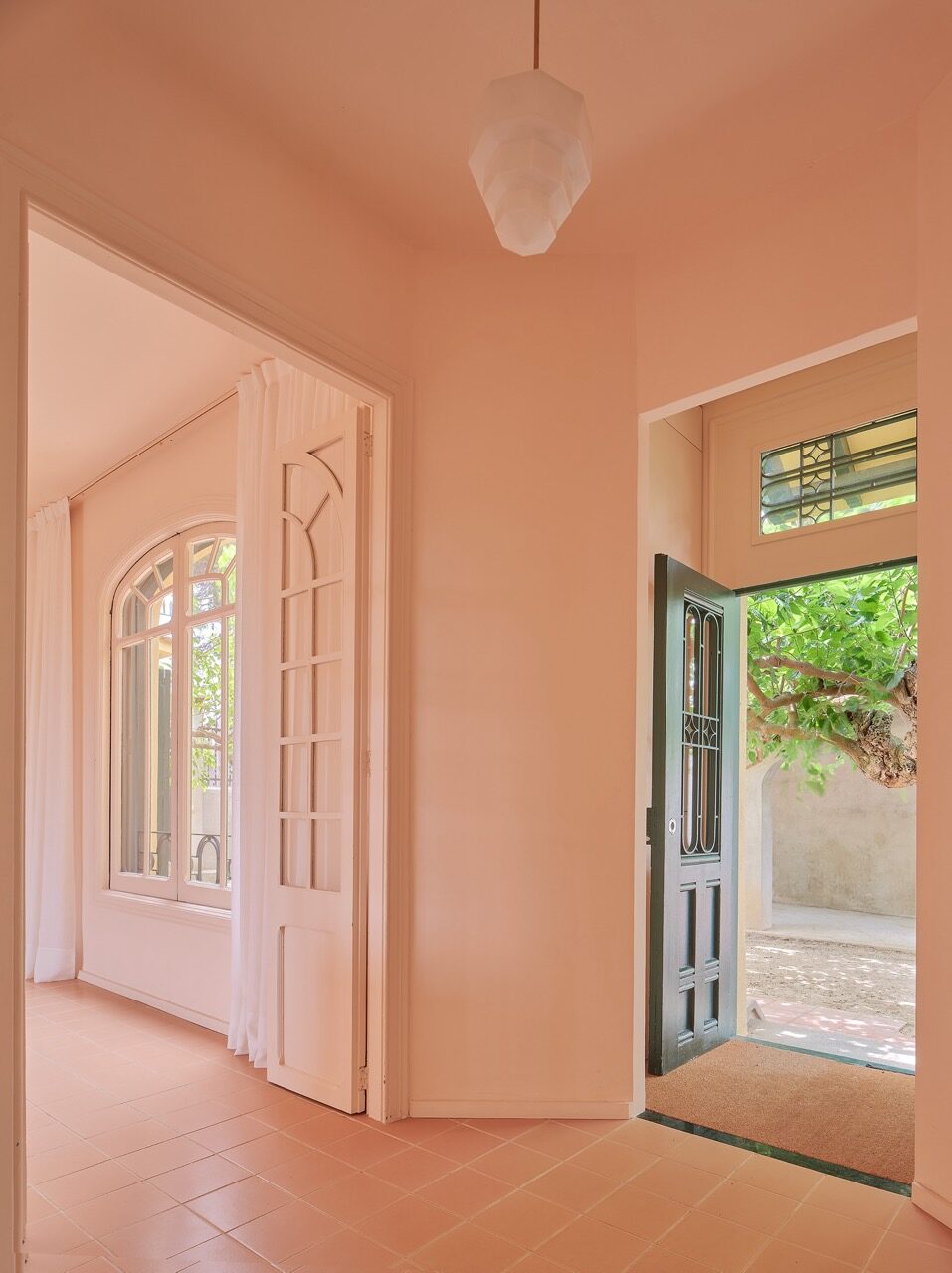
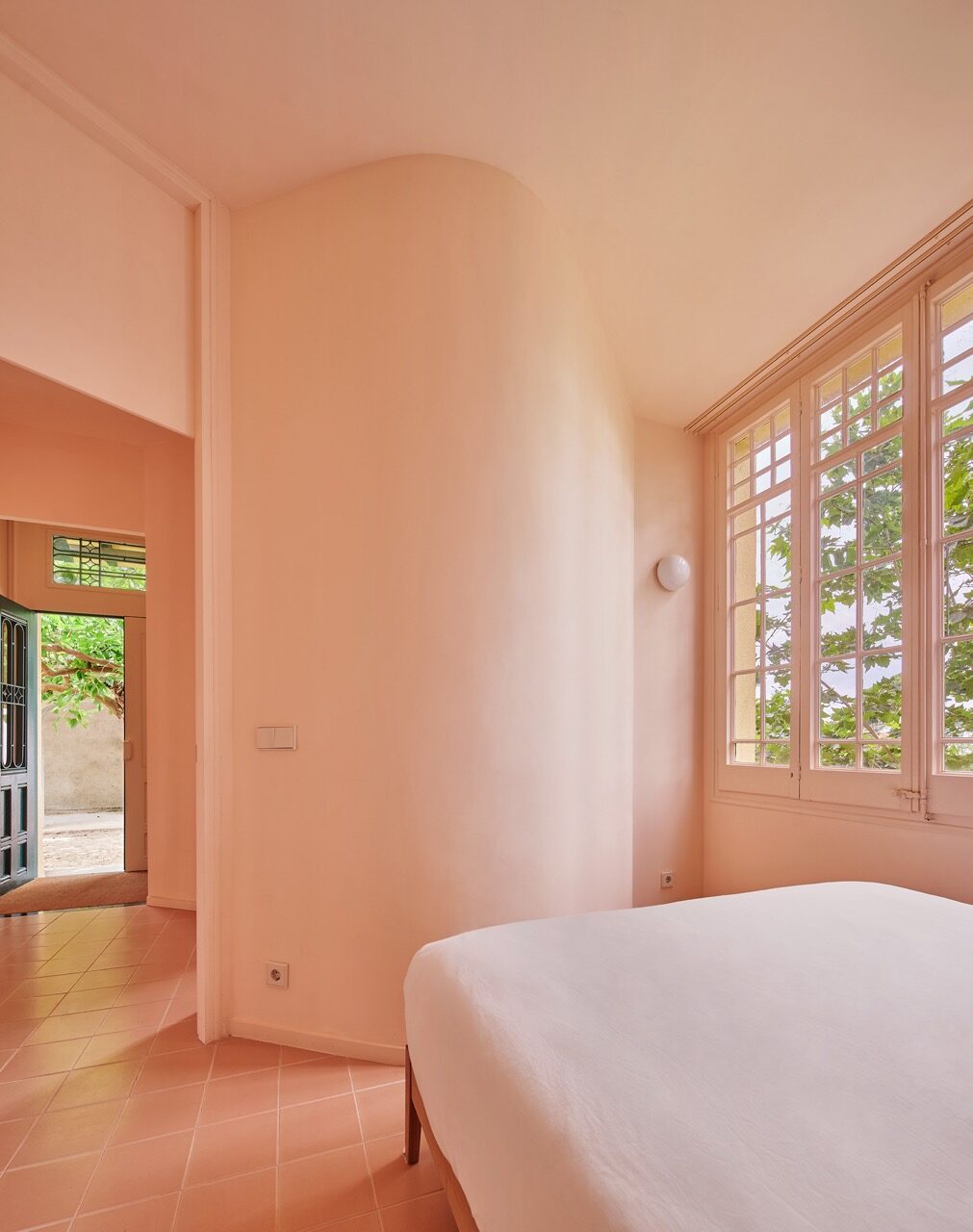
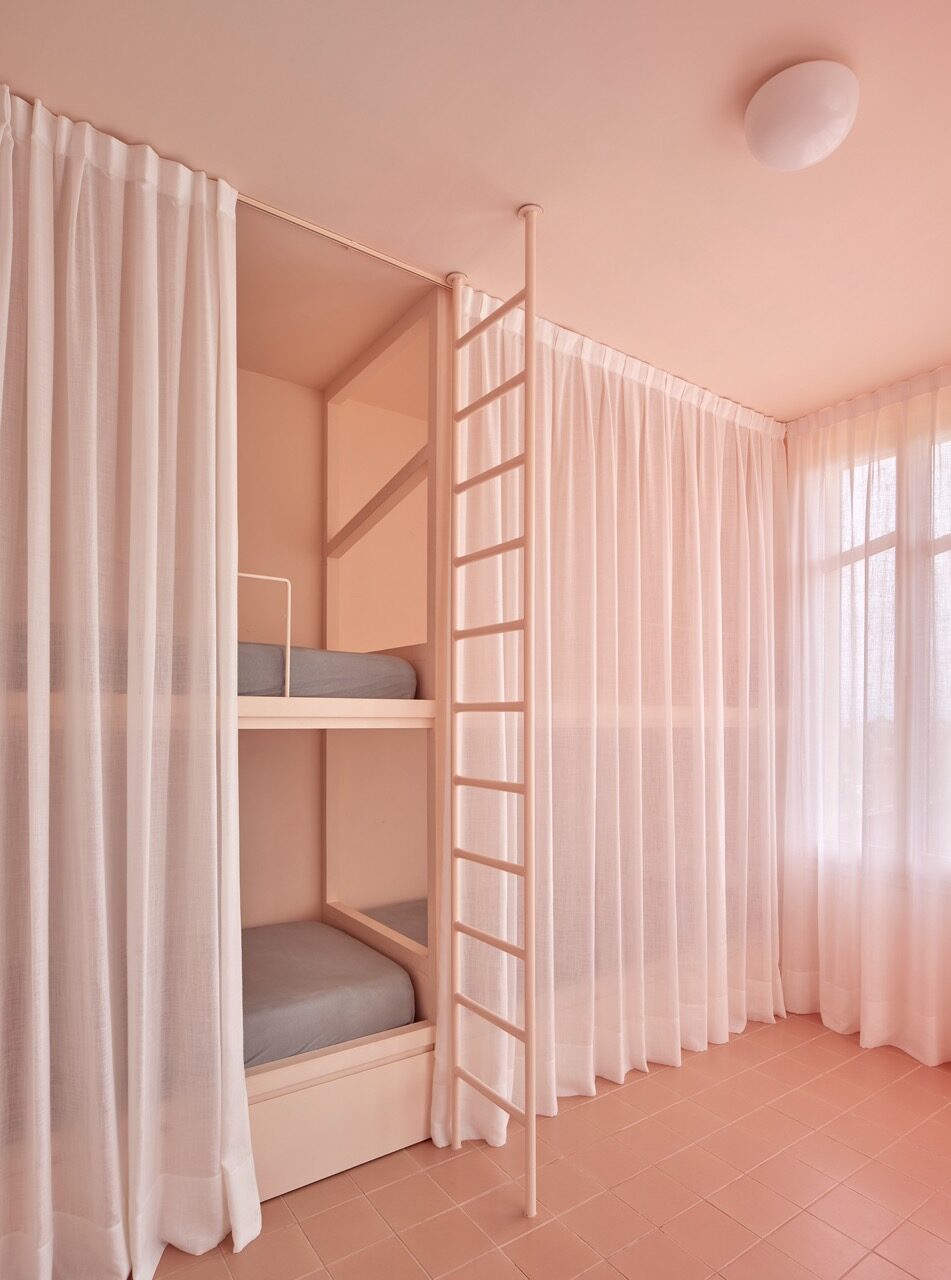
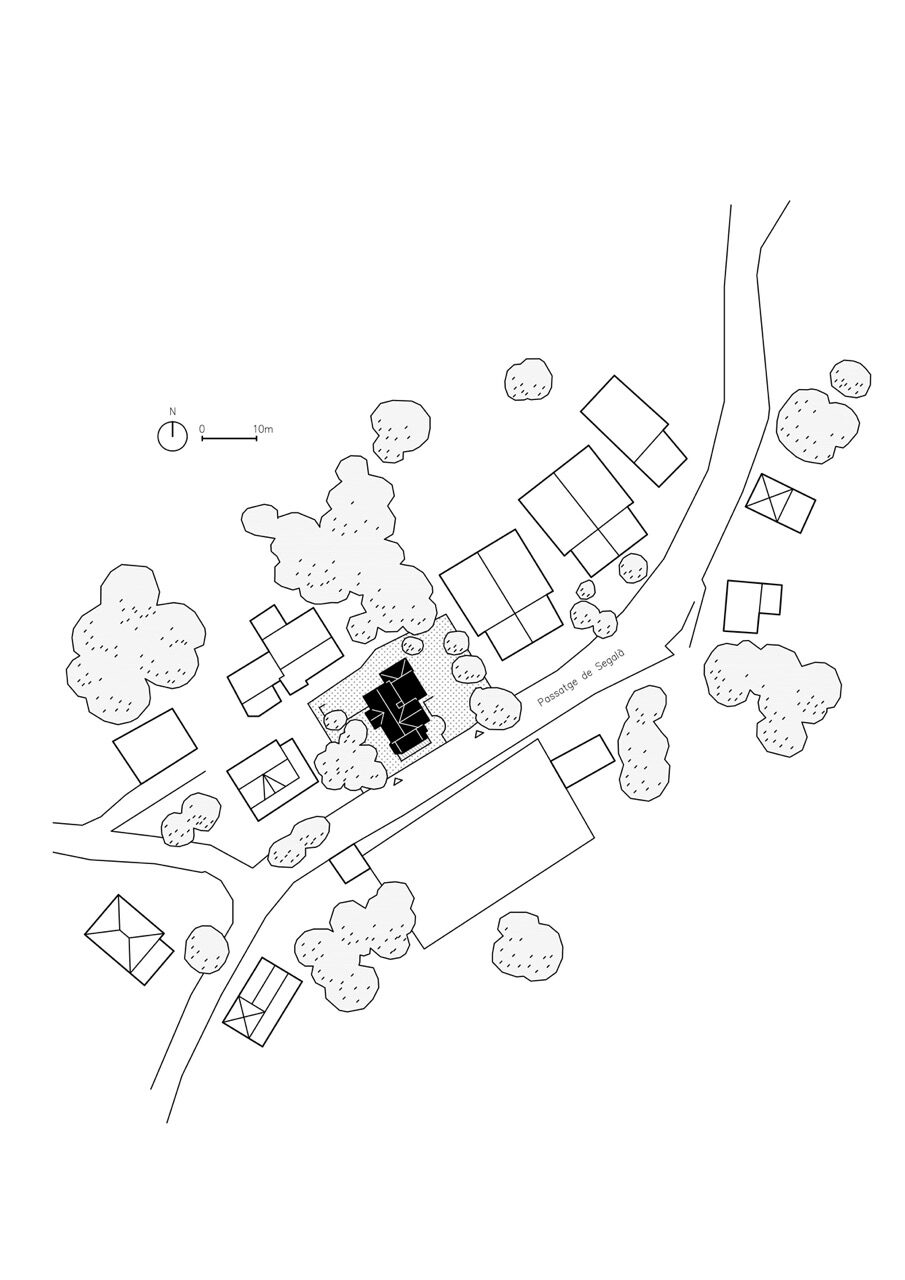
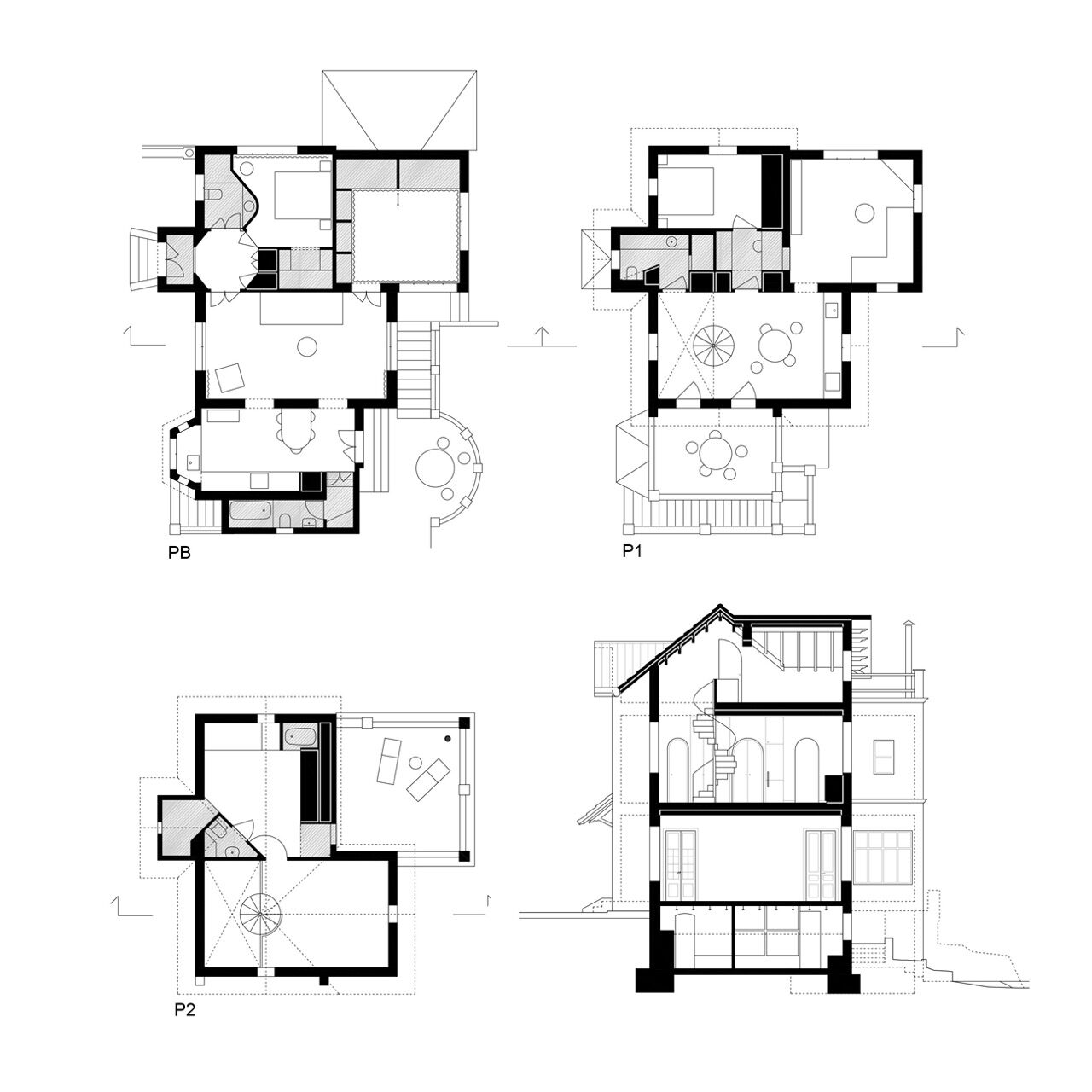
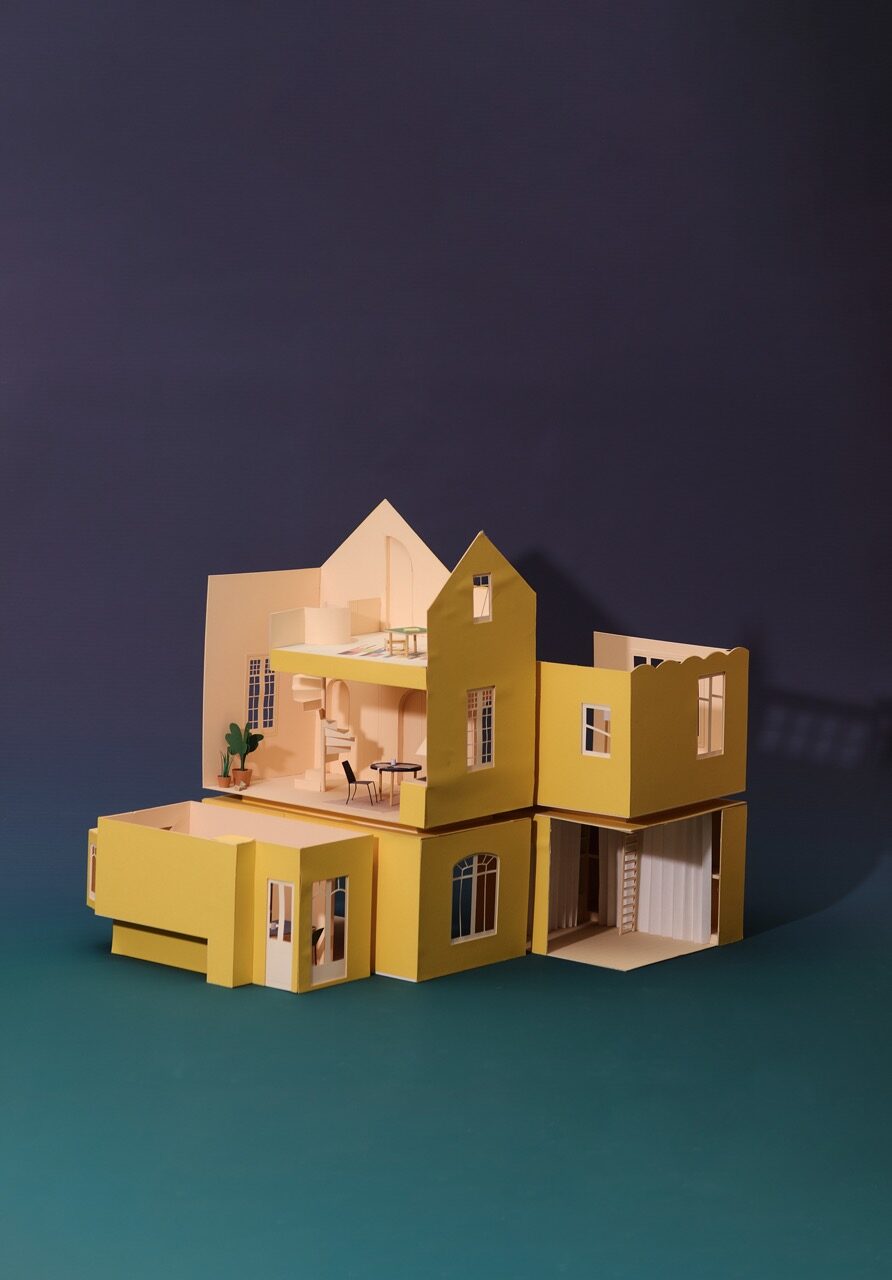
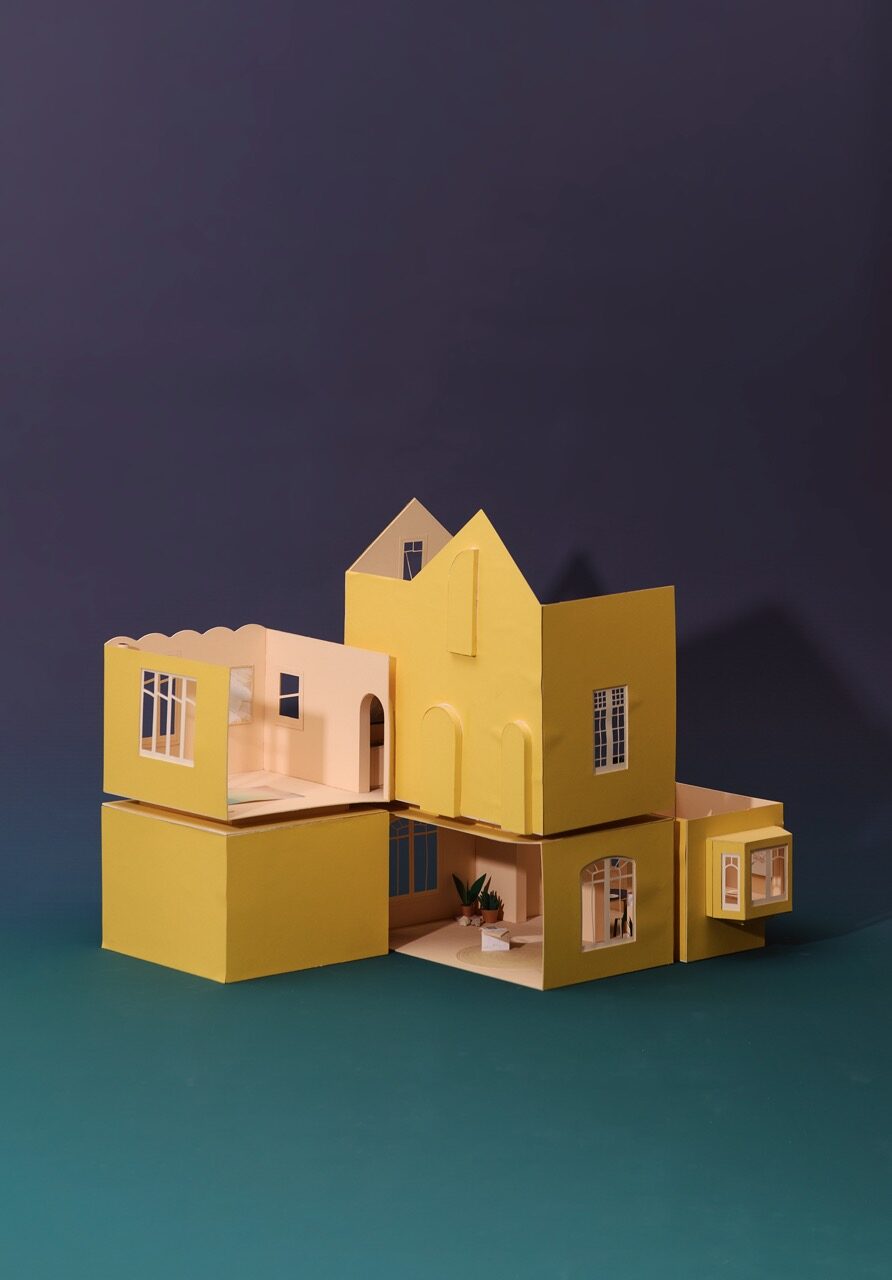
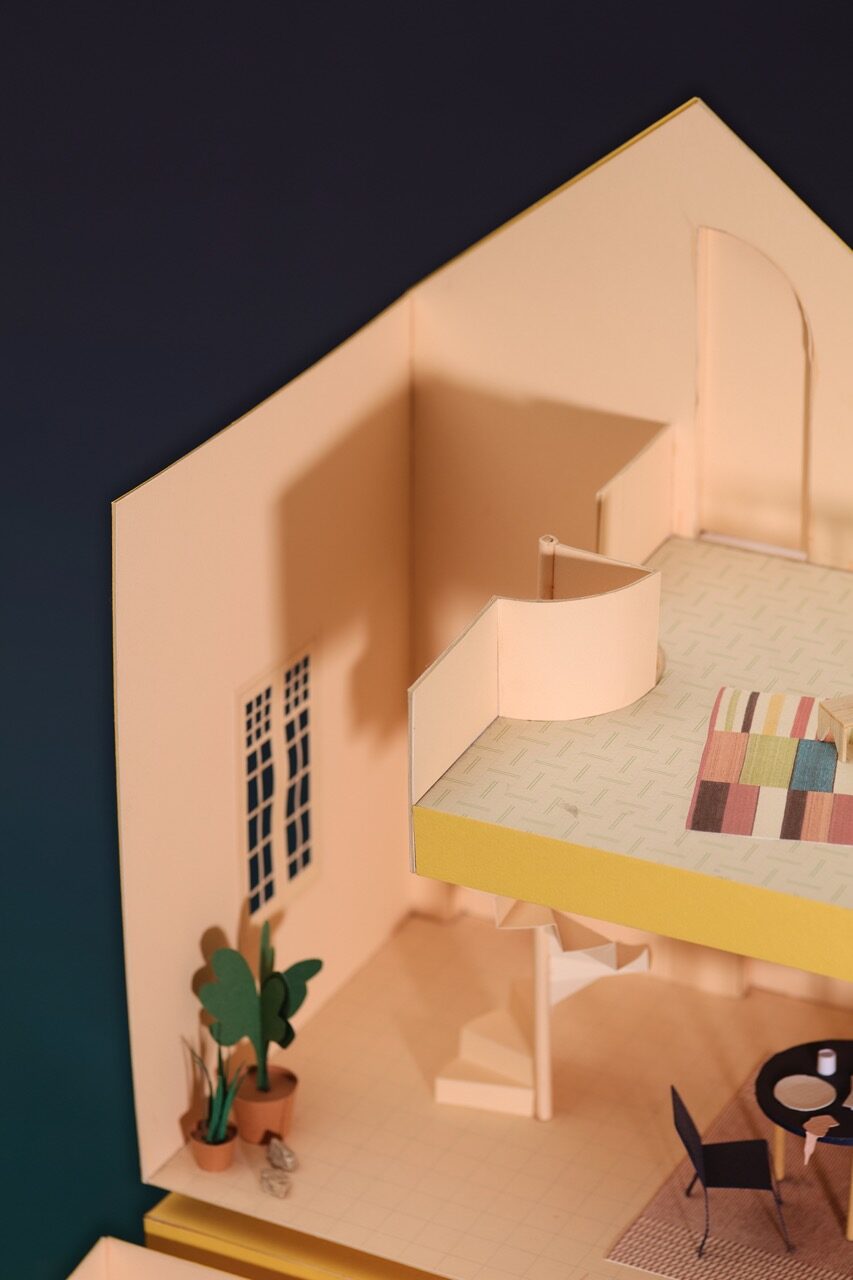
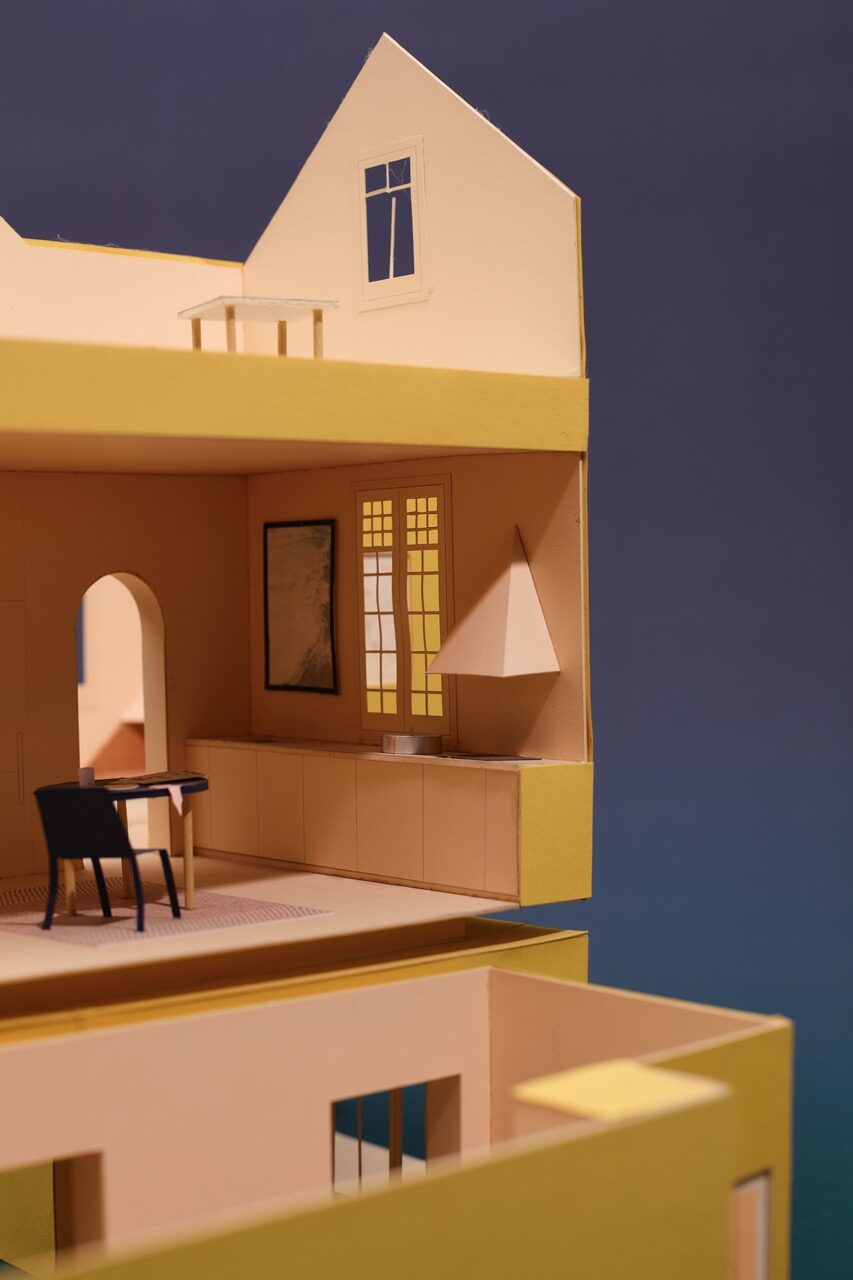
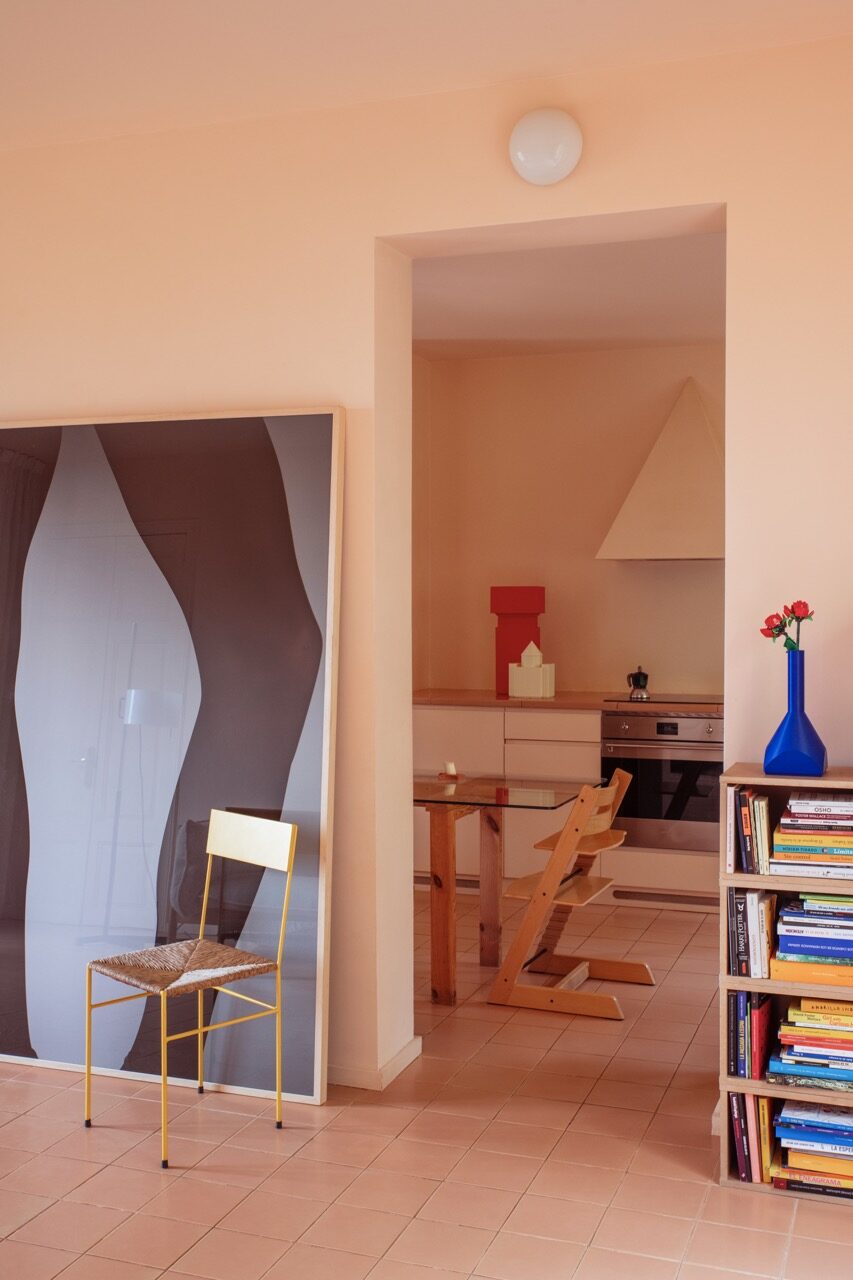
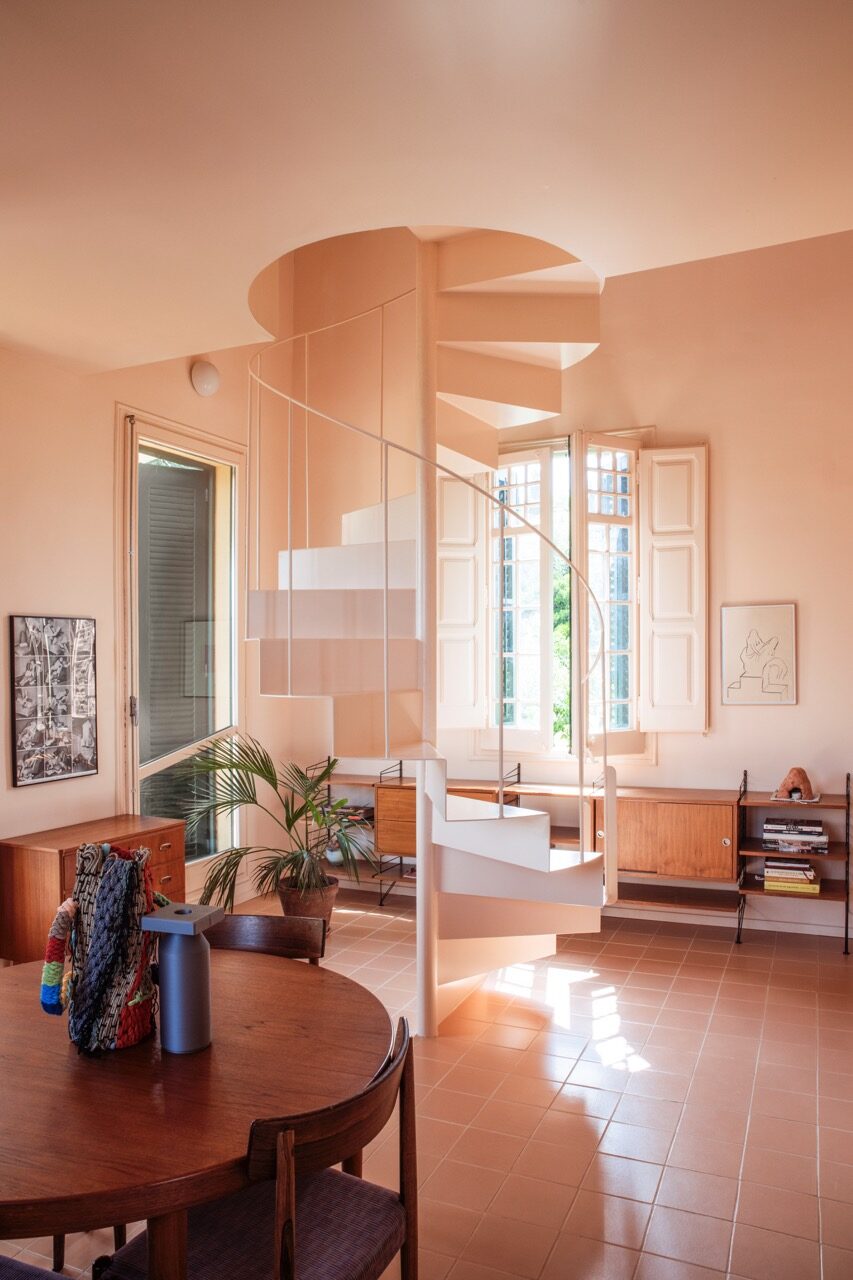
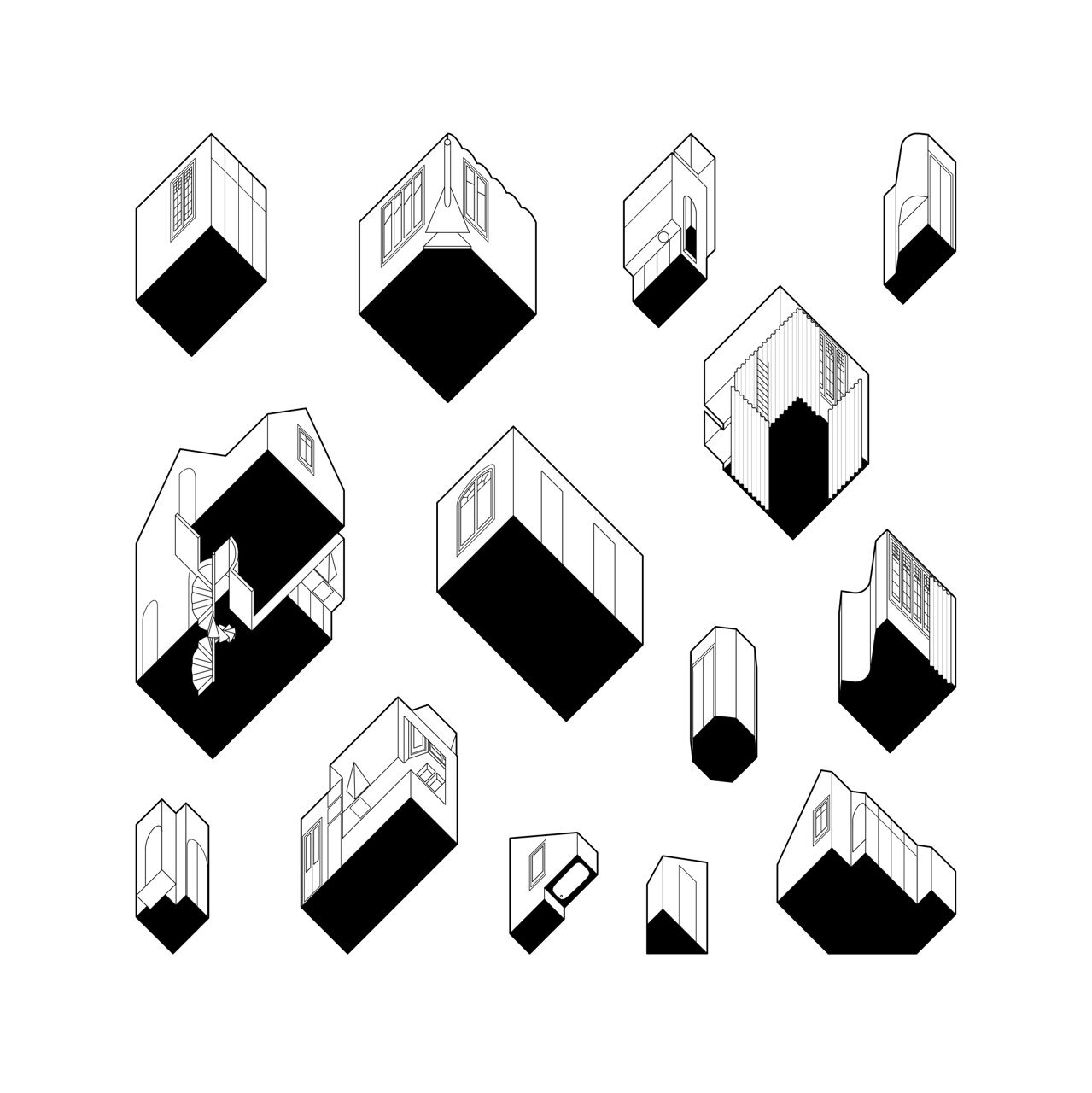
El encargo consiste en la división de una casa unifamiliar de mediados del siglo XX para acomodar a dos familias. Rodeada por un jardín con diferentes terrazas que ayudan a salvar el pronunciado desnivel del terreno, tiene el acceso principal en la cota más alta y un segundo acceso en la cota inferior. Las cuatro plantas, una de ellas en semisótano, estaban organizadas a partir de la yuxtaposición sin jerarquía de habitaciones de distintos tamaños conectadas entre sí, algunas de las cuales de una cierta elegancia –amplias, simétricas y con grandes aberturas. 

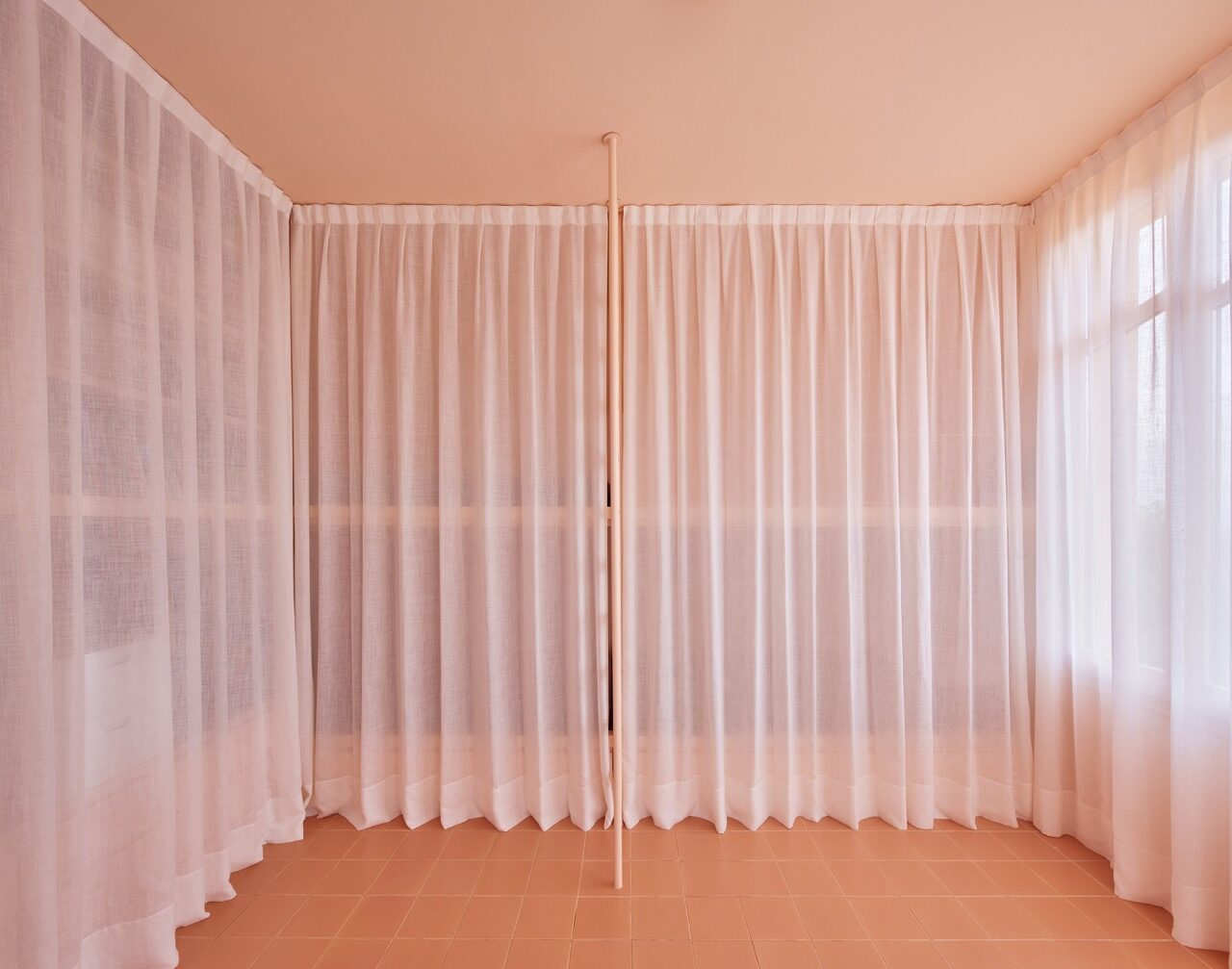
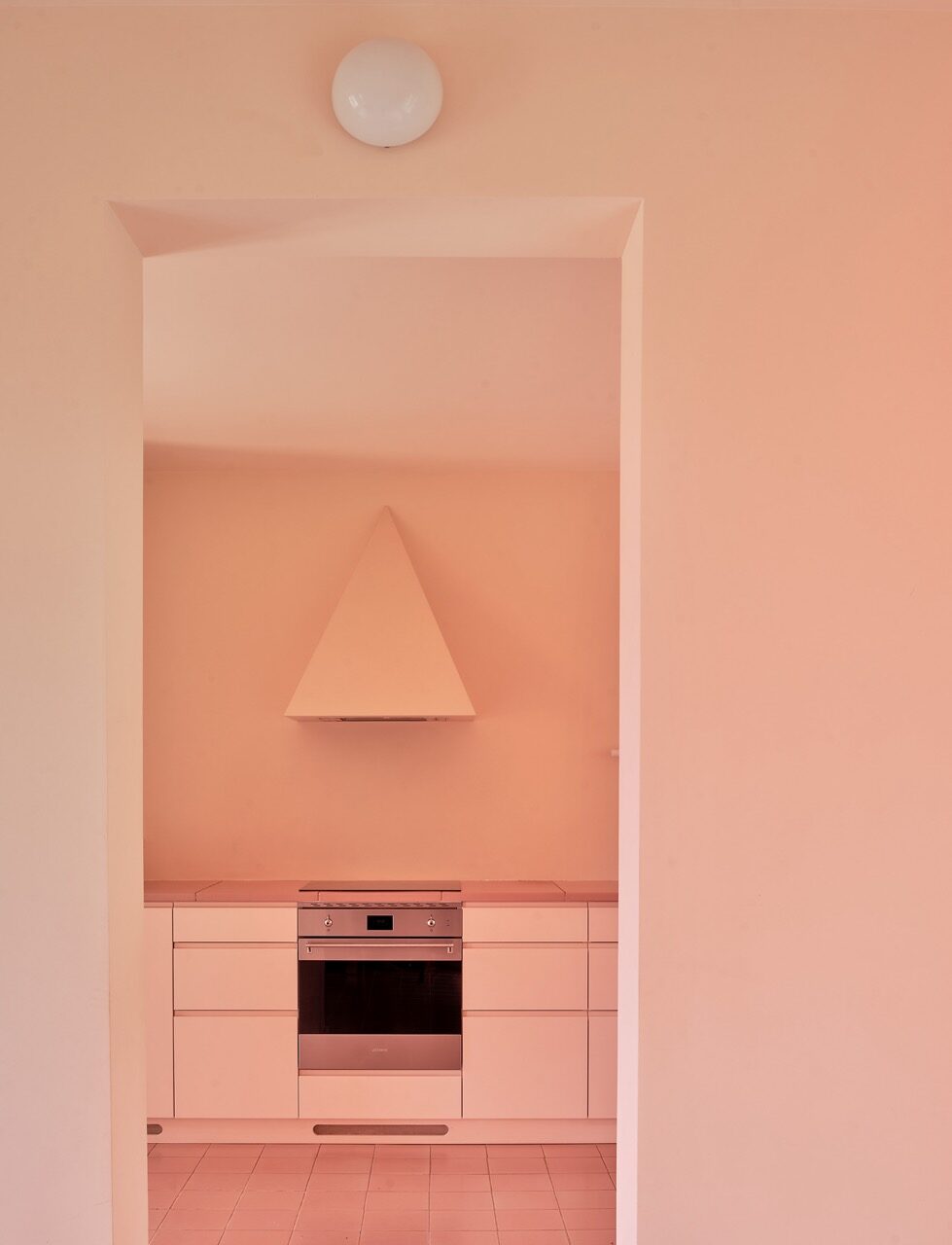
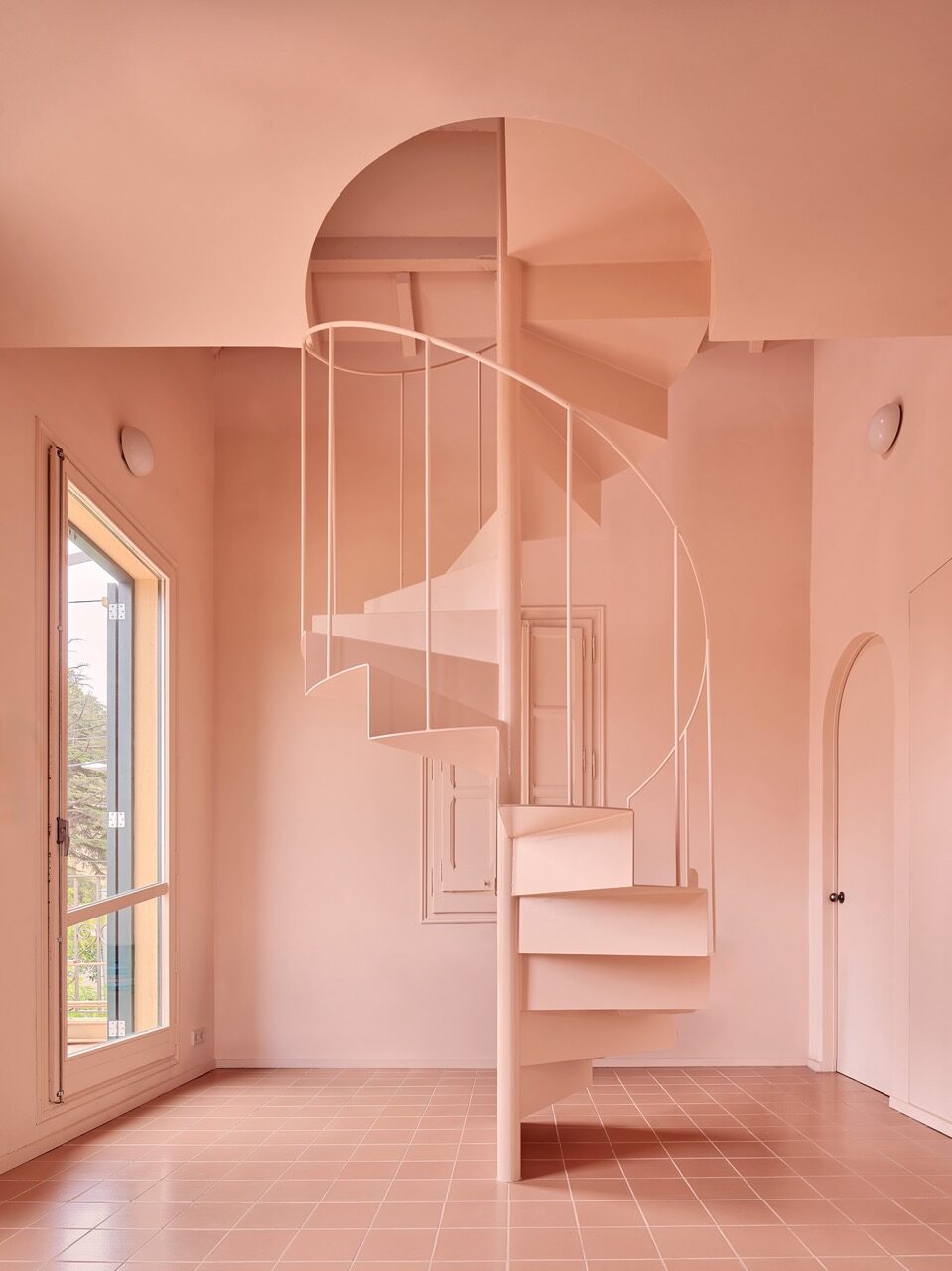
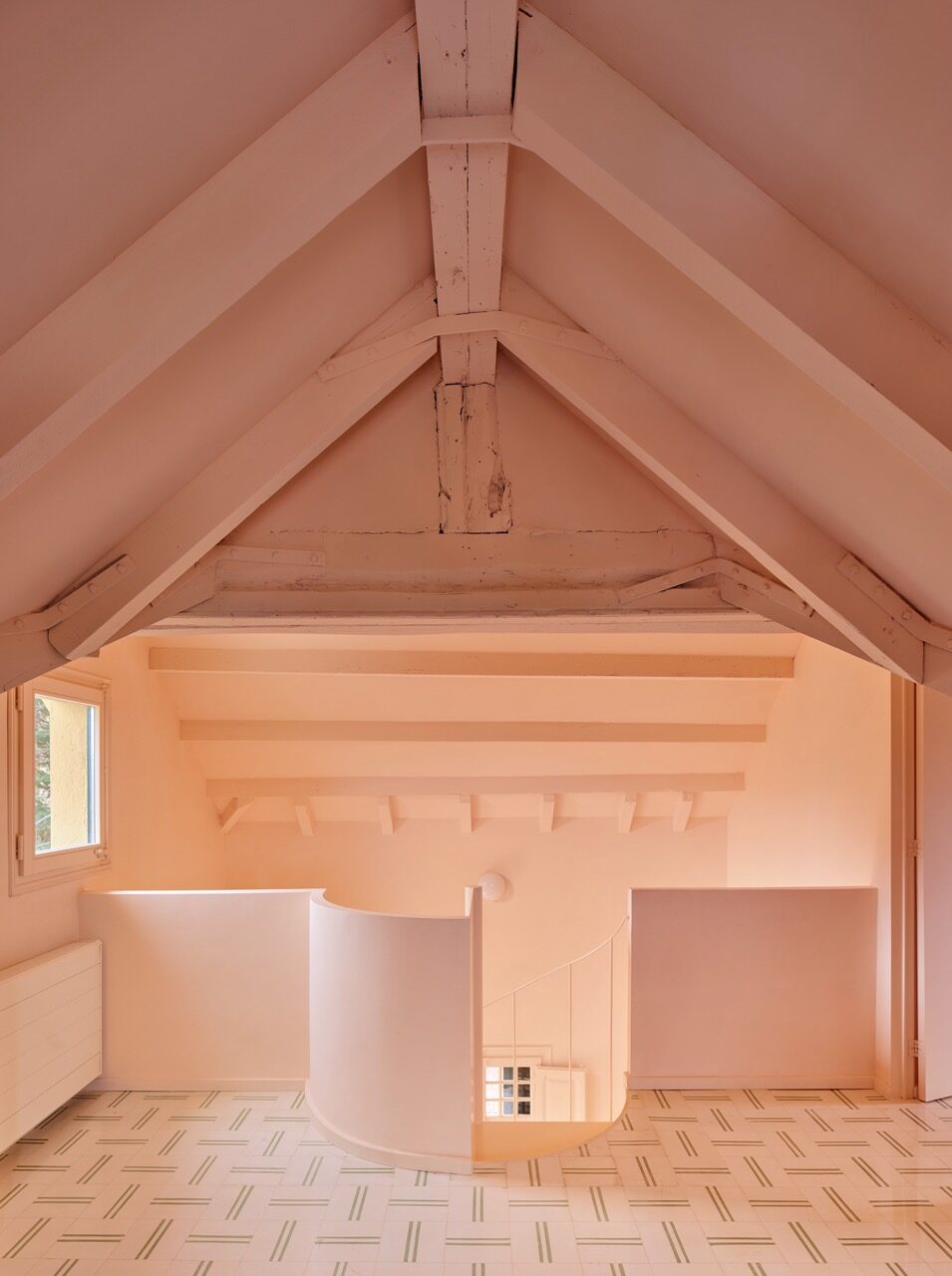
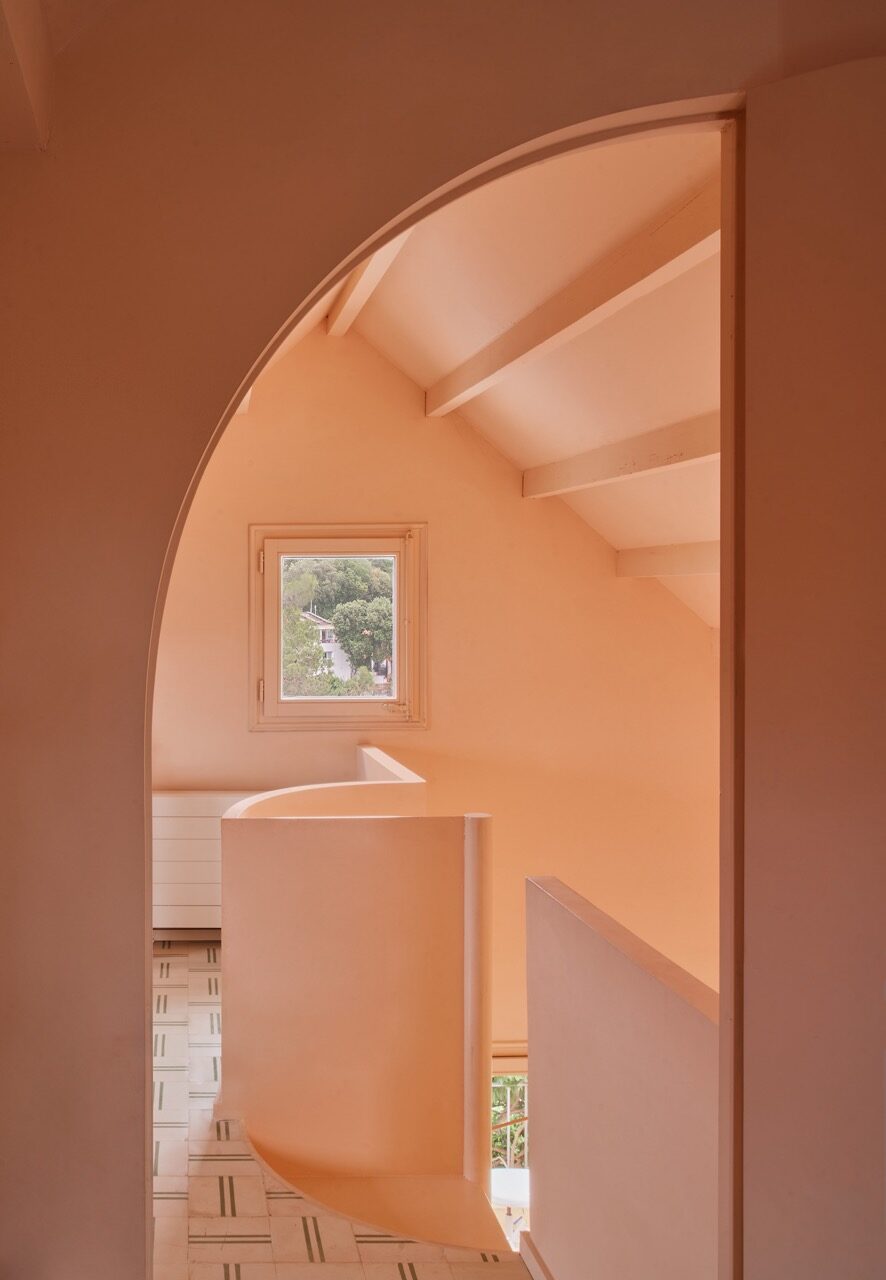
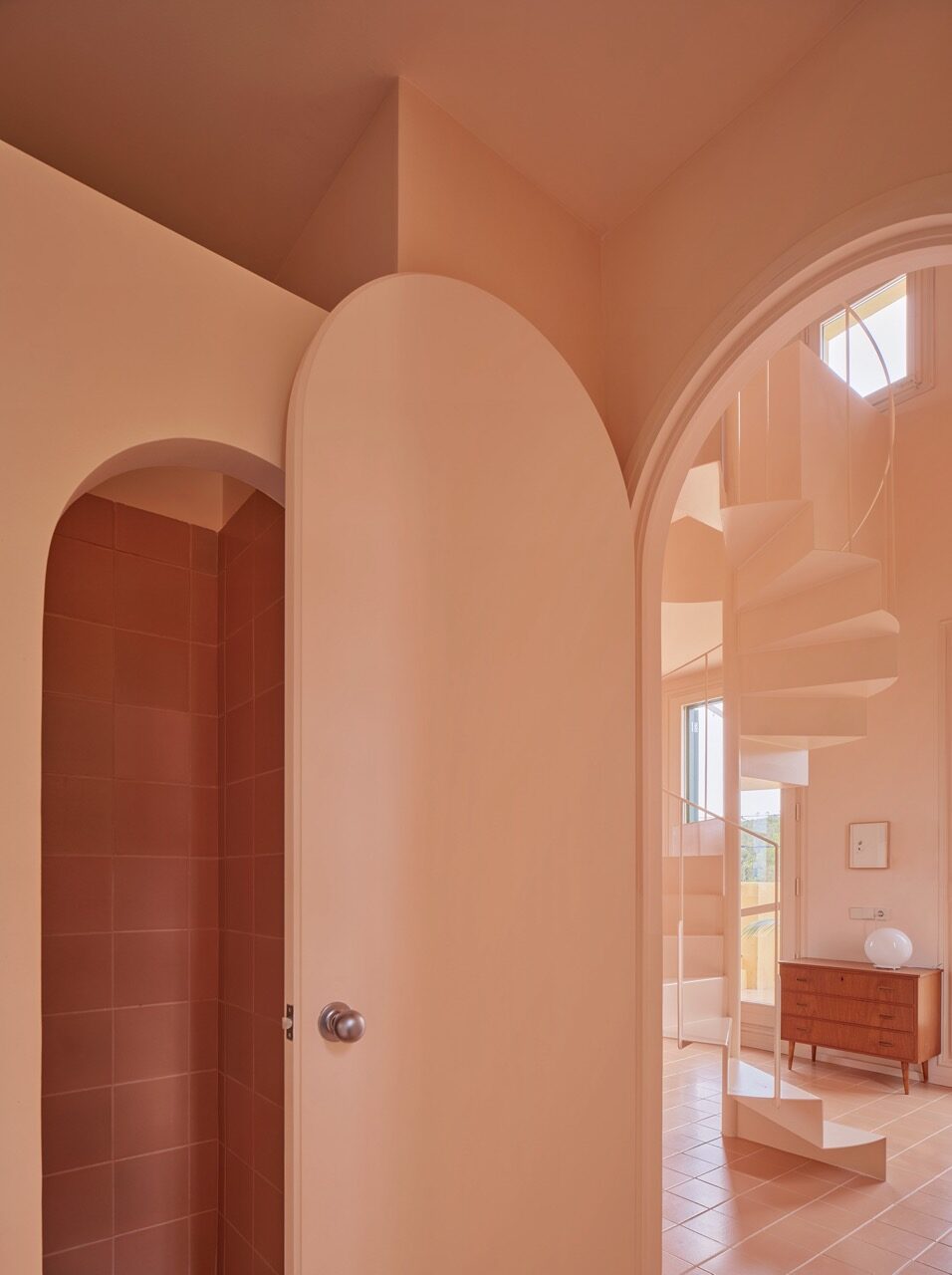
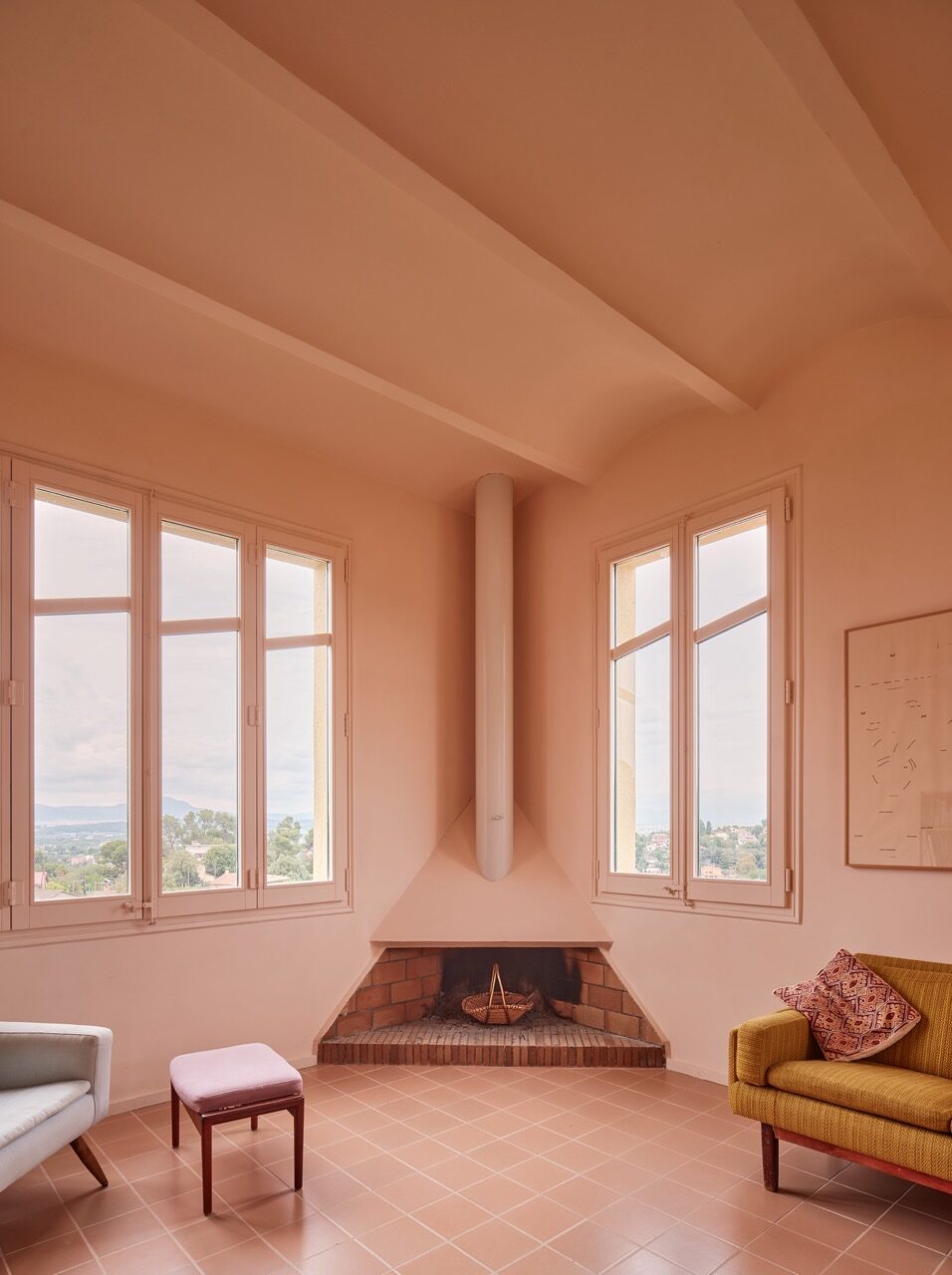
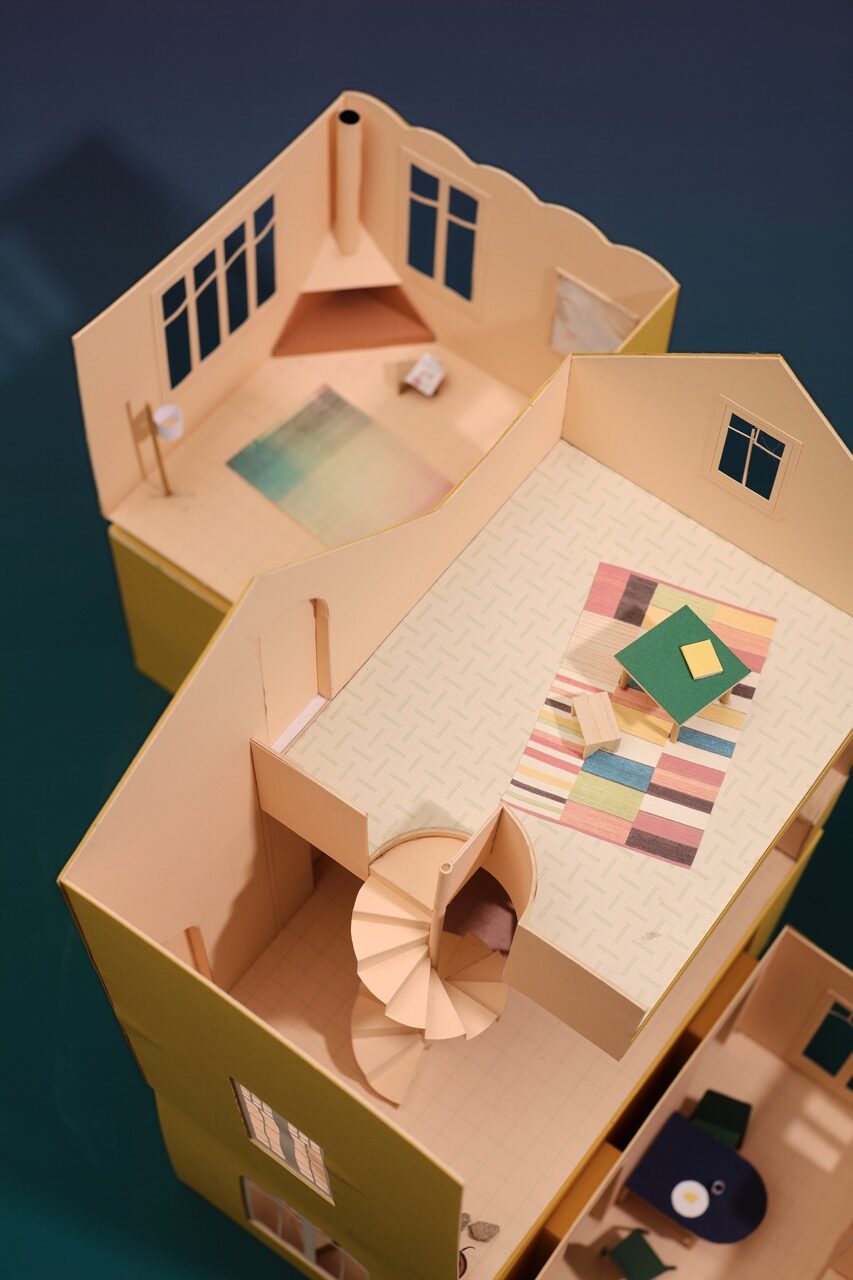
El proyecto se apoya en la matriz original superponiendo una nueva jerarquía de espacios que resuelven las especificidades técnicas y programáticas de cada nuevo uso, los cuales se acumulan como un poché en los perímetros, camuflando las intervenciones y definiendo la forma del vacío a partir de la apropiación de algunas geometrías y caligrafías existentes. La aplicación de un mismo color en todos los planos refuerza el valor del espacio frente a los elementos que lo componen, mezclando lo nuevo y lo antiguo con intencionada ambigüedad.

Cliente: Privado
Arquitectos: OESST
Colaboradores: Joan Ovejero
Fotografías: José Hevia + César Segarra + Raúl Ruz (maqueta)
Año: 2023
Lugar: La Floresta, Sant Cugat, España
Tipología: Rehabilitación vivienda
Estado: Construido

The commission involves dividing a mid-20th-century single-family house to accommodate two families. Surrounded by a garden with multiple terraces that help negotiate the steep slope of the site, the house has its main entrance at the highest level and a secondary entrance at the lower level. The four floors, one of them semi-basement, were originally organized through the non-hierarchical juxtaposition of rooms of different sizes, some of which displayed a certain elegance—spacious, symmetrical, and with large openings.

The project builds on the original matrix by superimposing a new hierarchy of spaces that address the technical and programmatic requirements of each new use. These are accumulated like a poché along the perimeters, camouflaging interventions and defining the shape of the void by appropriating certain existing geometries and line qualities. Applying a single color across all planes reinforces the value of space over its constituent elements, blending old and new with intentional ambiguity.

Client: Private
Architects: OESST
Collaborators: Joan Ovejero
Photography: José Hevia + César Segarra + Raúl Ruz (model)
Year: 2023
Location: La Floresta, Sant Cugat, Spain
Typology: Residential renovation
Status: Built