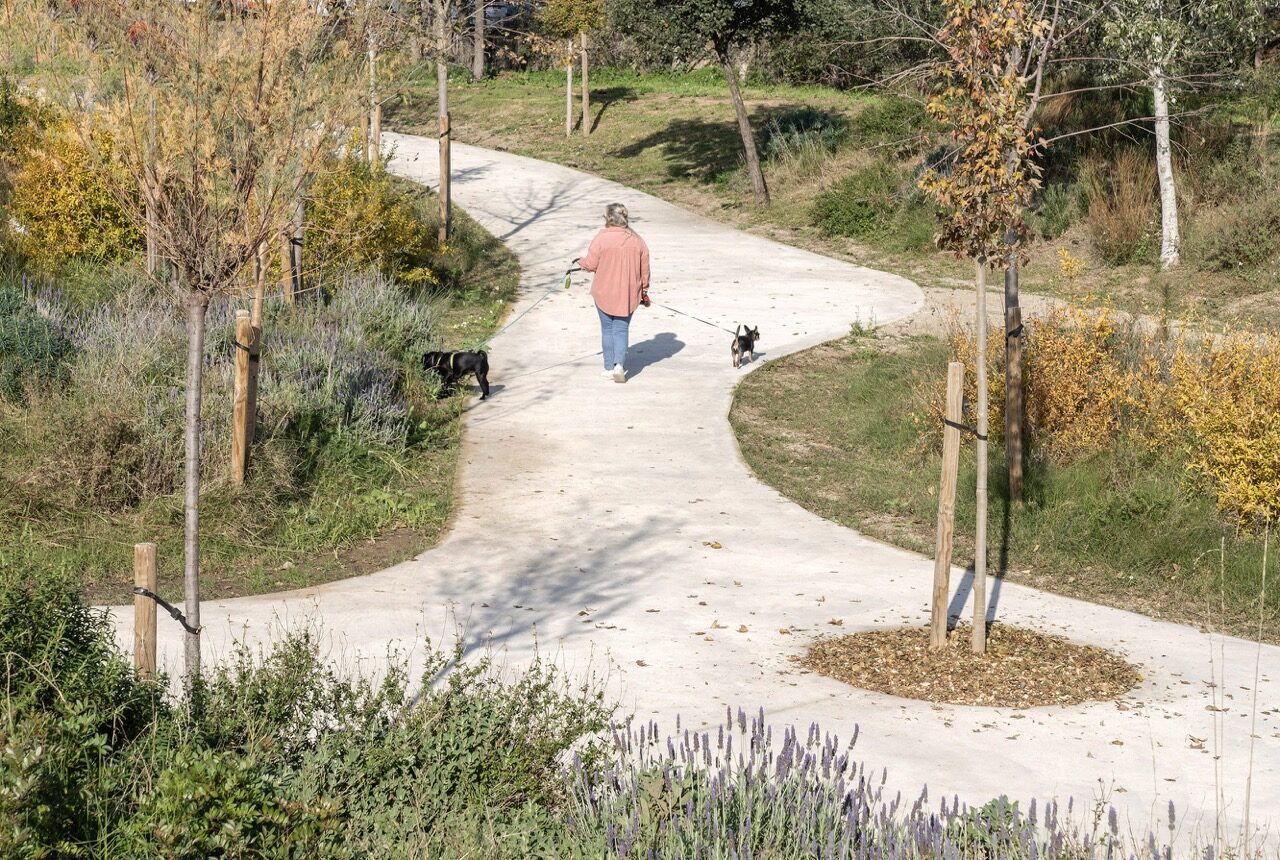
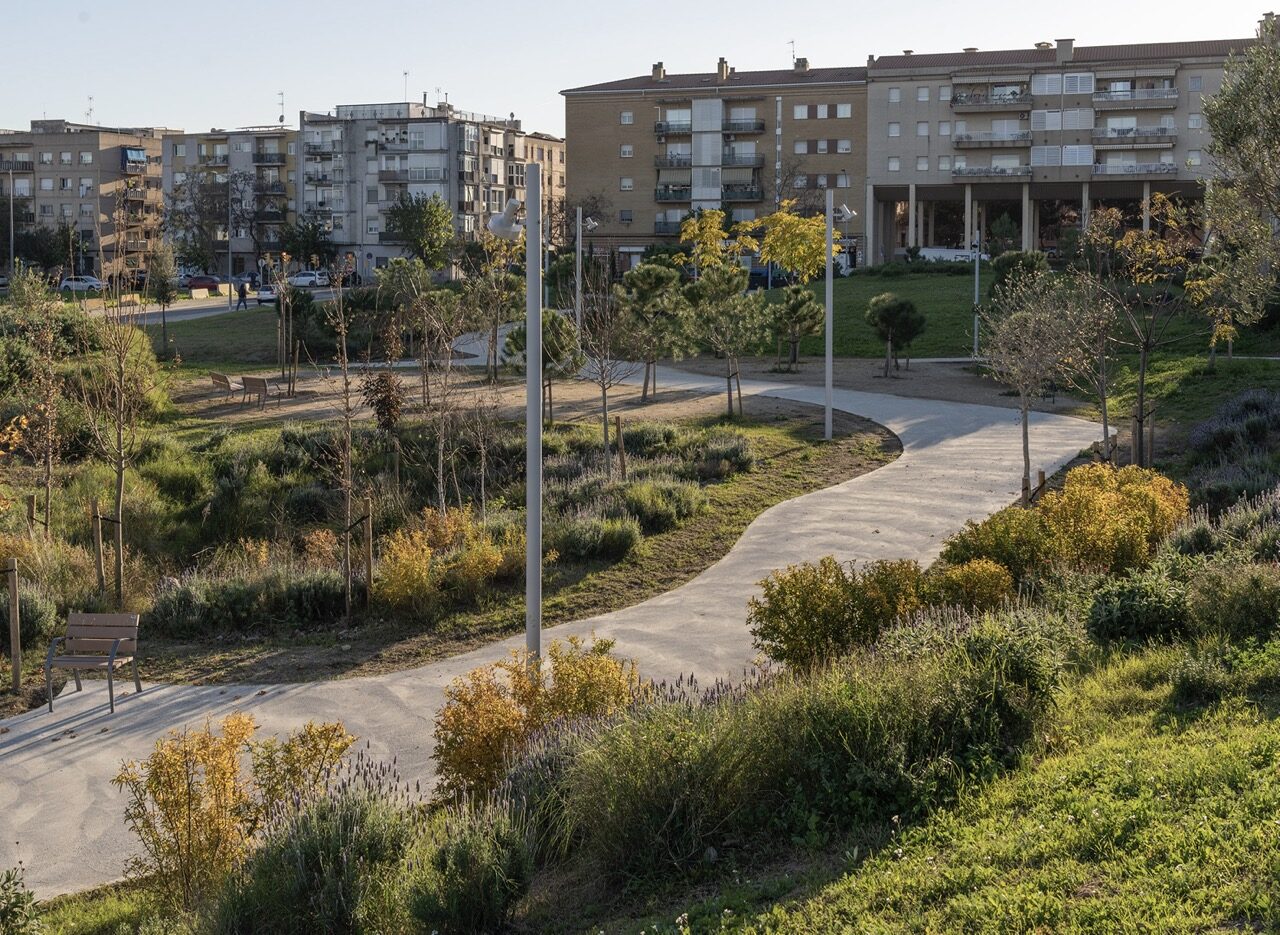
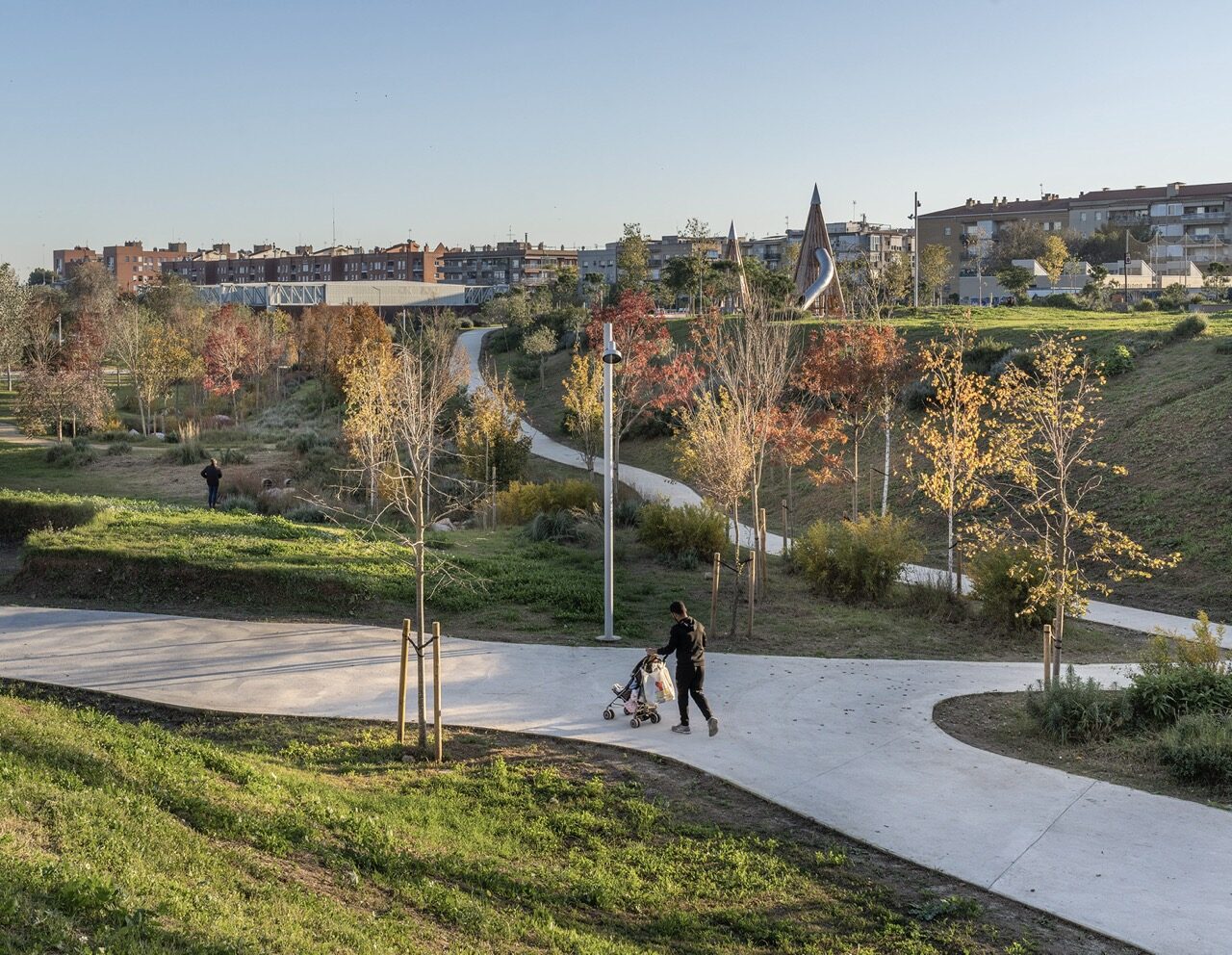
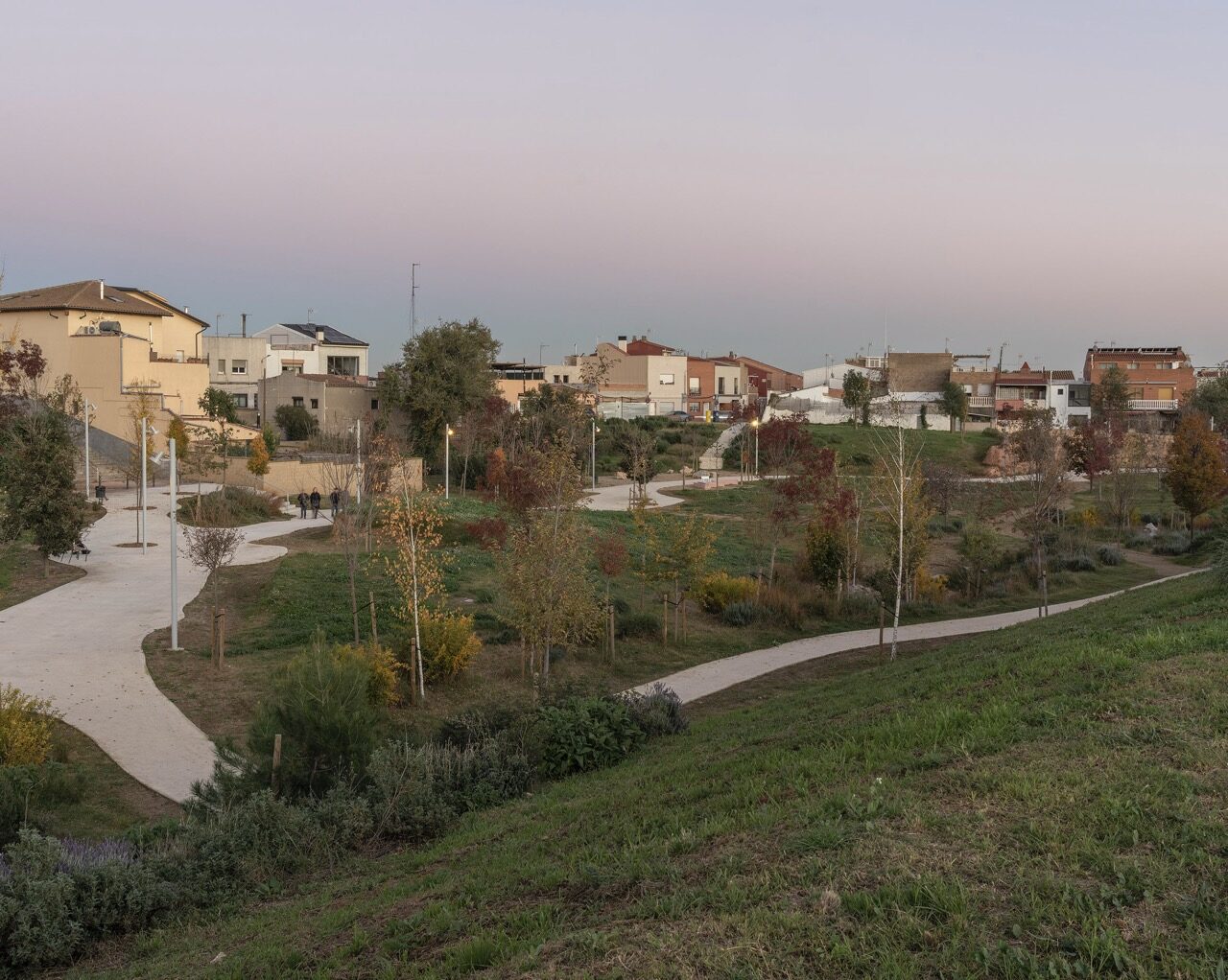
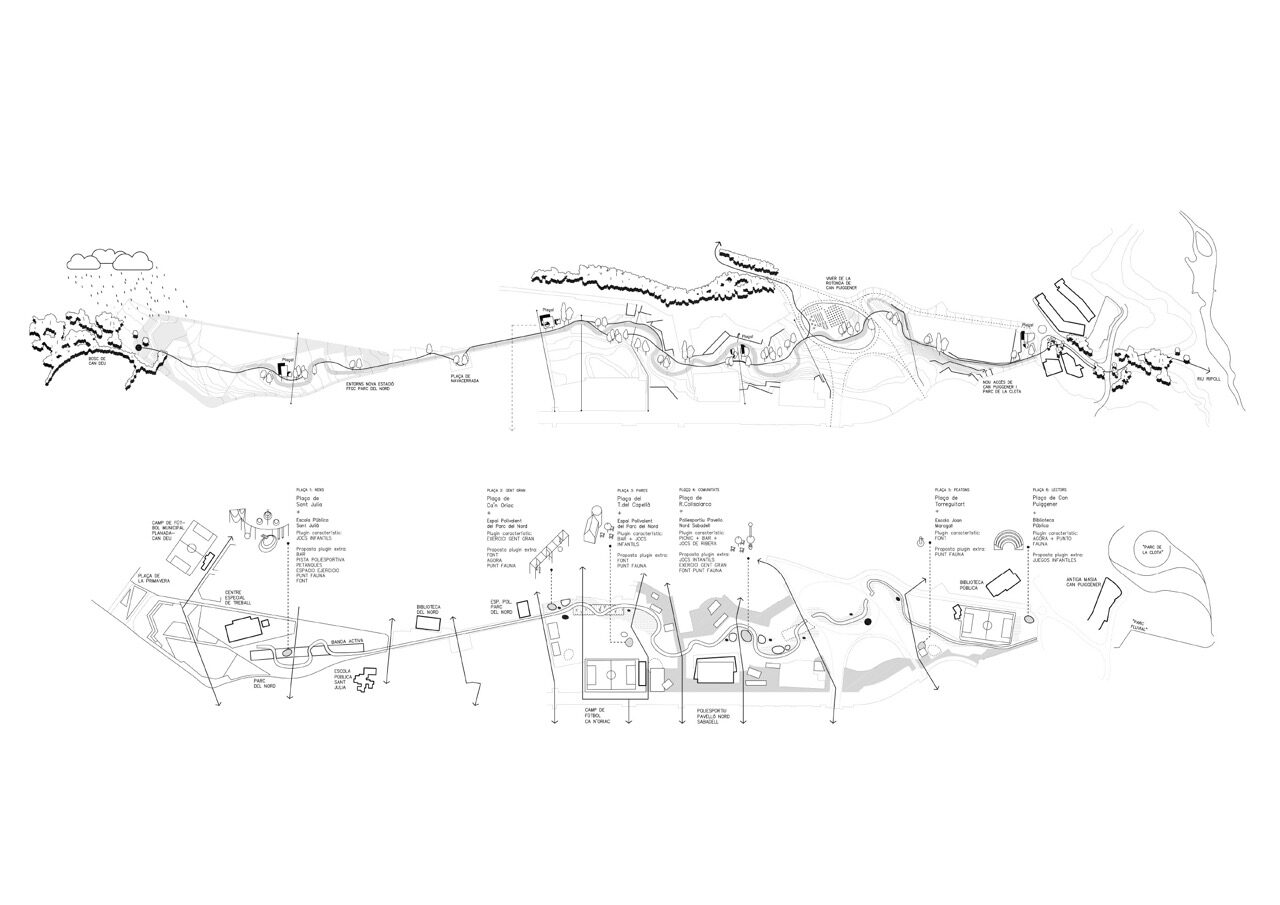
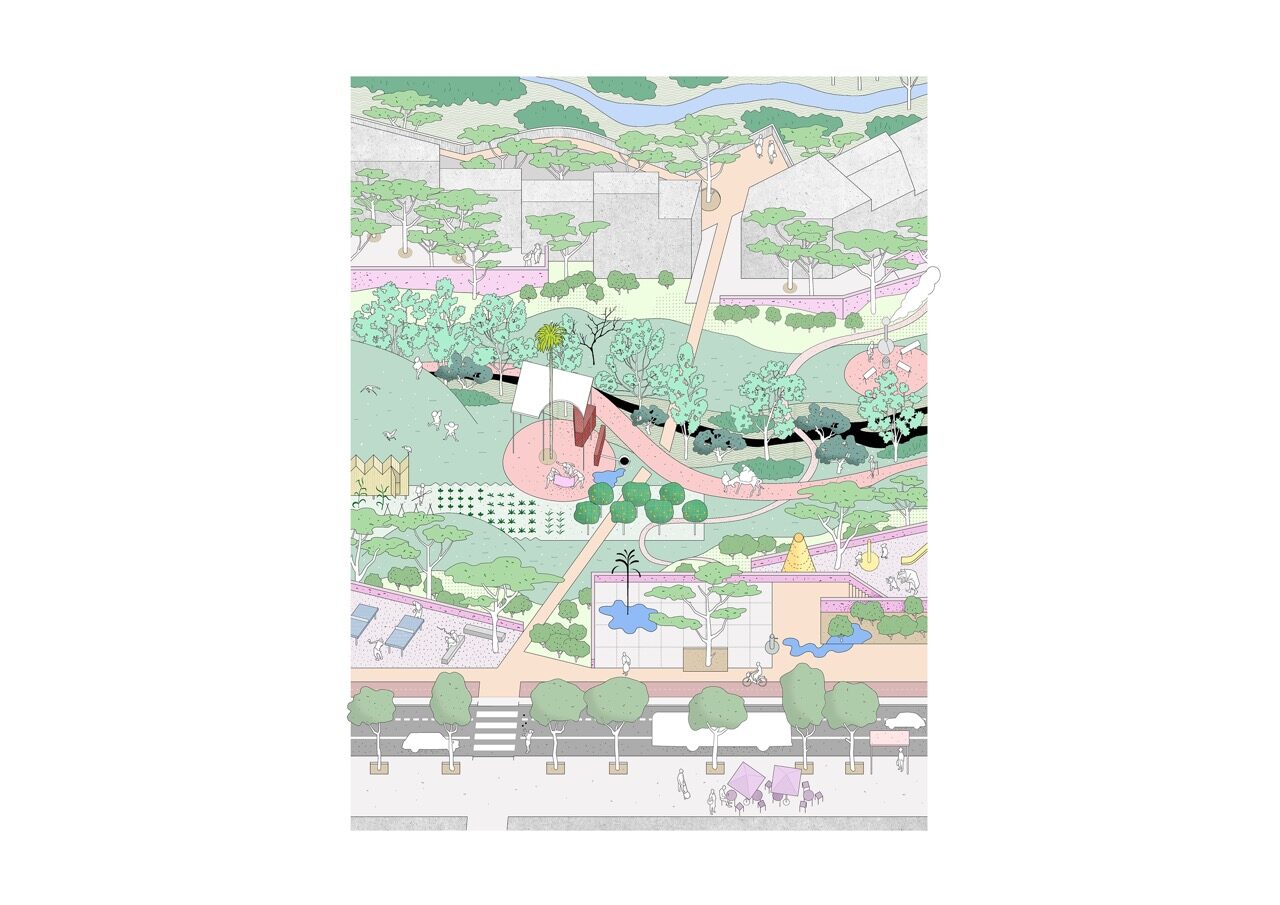
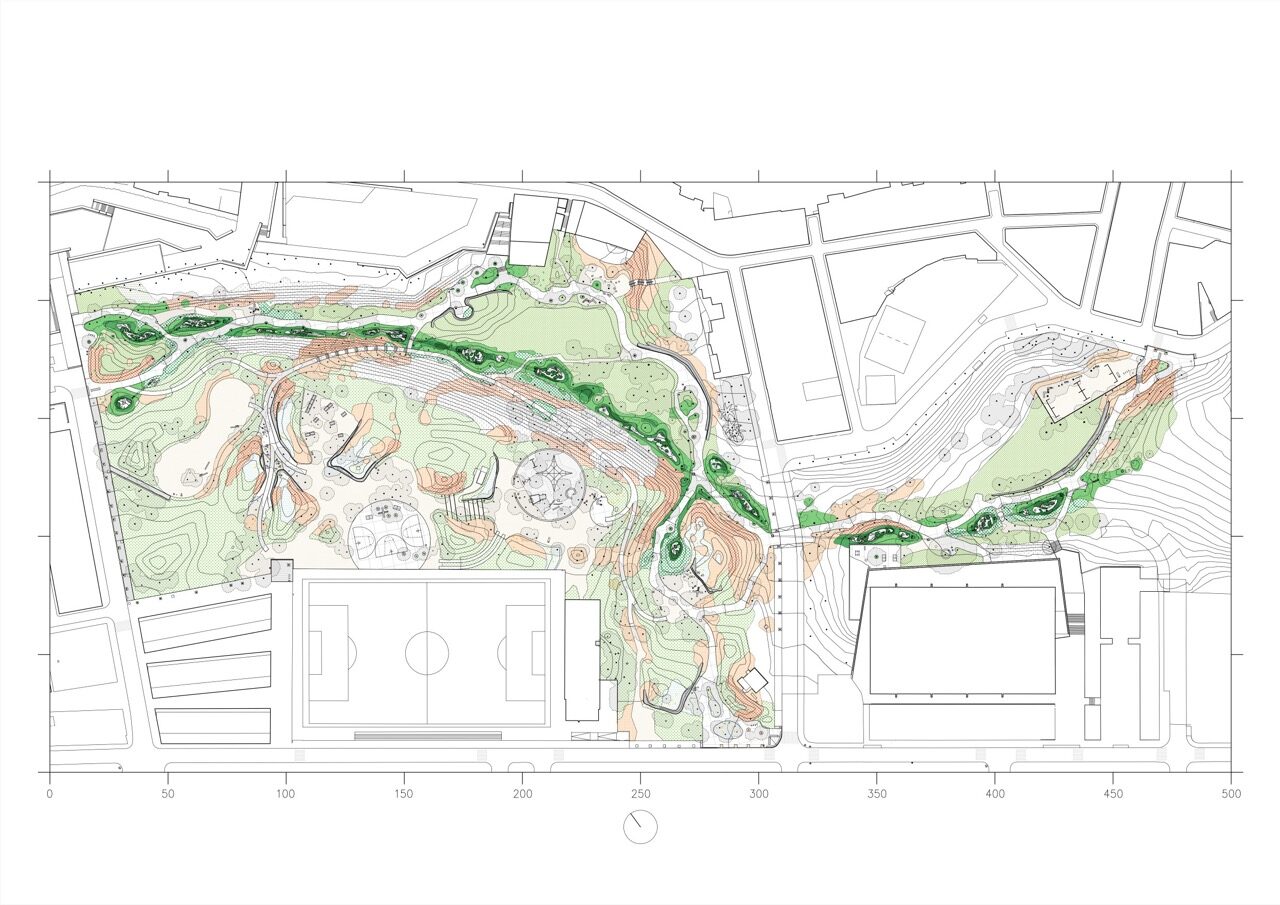
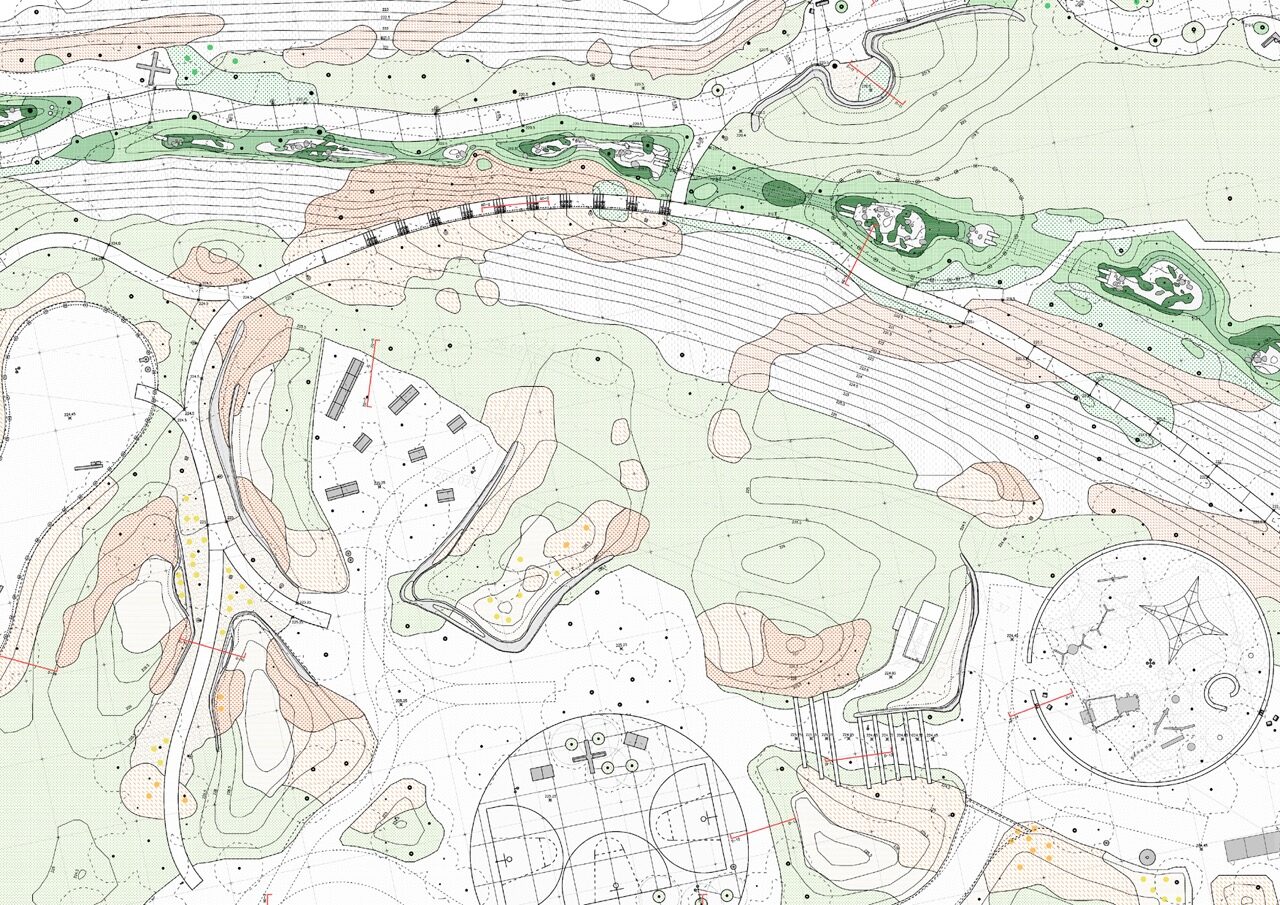
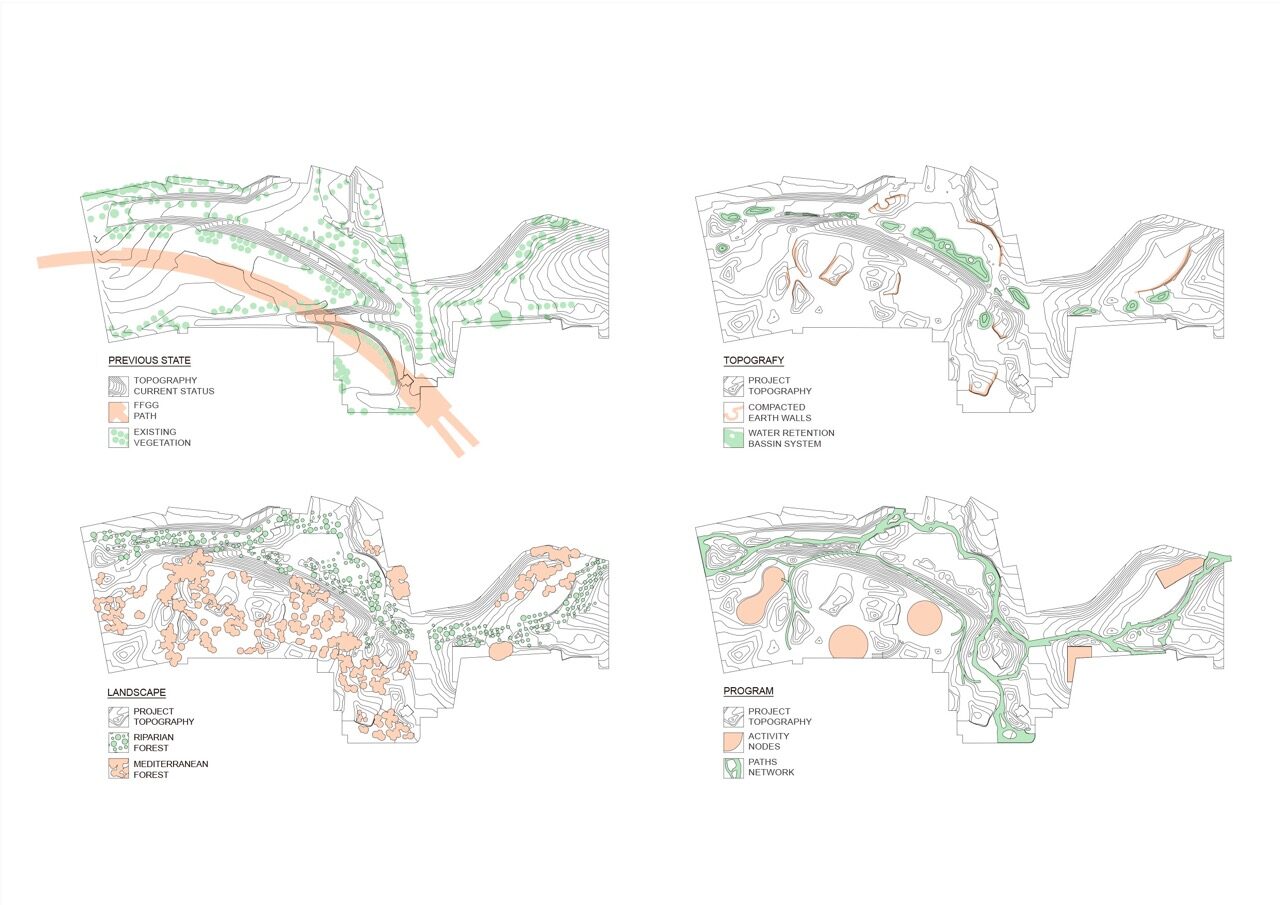
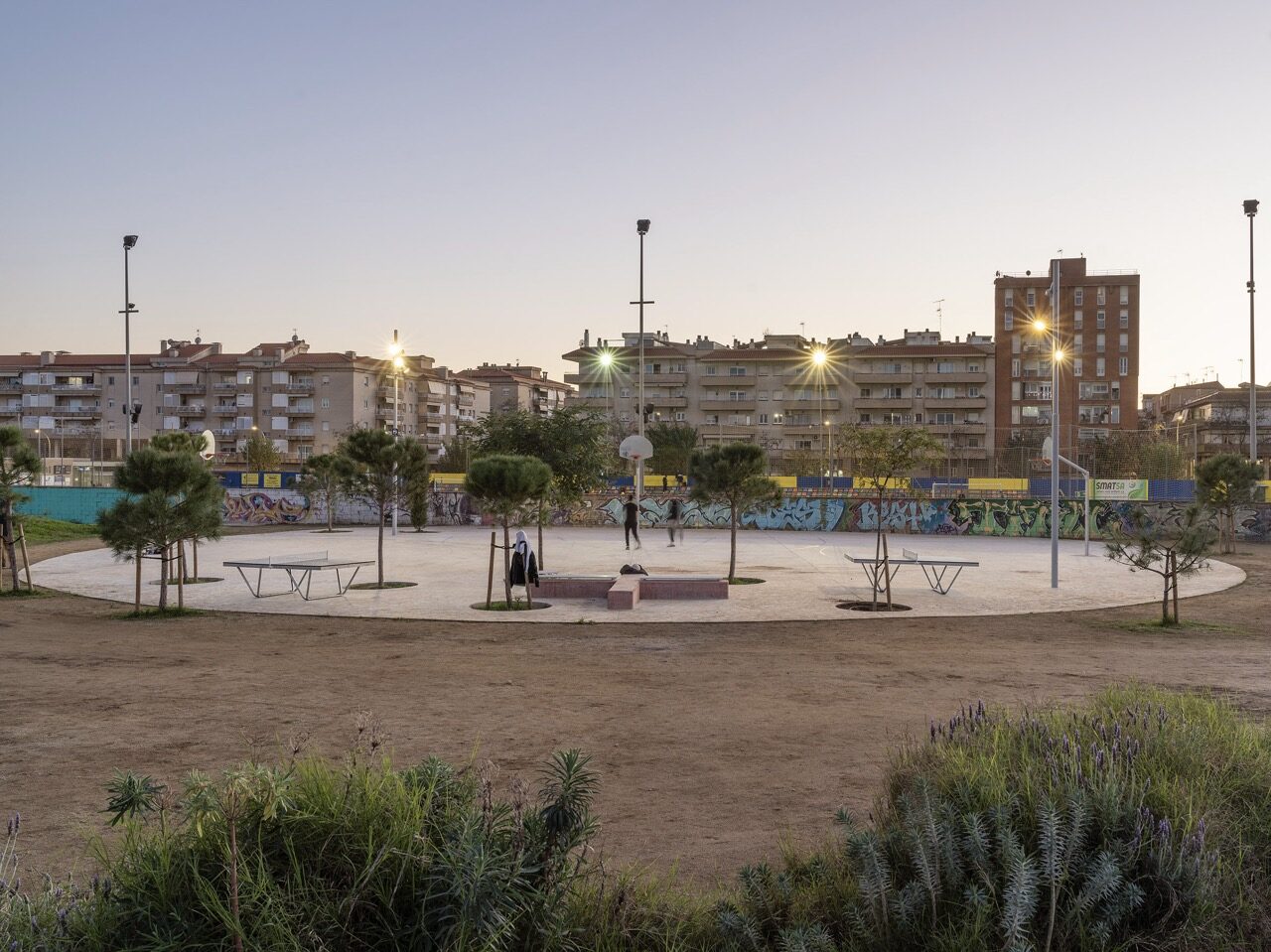
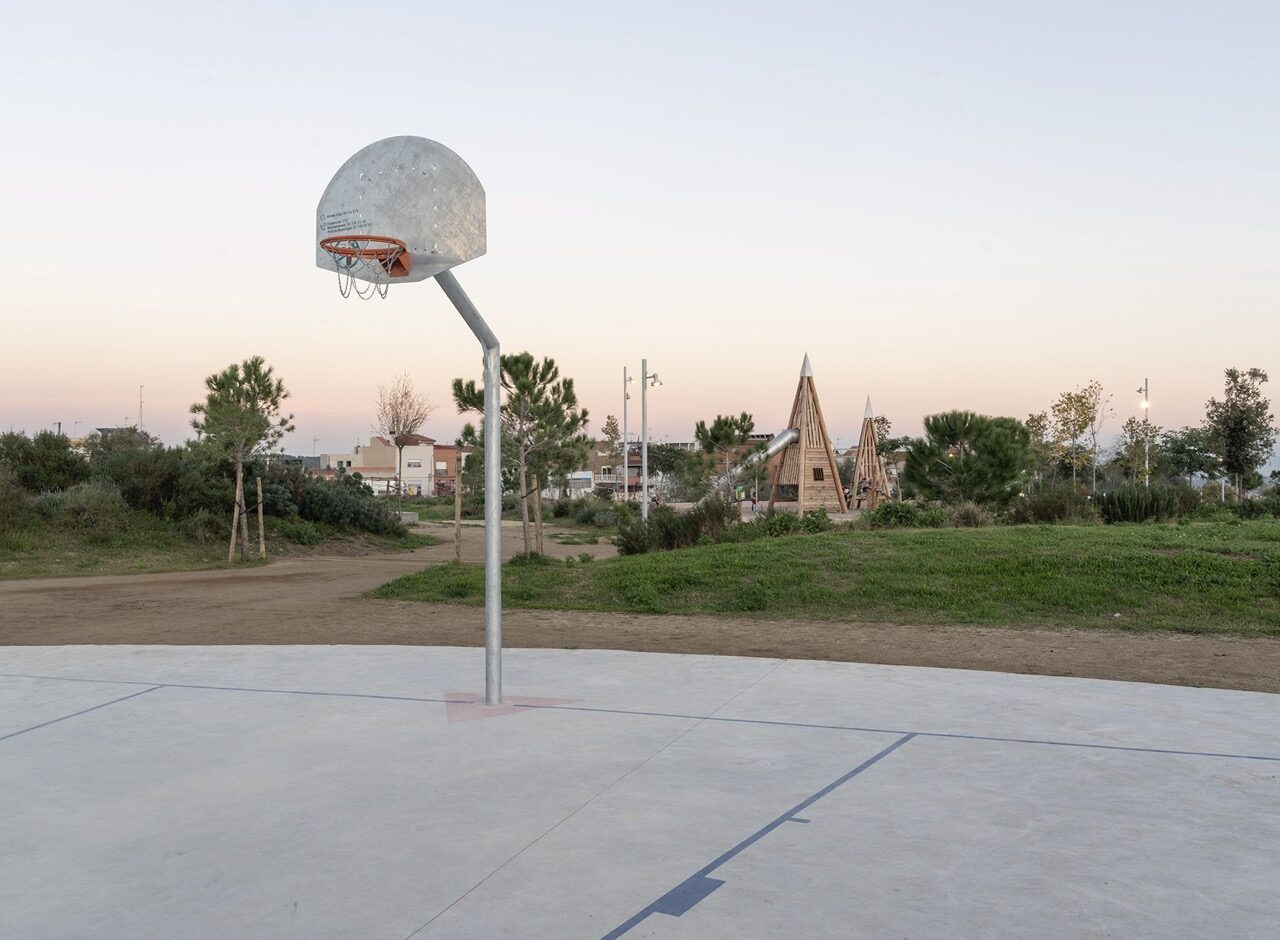
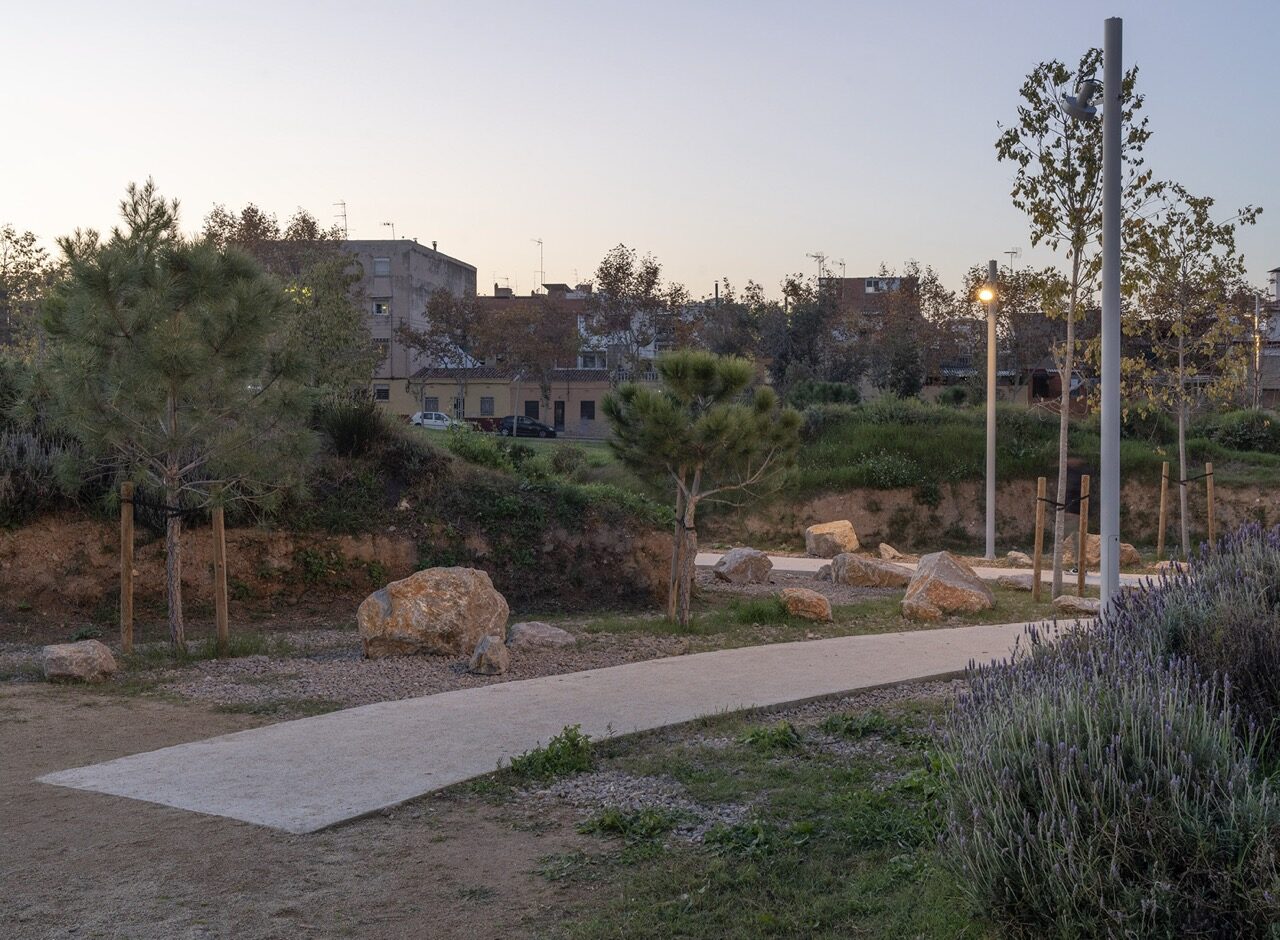
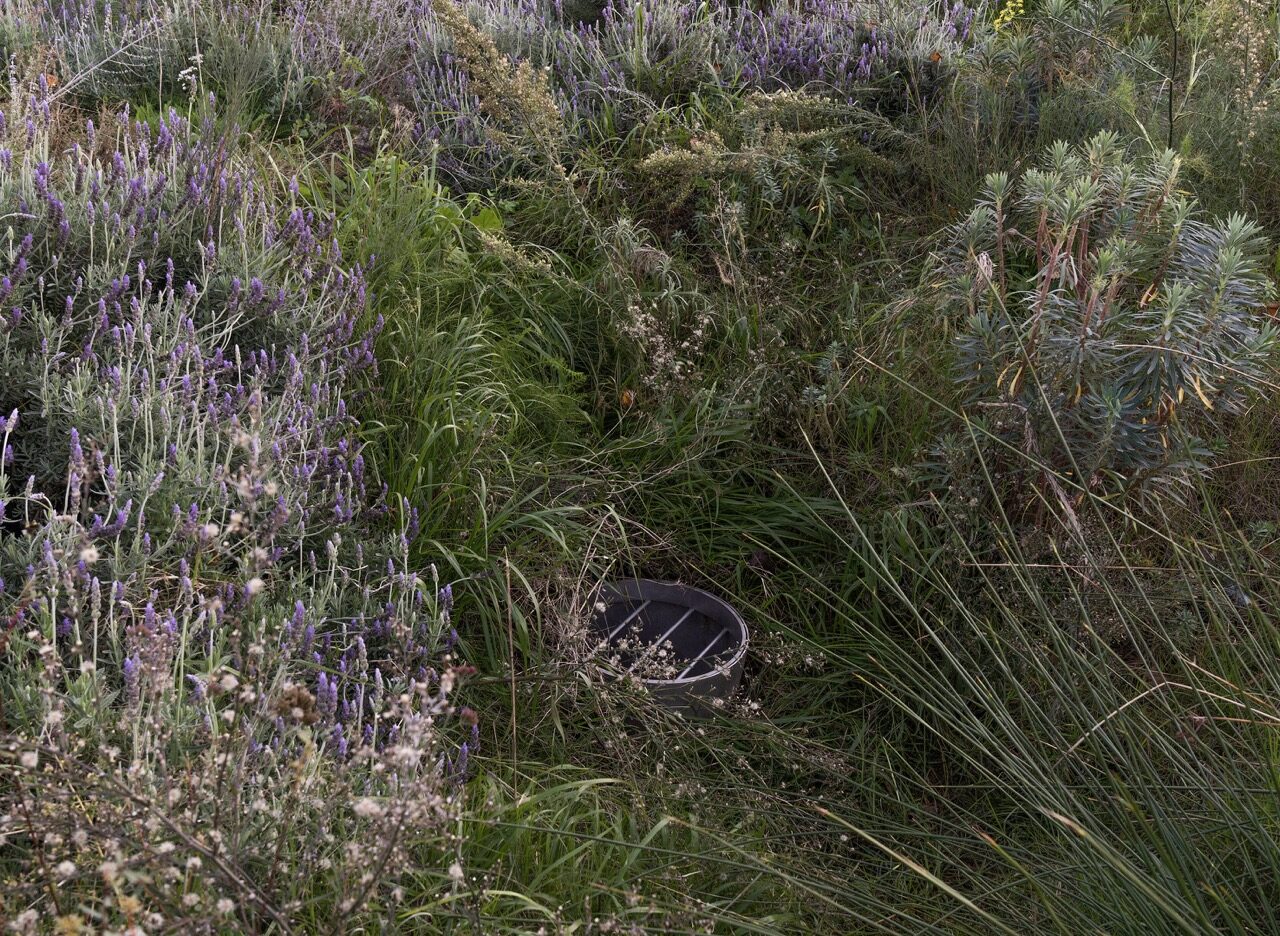
El antiguo Torrent del Capellà, modelado por las escorrentías de la cuenca forestal de Can Deu, funcionó en su día como un corredor ecológico vital, atravesando los barrios del norte de la ciudad antes de desembocar en el río Ripoll. Tomando esta preexistencia física y cultural como marco de referencia, P.A.R.C. propone la restauración del curso original del arroyo, redefiniendo el flujo del agua de lluvia mediante un sistema de balsas de retención interconectadas—nodos húmedos que favorecen el restablecimiento de la flora y fauna autóctonas.

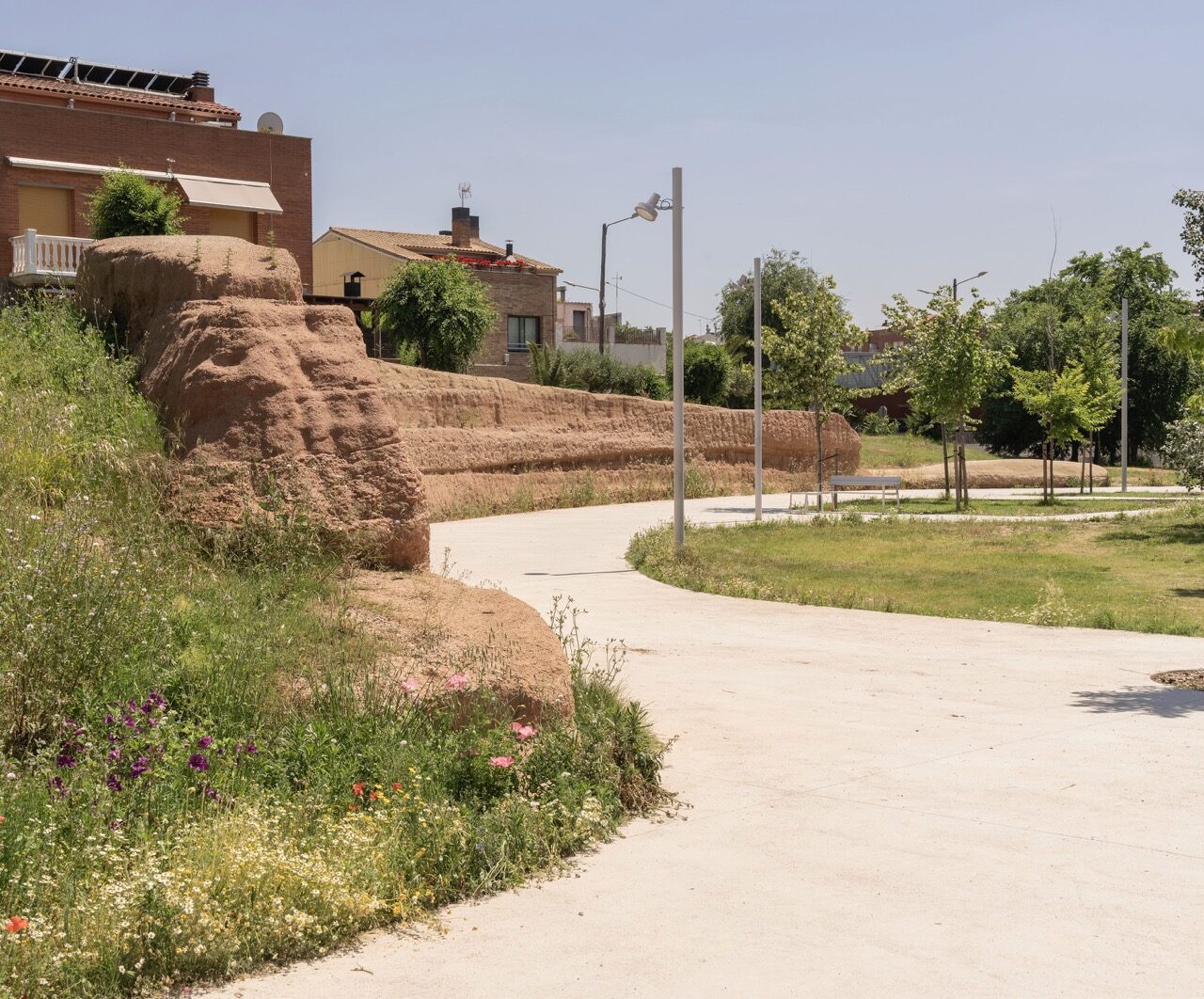
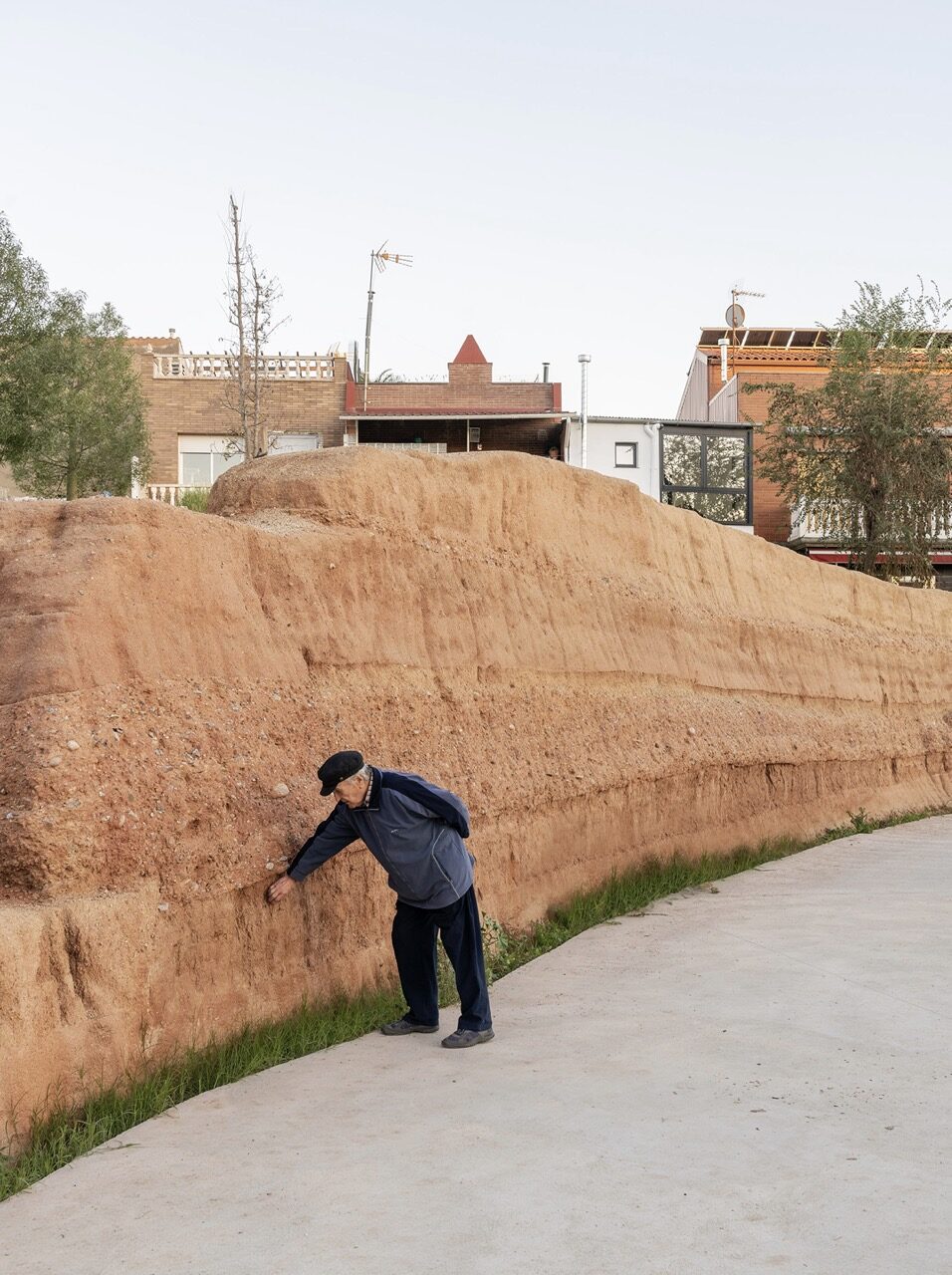
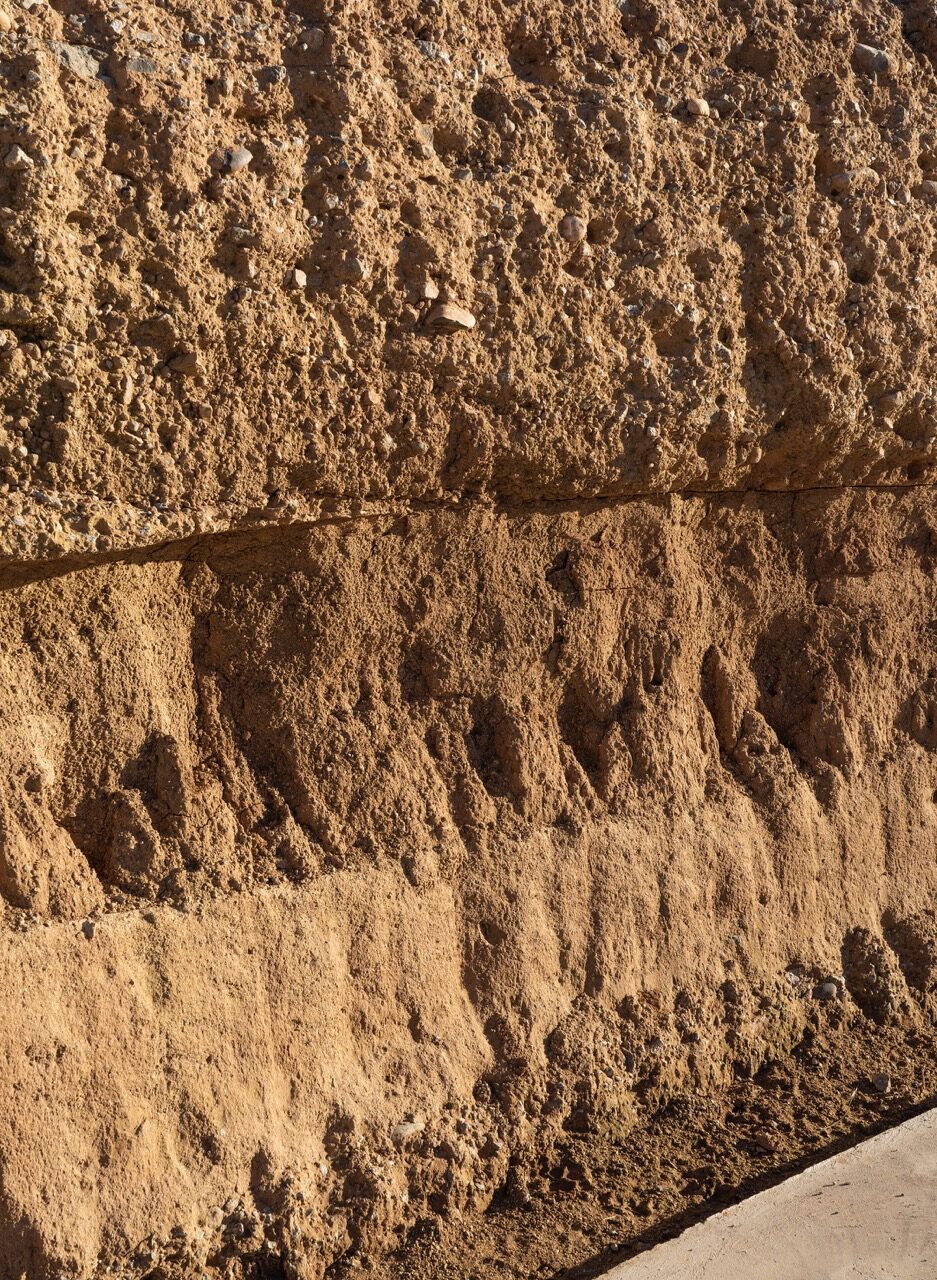
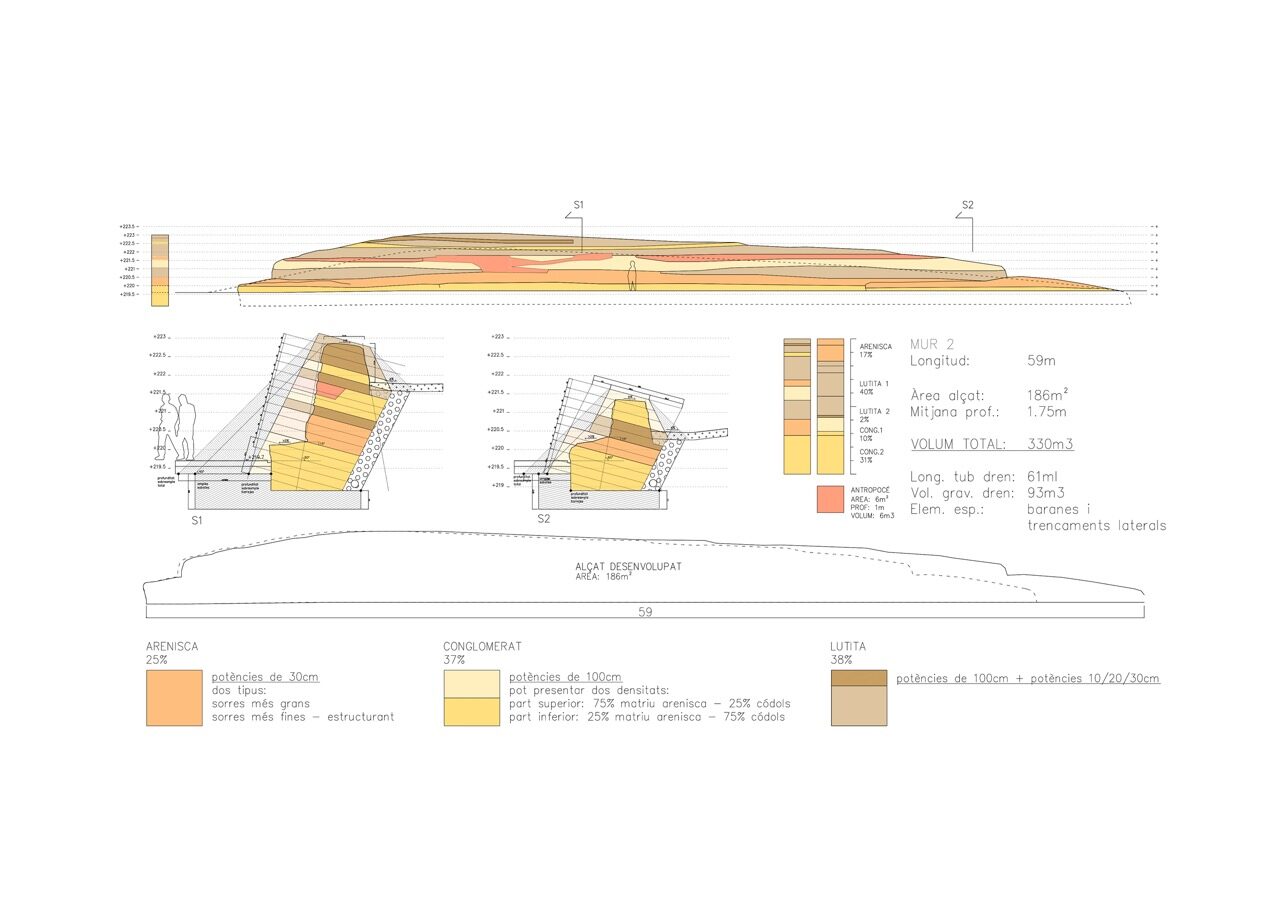
El proyecto prioriza el paisaje como infraestructura, resistiendo la presión del desarrollo urbano y buscando transformar el borde periurbano con una intervención mineral mínima. A través de operaciones topográficas sobre el terreno original, se define un proceso constructivo que implica el desbroce, la selección y el cribado de tierras depositadas—materiales acumulados durante décadas de construcciones autogestionadas que habían sepultado el lecho del torrente bajo escombros. Estas tierras nativas se reensamblan en muros aluviales compactados, caracterizados por su capacidad de erosión continua, una condición definitoria del paisaje local.

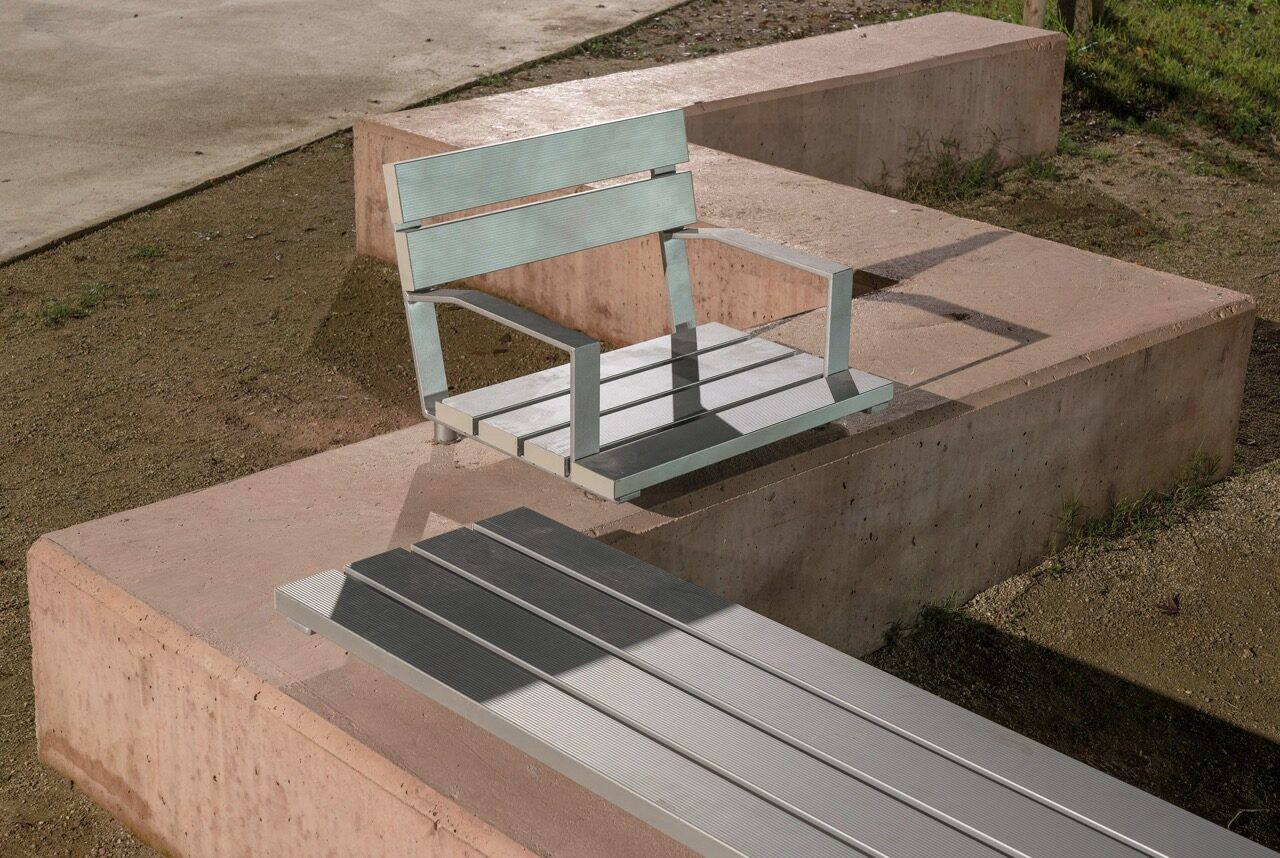
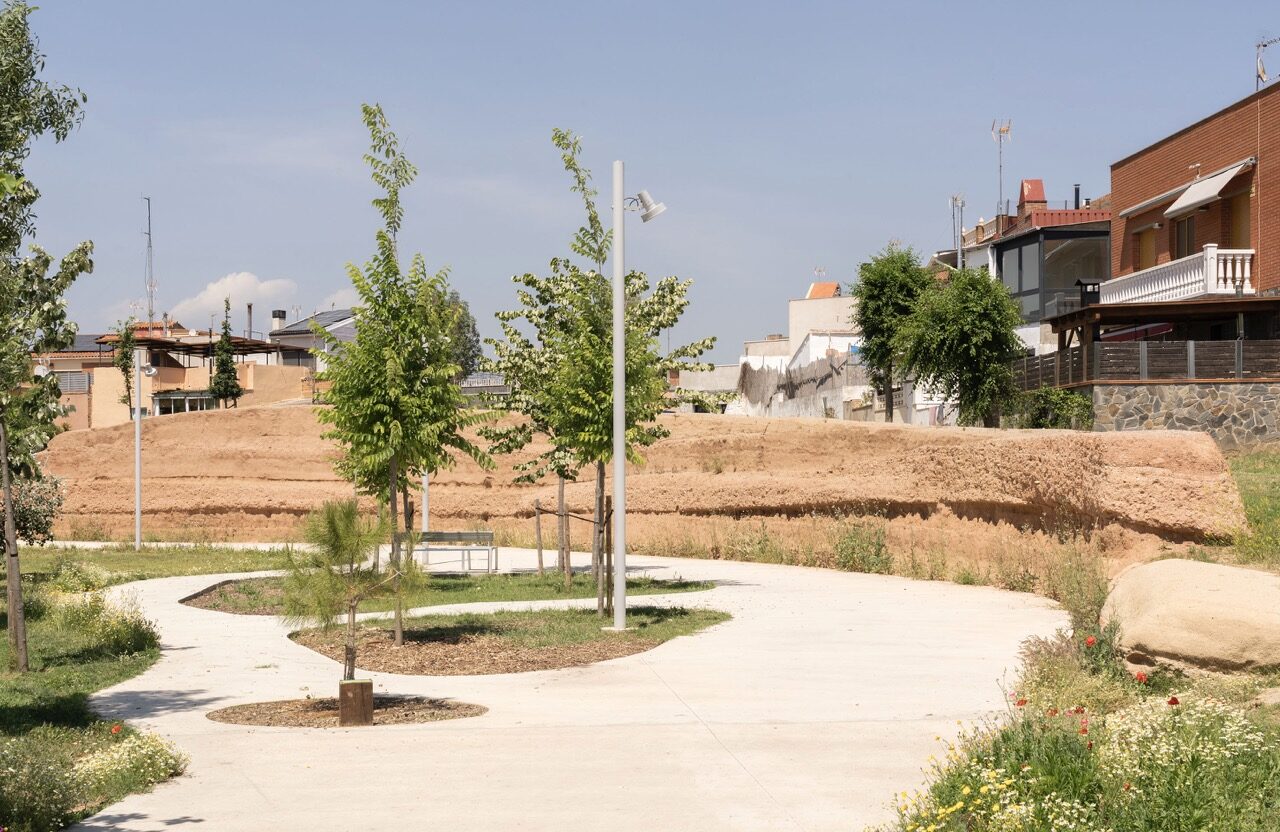
Distribuidos a lo largo del sitio, estos taludes de tierra generan una red de espacios horizontales y acústicamente resguardados, que ofrecen diferentes grados de intimidad y orientación espacial. Esta estrategia material y espacial recupera dos elementos esenciales del paisaje histórico: el curso del agua, con sus estanques encadenados de escorrentía, y la condición sedimentaria y expresiva de sus límites.

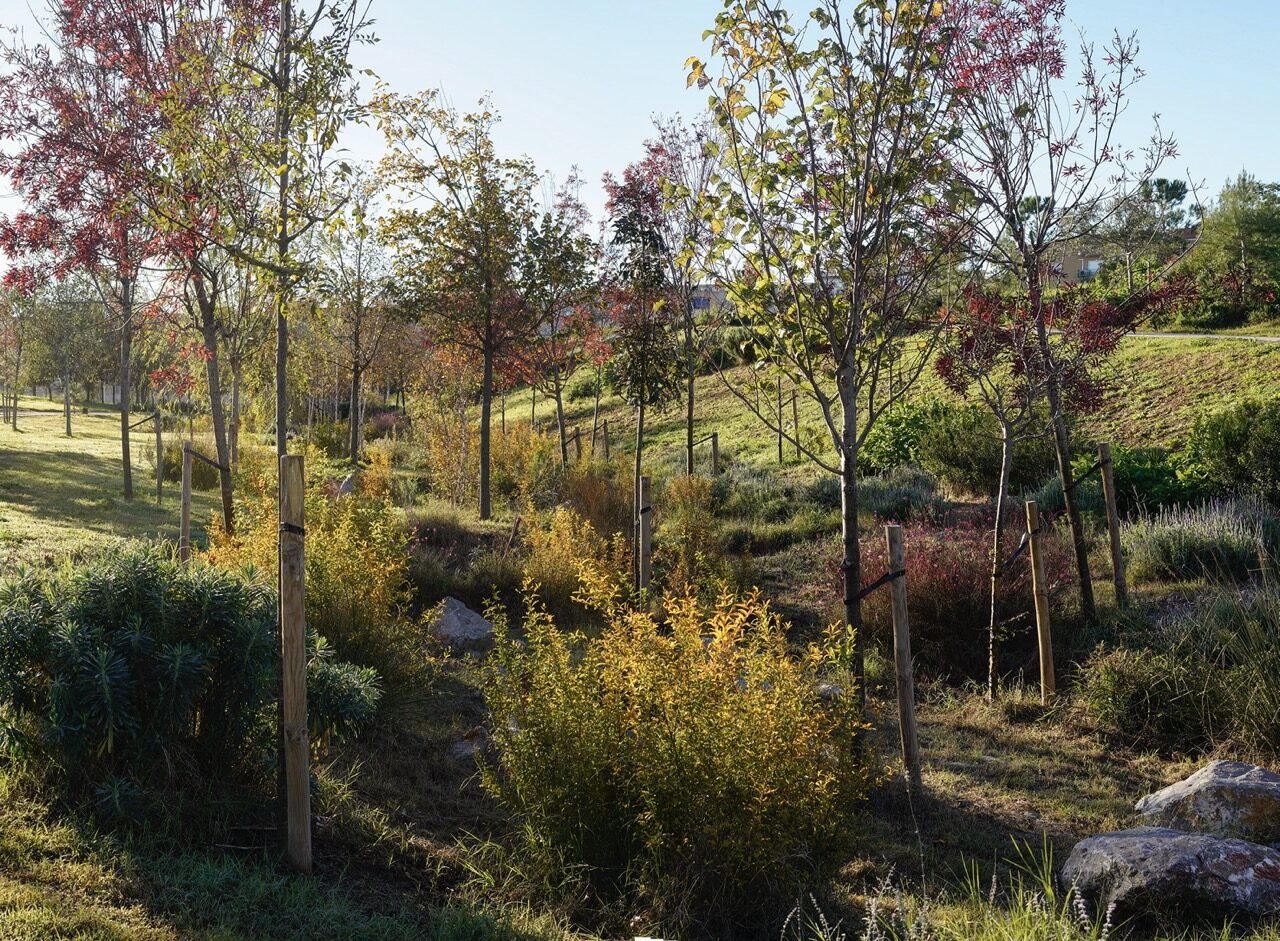
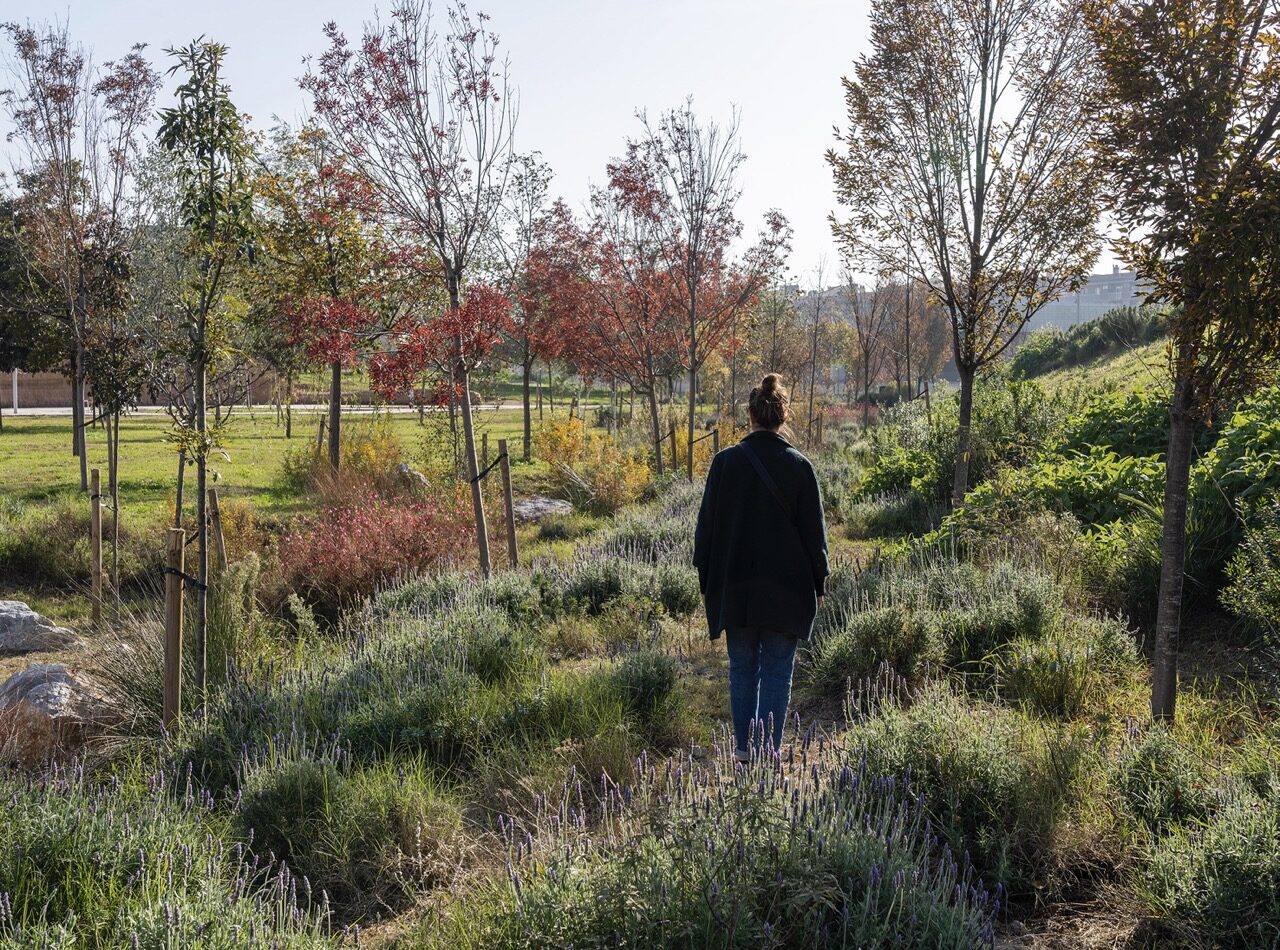
La vegetación del parque se plantea en consonancia con las nuevas oportunidades geográficas generadas por los movimientos de tierra. En la cota baja se sitúa el bosque de ribera, plantado en retícula, generando un dosel denso de fresnos, tilos y olmos, que proporciona una sombra tamizada y fresca para los paseos de verano, permitiendo al mismo tiempo el paso del calor del sol durante el frío del invierno.

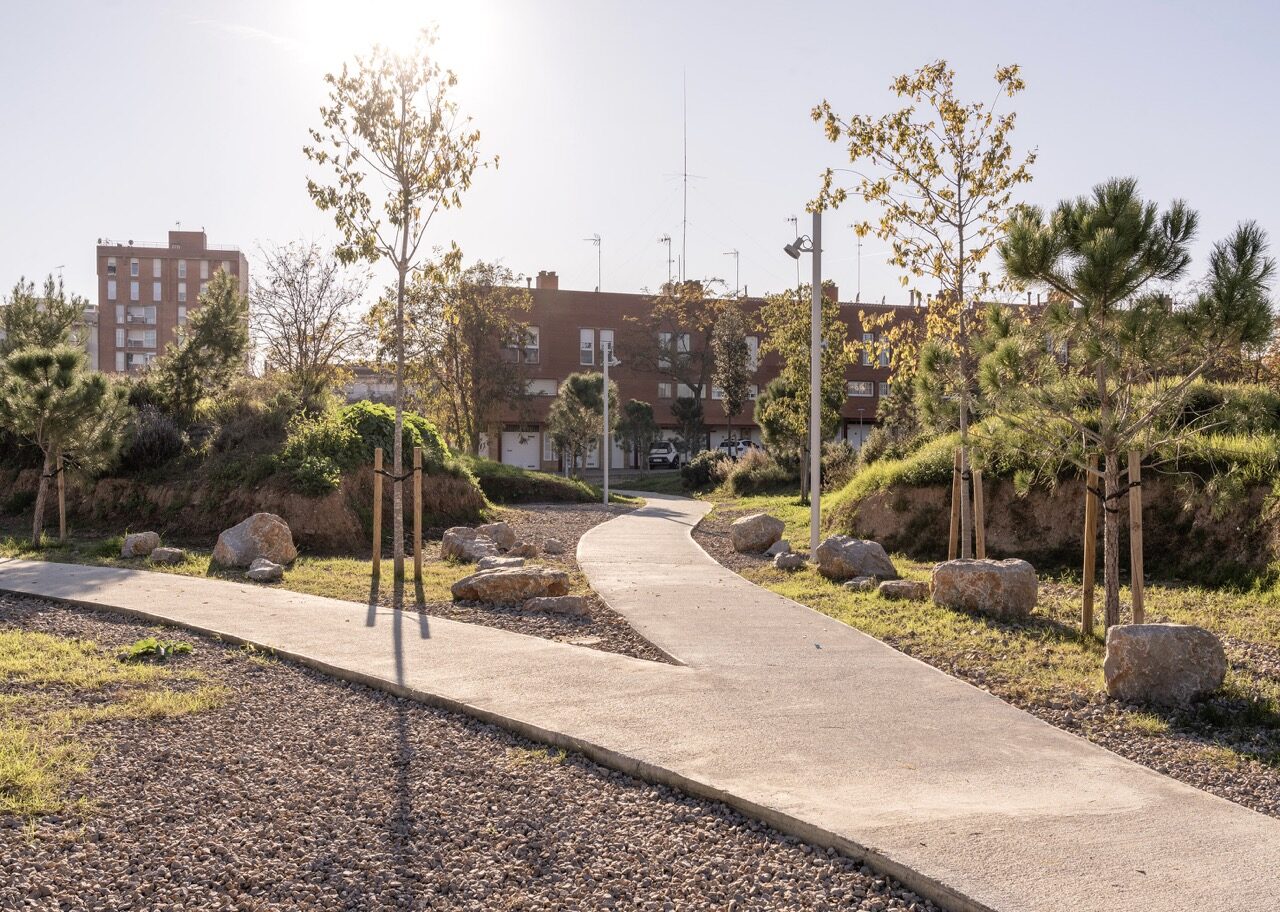
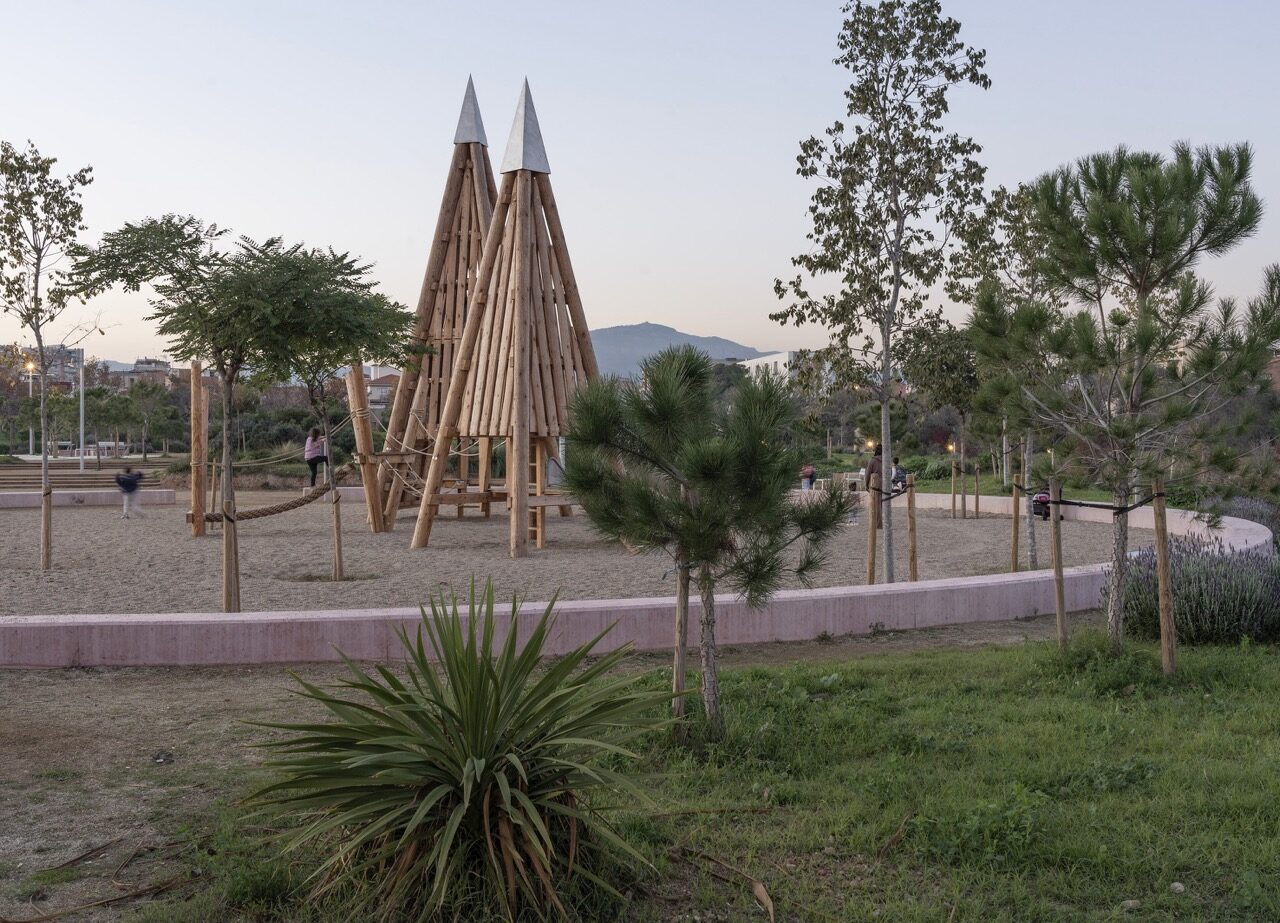
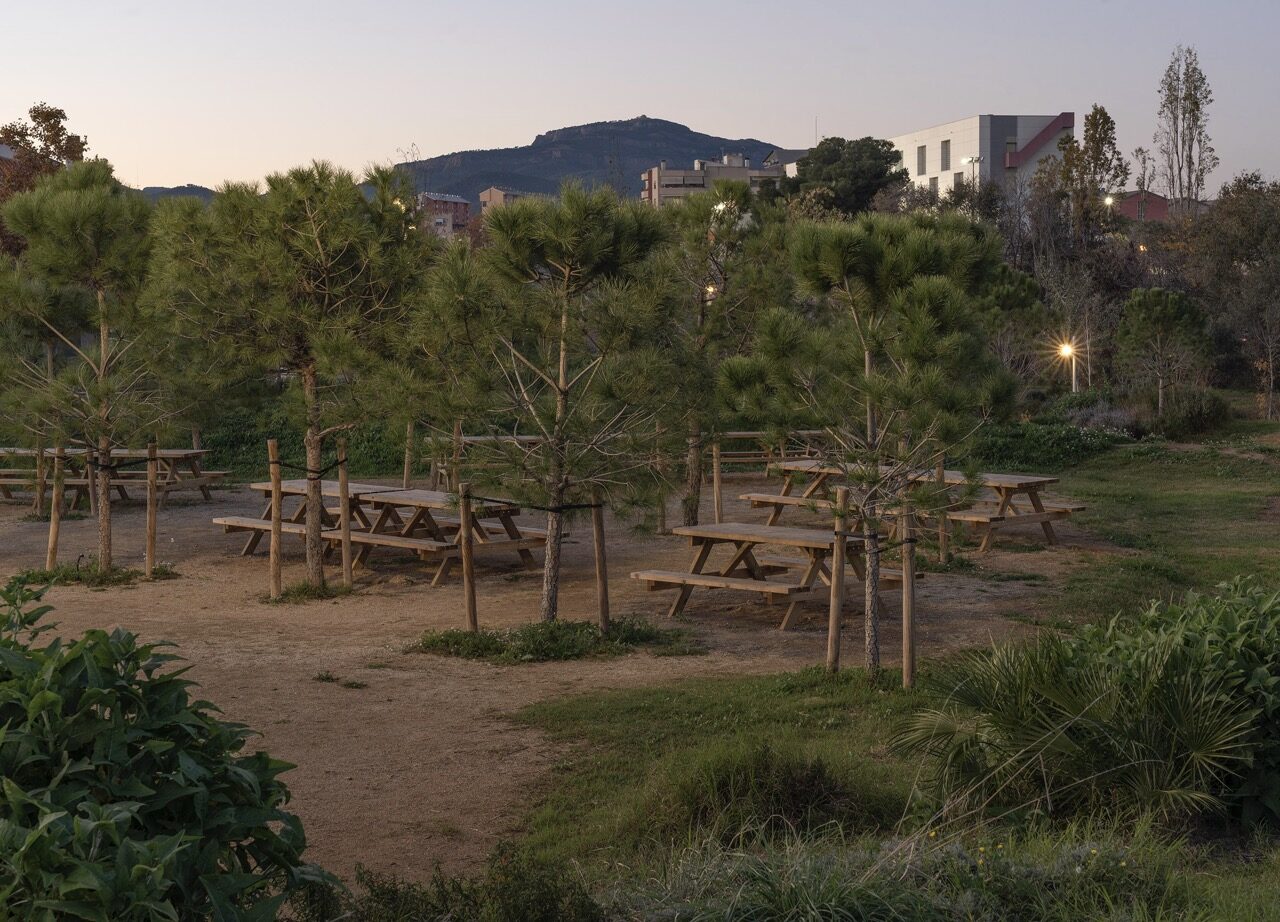
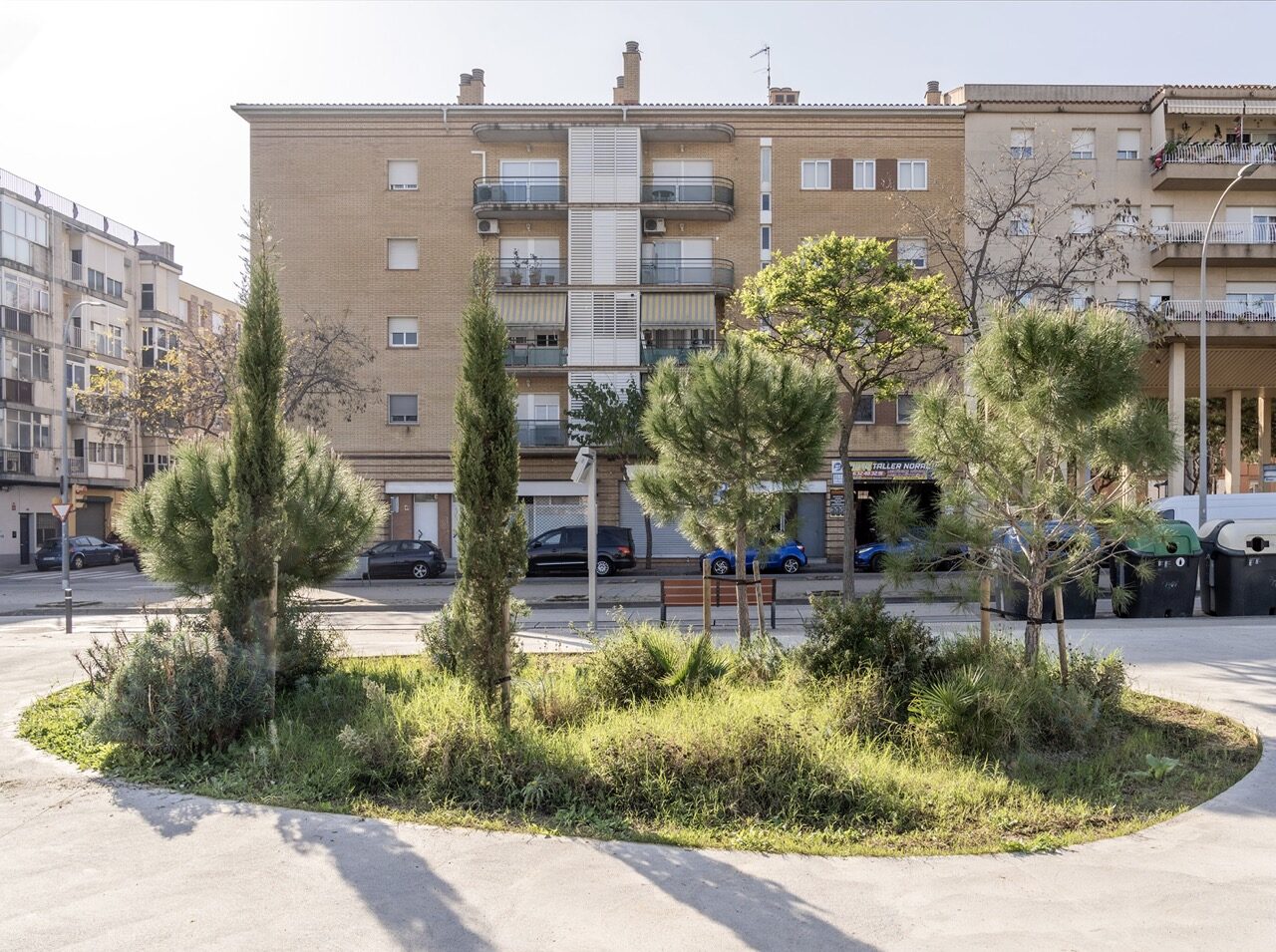
El bosque mediterráneo aparece en las cotas más altas del proyecto y en los taludes, en contraste con el bosque de ribera, y se planta en bosquetes. El estrato arbóreo está dominado por el pino piñonero y el pino silvestre, conformando un dosel típico del bosque mediterráneo. Este se complementa con especies caducas como el almez, la melia y la tipuana, más presentes en las zonas activas, aportando riqueza estacional.

Cliente: Ajuntament de Sabadell
Arquitectos: OESST + MARBORIS VILLE ET PAISAGE
Colaboradores: ABM (ingenieros), FETDETERRA (muros de tierra compactada), Gonzalo del Val (mobiliario y objetos), MECANISMO (estructura)
Fotografías: Sergio Belinchón
Año: 2019 – 2025 – ongoing
Lugar: Parc del Nord, Sabadell, España
Tipología: Parque
Estado: Primera fase construida. Concurso, Primer premio.

The former Torrent del Capellà, shaped by runoff from the Can Deu forest basin, once functioned as a vital ecological corridor, traversing the northern neighborhoods of the city before flowing into the Ripoll River. Taking this physical and cultural preexistence as a reference framework, P.A.R.C. proposes the restoration of the stream’s original course, redefining the flow of rainwater through a system of interconnected retention basins—wet nodes that promote the reestablishment of native flora and fauna.

The project prioritizes landscape as infrastructure, resisting the pressure of urban development and seeking to transform the peri-urban edge through minimal mineral intervention. Through topographic operations on the original terrain, a construction process is defined that involves clearing, selecting, and sieving deposited soils—materials accumulated over decades of self-managed constructions that had buried the torrent bed under debris. These native soils are reassembled into compacted alluvial walls, characterized by their capacity for continuous erosion, a defining condition of the local landscape.

Distributed across the site, these earth embankments create a network of horizontal and acoustically sheltered spaces, offering different degrees of intimacy and spatial orientation. This material and spatial strategy recovers two essential elements of the historical landscape: the watercourse, with its chain of runoff ponds, and the sedimentary and expressive condition of its boundaries.

The park’s vegetation is designed in harmony with the new geographical opportunities created by the earthworks. At the lower level lies the riparian forest, planted in a grid, generating a dense canopy of ash, linden, and elm trees, providing filtered, cool shade for summer walks while allowing sunlight to penetrate during the cold of winter.

The Mediterranean forest appears at the higher levels of the project and on the embankments, in contrast to the riparian forest, and is planted in groves. The tree layer is dominated by stone pine and Scots pine, forming a canopy typical of Mediterranean forests. This is complemented by deciduous species such as hackberry, neem, and tipuana, more present in active areas, adding seasonal richness.

Client: Ajuntament de Sabadell
Architects: OESST + MARBORIS VILLE ET PAISAGE
Collaborators: ABM (engineers), FETDETERRA (rammed earth walls), Gonzalo del Val (furniture and objects), MECANISMO (structure)
Photography: Sergio Belinchón
Year: 2019 – 2025 – ongoing
Location: Parc del Nord, Sabadell, Spain
Typology: Park
Status: First phase built. Competition, First Prize.