Estamos asistiendo a un cambio de paradigma que deja atrás más de cinco siglos de antropocentrismo. En arquitectura, esto implica situar la sostenibilidad y la ecología en el centro del proyecto, ya no como añadidos, sino como motores fundamentales del diseño. La arquitectura debe facilitar una coexistencia equilibrada entre los sistemas naturales y los construidos.

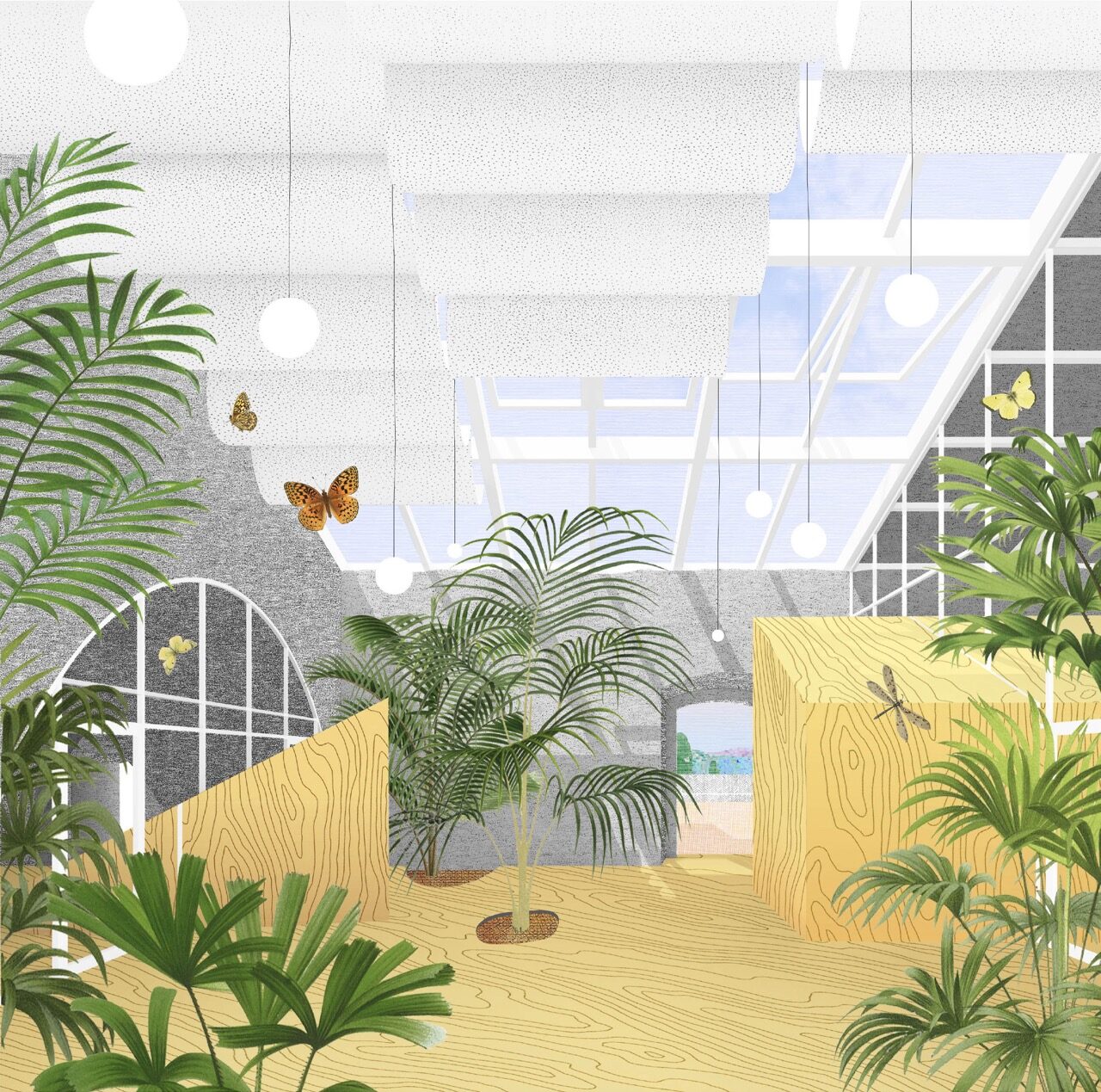
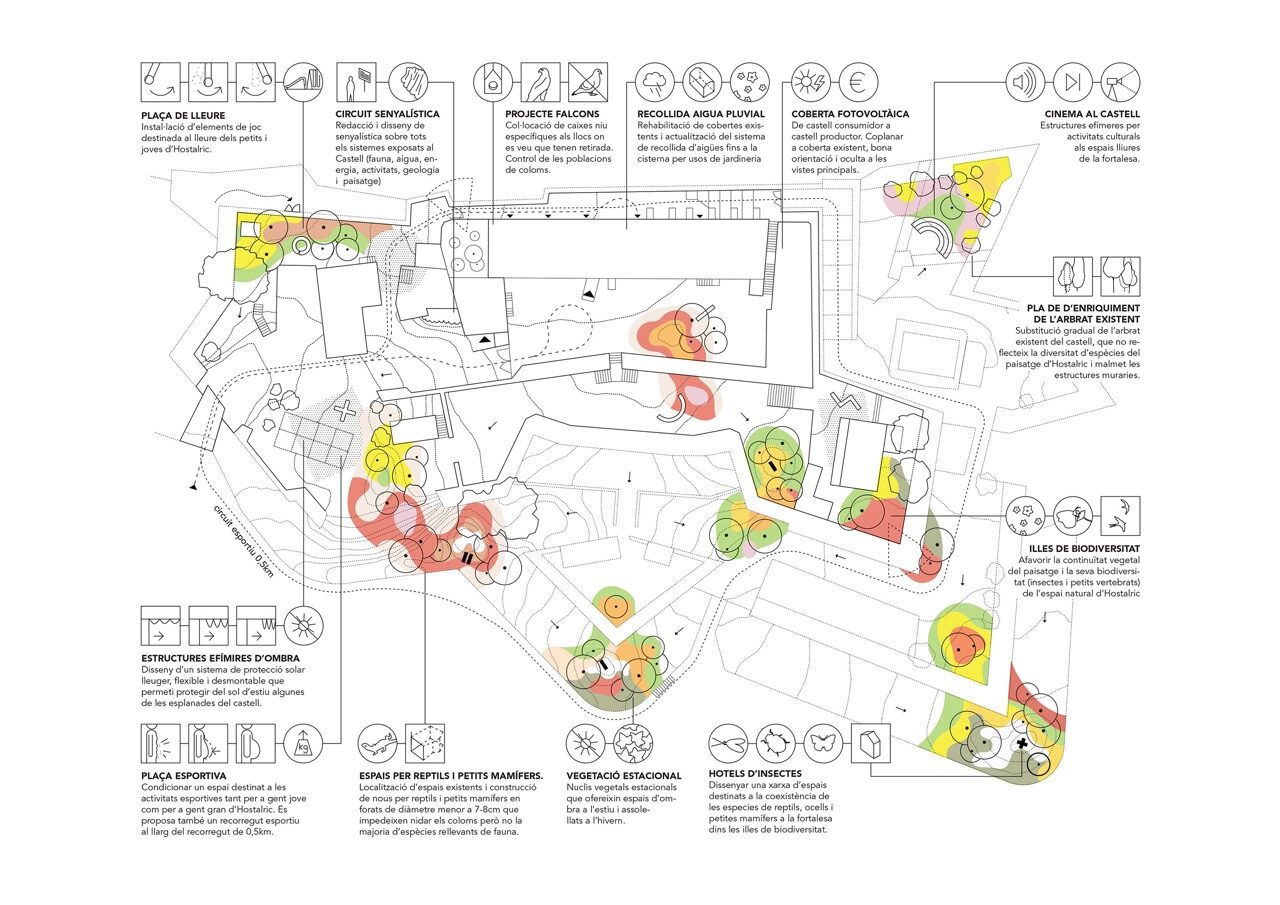
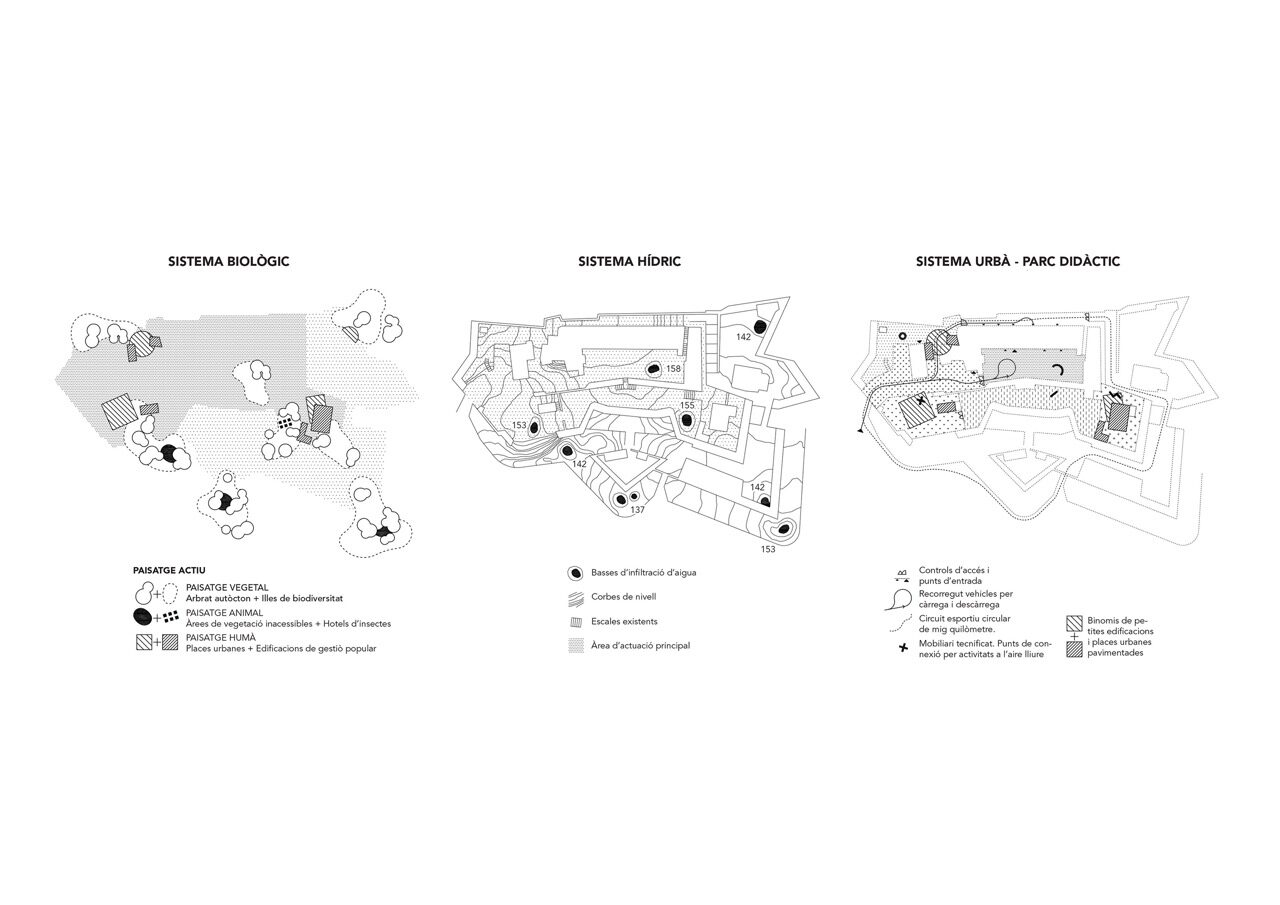
La propuesta para el Castillo de Hostalric se enmarca en esta visión. La intervención transforma la fortaleza en un ecosistema urbano, articulado mediante un conjunto de “islas” de biodiversidad y nodos de actividad humana. El paisaje deja de ser un fondo visual para convertirse en un sistema activo que conecta naturaleza, historia y sociedad.

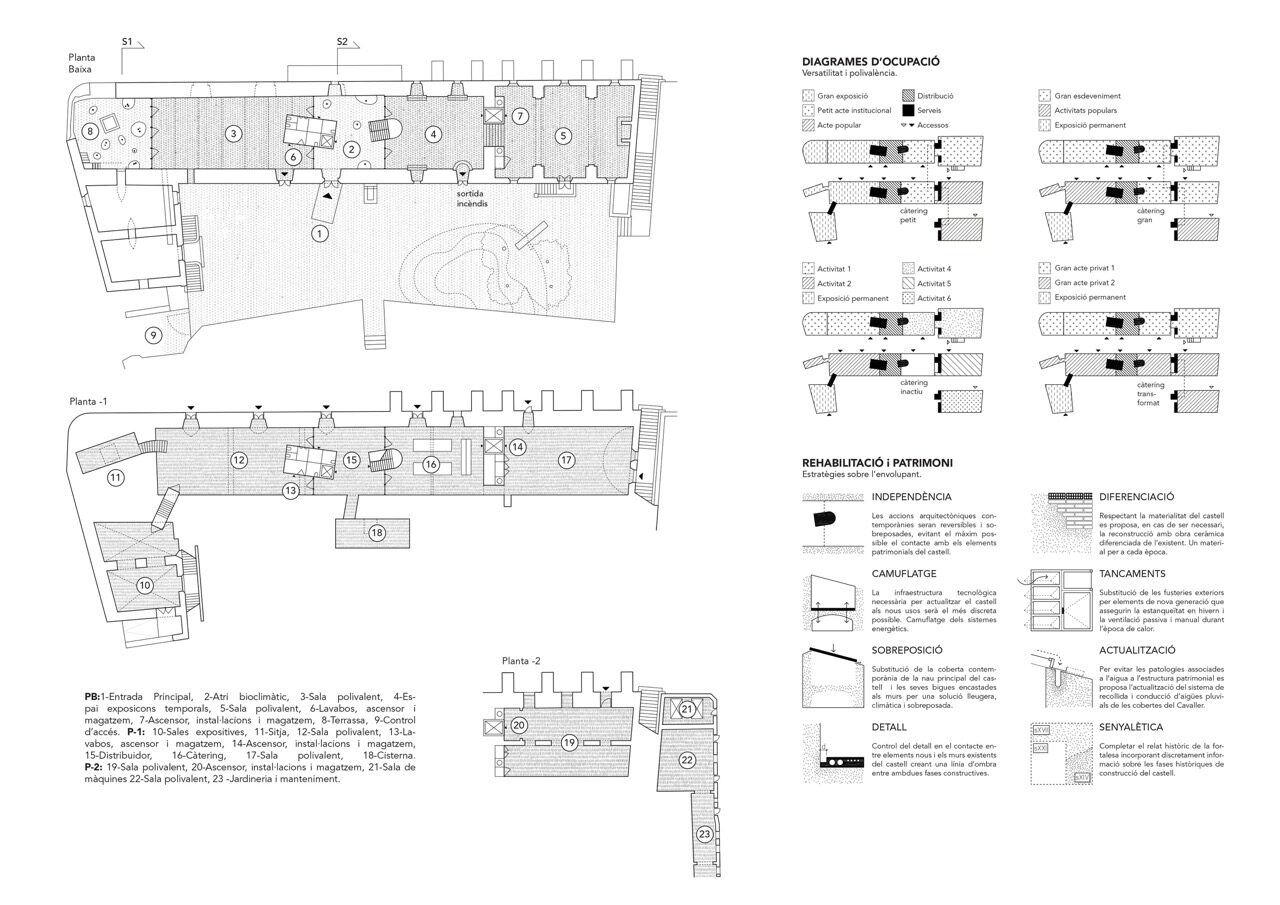
La estrategia arquitectónica es mínima y respetuosa. Una nueva estructura de madera, reversible y ligera, dialoga con la solidez de la arquitectura patrimonial en piedra. Este contraste material permite intervenir sin alterar el edificio existente, limitándose a acciones de consolidación, mejora funcional (accesibilidad, ventilación, iluminación natural, eficiencia energética) y conservación, sin reconstrucciones que alteren su memoria.

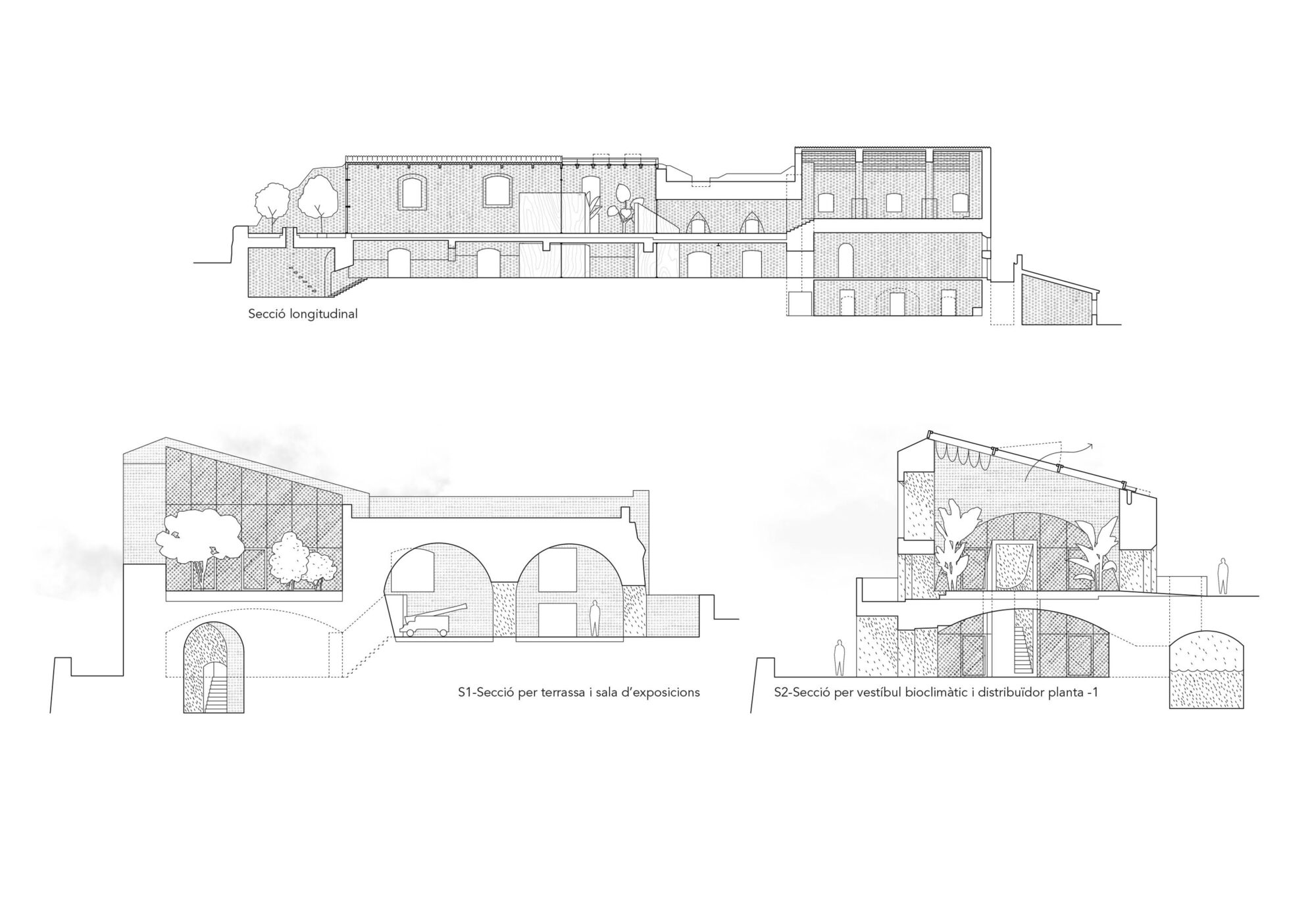
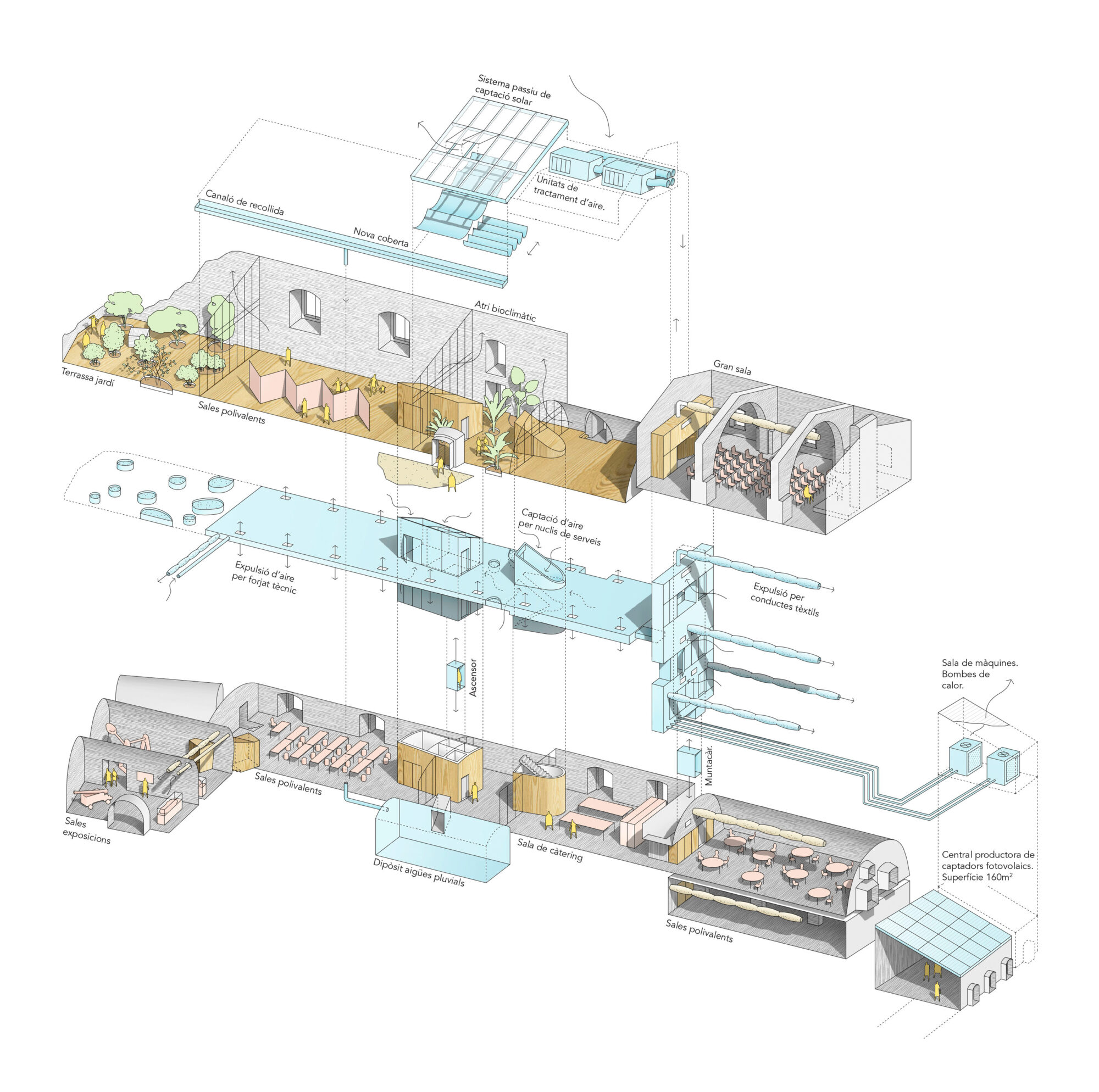
El comportamiento energético guía toda la intervención. Se priorizan los sistemas pasivos: se aprovecha la inercia térmica del edificio, su estanqueidad y una nueva cubierta acristalada en el atrio, que acumula calor en invierno y permite ventilación cruzada en verano gracias a aberturas superiores que actúan como chimeneas. El sistema activo de climatización, basado en bomba de calor, está sectorizado para un uso flexible, y se complementa con una instalación fotovoltaica orientada a la autosuficiencia energética a largo plazo.

Cliente: Ajuntament d’Hostalric
Arquitectos: OESST
Colaboradores:
Fotografías:
Año: 2020
Lugar: Castell d’Hostalric, Hostalric, España
Tipología: Rehabilitación monumento histórico
Estado: Concurso – Finalista

We are witnessing a paradigm shift that leaves behind more than five centuries of anthropocentrism. In architecture, this means placing sustainability and ecology at the core of the project—not as add-ons, but as fundamental drivers of design. Architecture must facilitate a balanced coexistence between natural and built systems.

The proposal for the Castle of Hostalric is framed within this vision. The intervention transforms the fortress into an urban ecosystem, organized through a series of biodiversity “islands” and nodes of human activity. The landscape ceases to be a mere visual backdrop and becomes an active system connecting nature, history, and society.

The architectural strategy is minimal and respectful. A new wooden structure—reversible and lightweight—dialogues with the solidity of the heritage stone architecture. This material contrast allows interventions without altering the existing building, limited to consolidation, functional improvements (accessibility, ventilation, natural lighting, energy efficiency), and conservation, without reconstructions that would compromise its historical memory.

Energy performance guides the entire intervention. Passive systems are prioritized: the building’s thermal inertia and airtightness are leveraged, along with a new glazed roof in the atrium that stores heat in winter and allows cross-ventilation in summer through upper openings acting as chimneys. The active climate control system, based on a heat pump, is zoned for flexible use and complemented by a photovoltaic installation aimed at long-term energy self-sufficiency.

Client: Ajuntament d’Hostalric
Architects: OESST
Collaborators:
Photography:
Year: 2020
Location: Castell d’Hostalric, Hostalric, Spain
Typology: Historic monument restoration
Status: Competition – Finalist