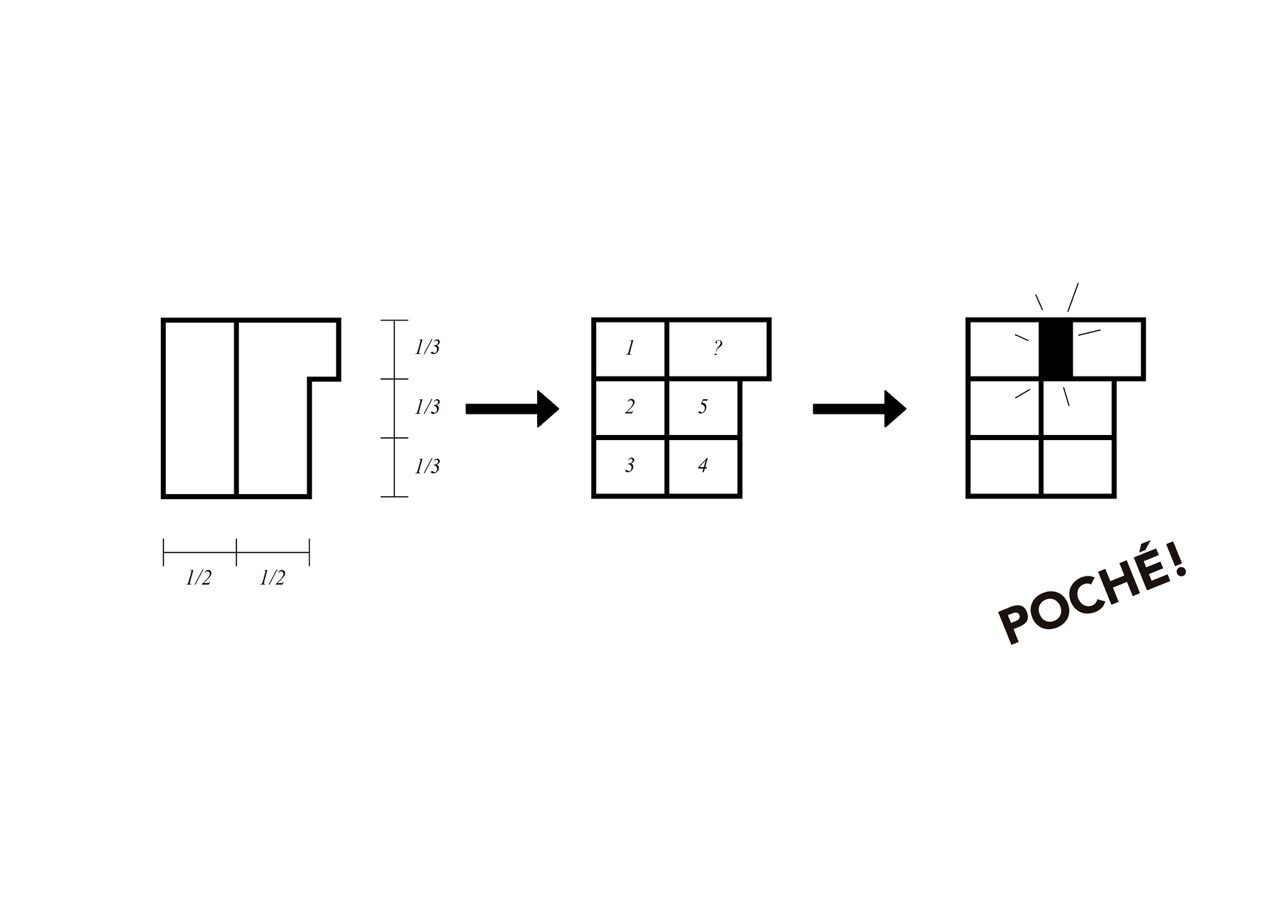
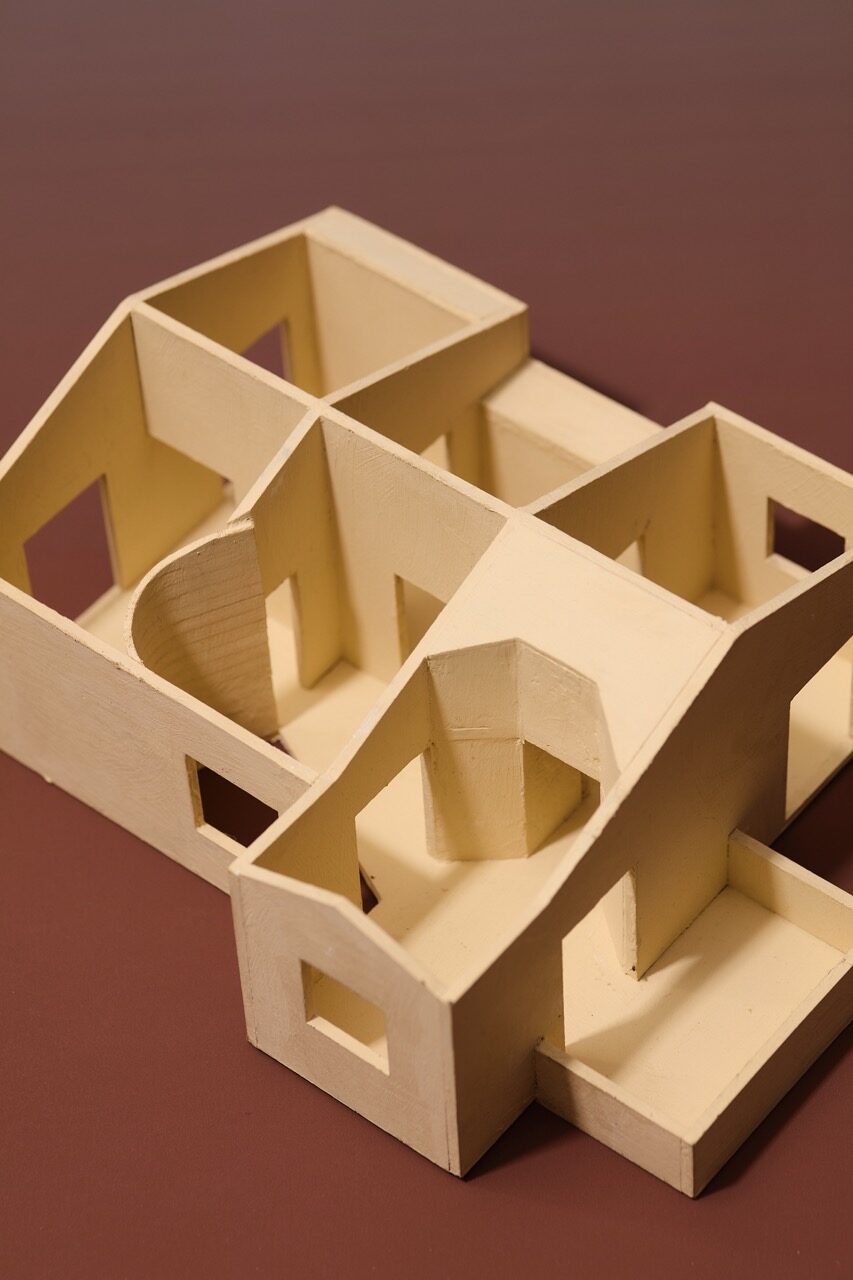
Pronunciat amb un accent exagerat a la “e” final, “poche” és un terme arquitectònic francès per a totes les coses que hi ha dins dels murs entre espais.

Se nos pide un primer estudio para la rehabilitación de una casa unifamiliar aislada con el objetivo de transformarla en dos viviendas independientes. Construida con muros de carga y situada en un terreno aterrazado a distintos niveles, la casa tiene tres plantas, una de ellas semienterrada, y se organiza en dos crujías con una pared de carga en el centro y cubierta a dos aguas.

La vivienda principal deberá ocupar las dos plantas superiores y la segunda la planta semisótano, cuya crujía
sudeste apenas dispone de aberturas. Uno de los principales problemas que se plantean es resolver el uso
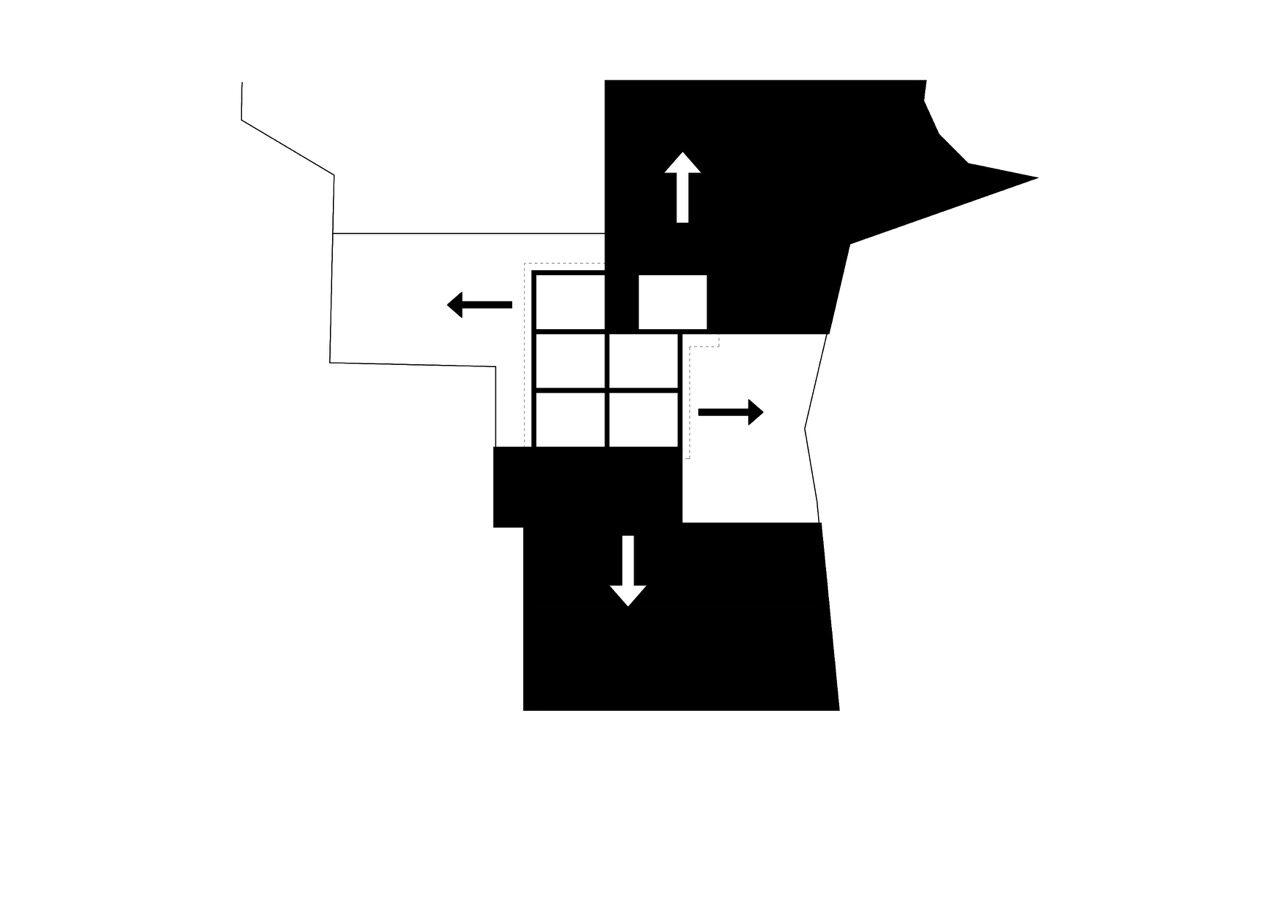
privativo del jardín que rodea la casa, por lo que la primera decisión del proyecto será dividir la parcela en cuatro sectores destinándolos de forma intercalada a cada una de las viviendas. Siguiendo este esquema, se excava un patio que libera la fachada de la crujía semienterrada dotando la casa de una nueva salida al exterior y a la vez garantizando la intimidad sin necesidad de introducir elementos divisorios.

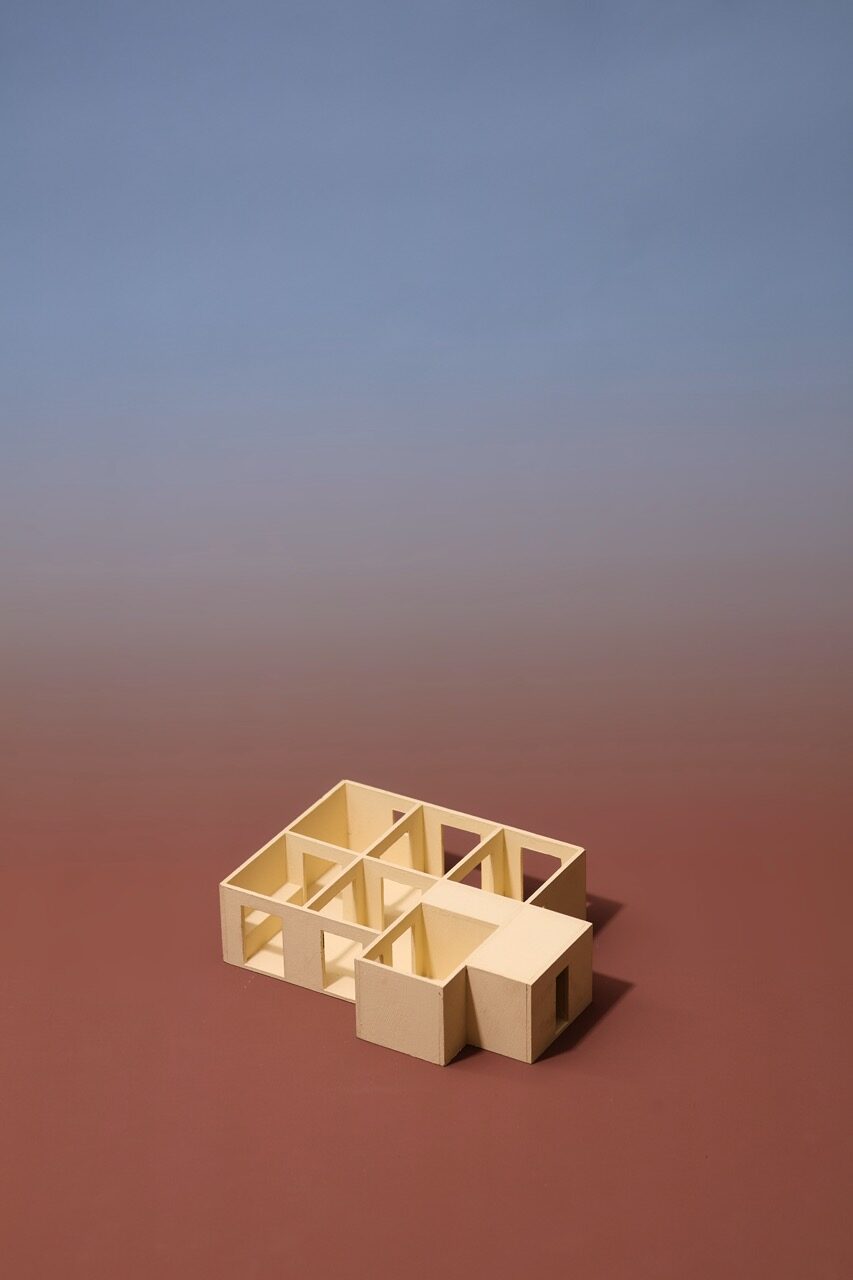
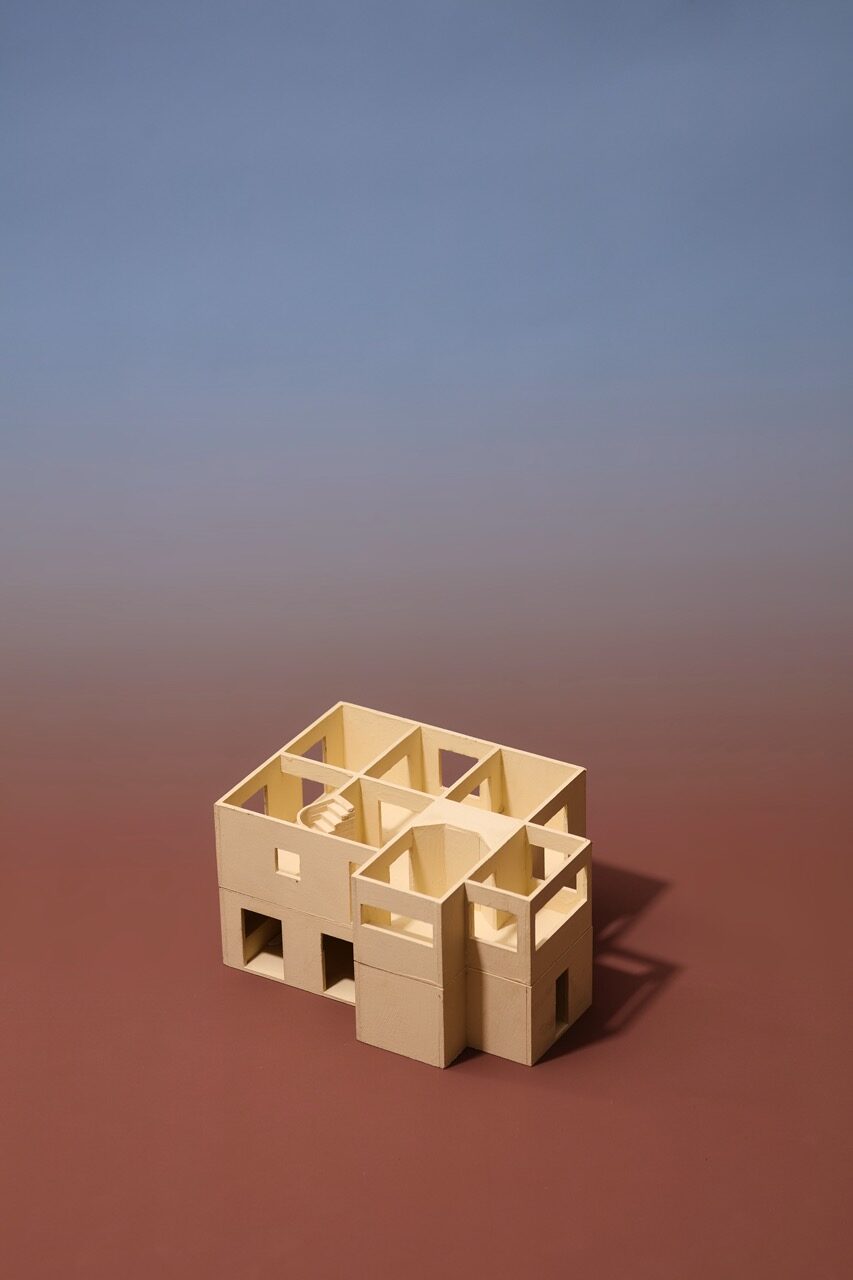
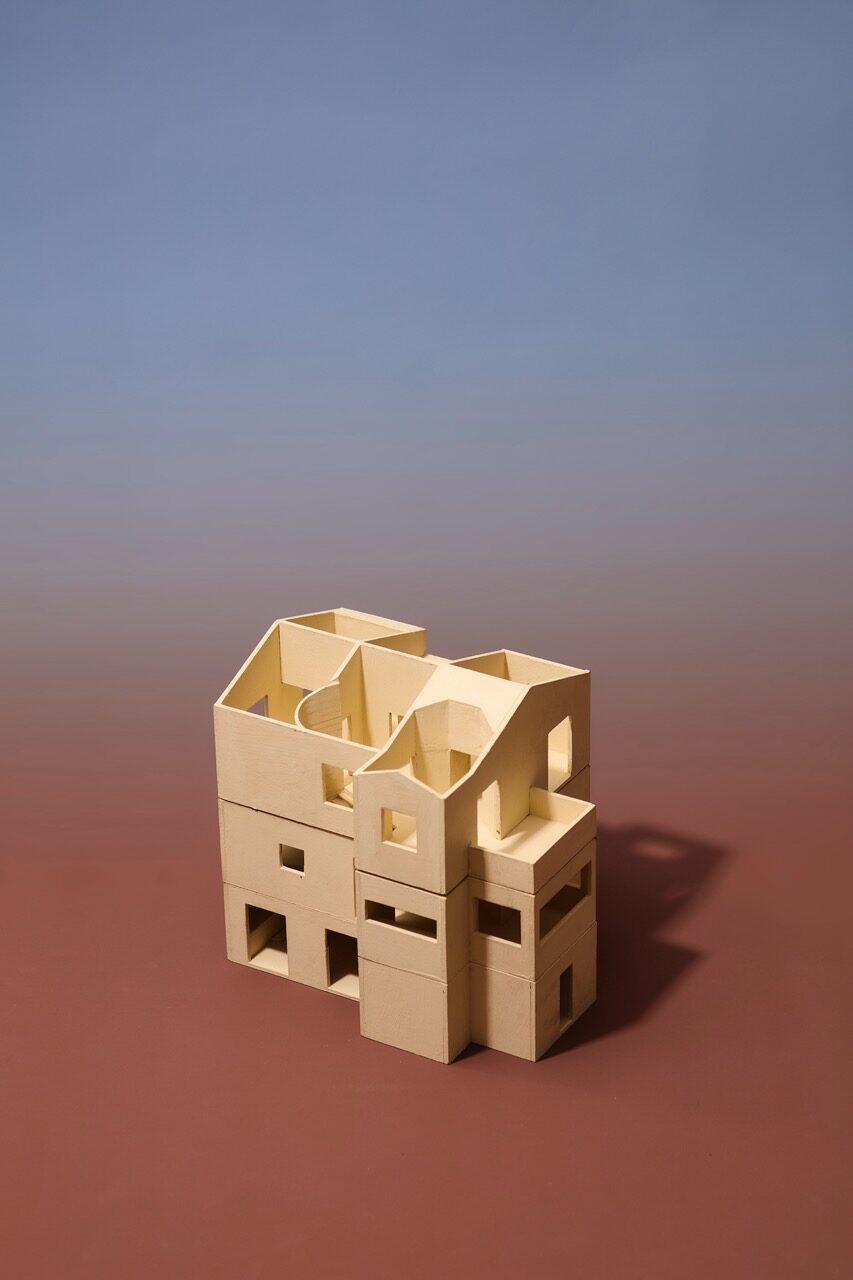
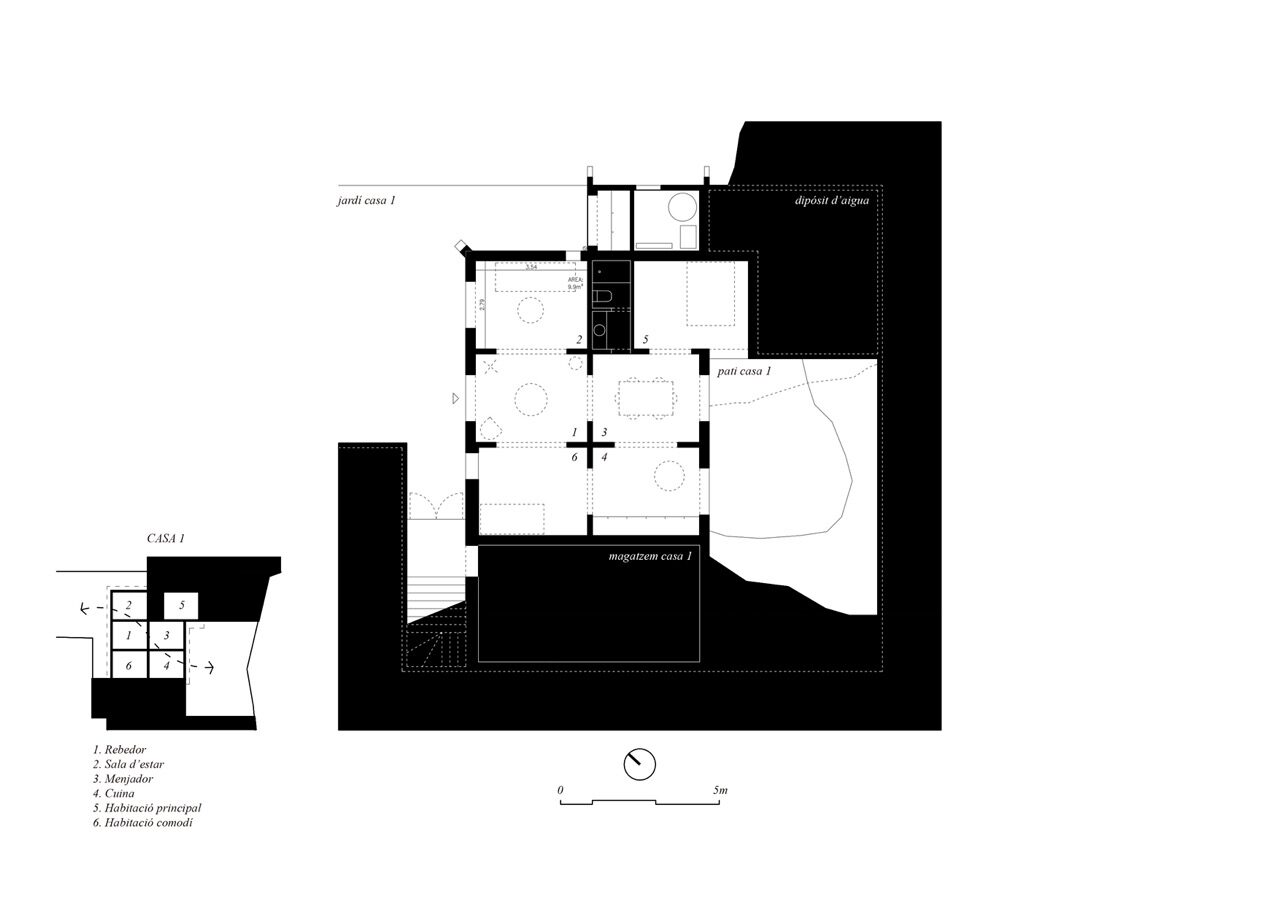
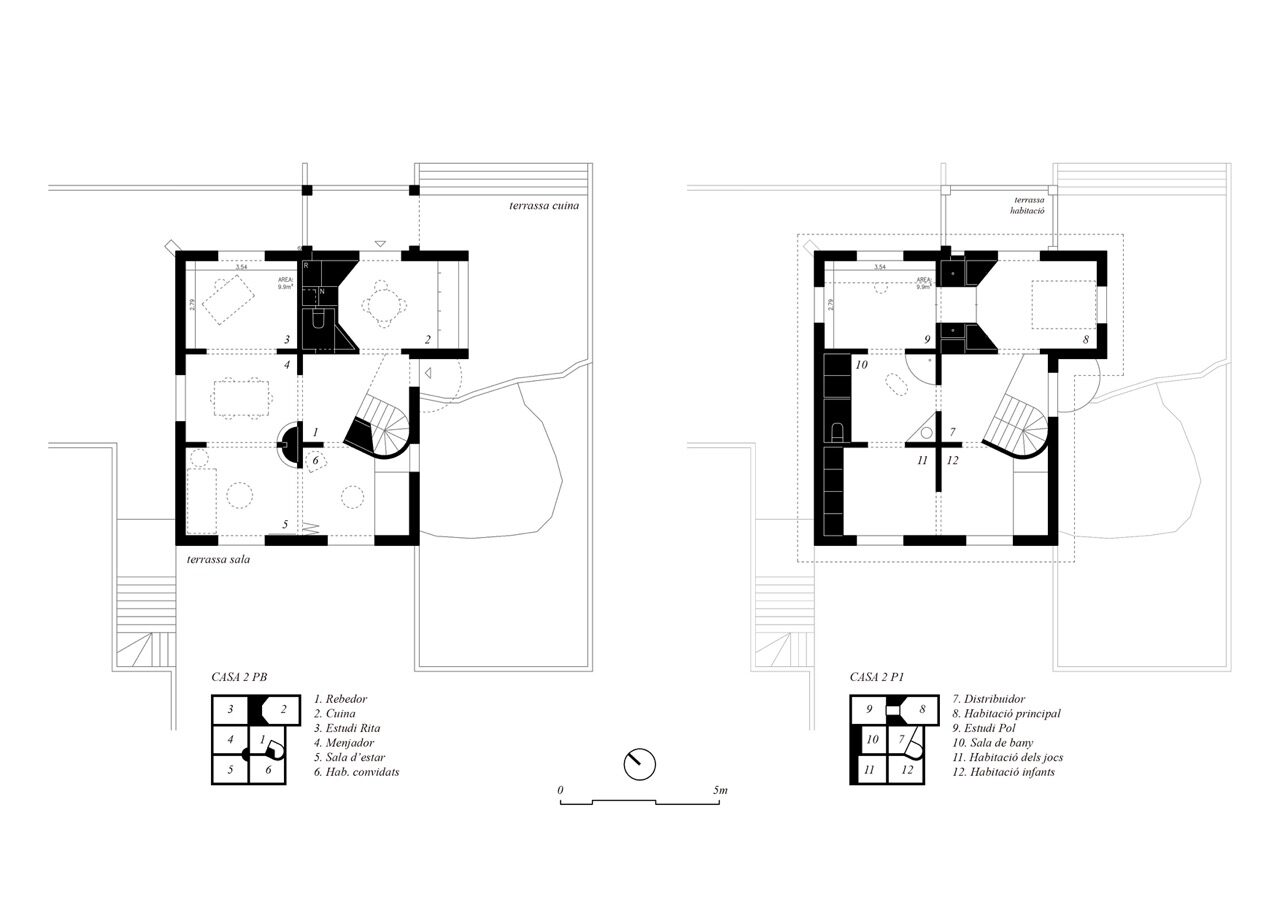
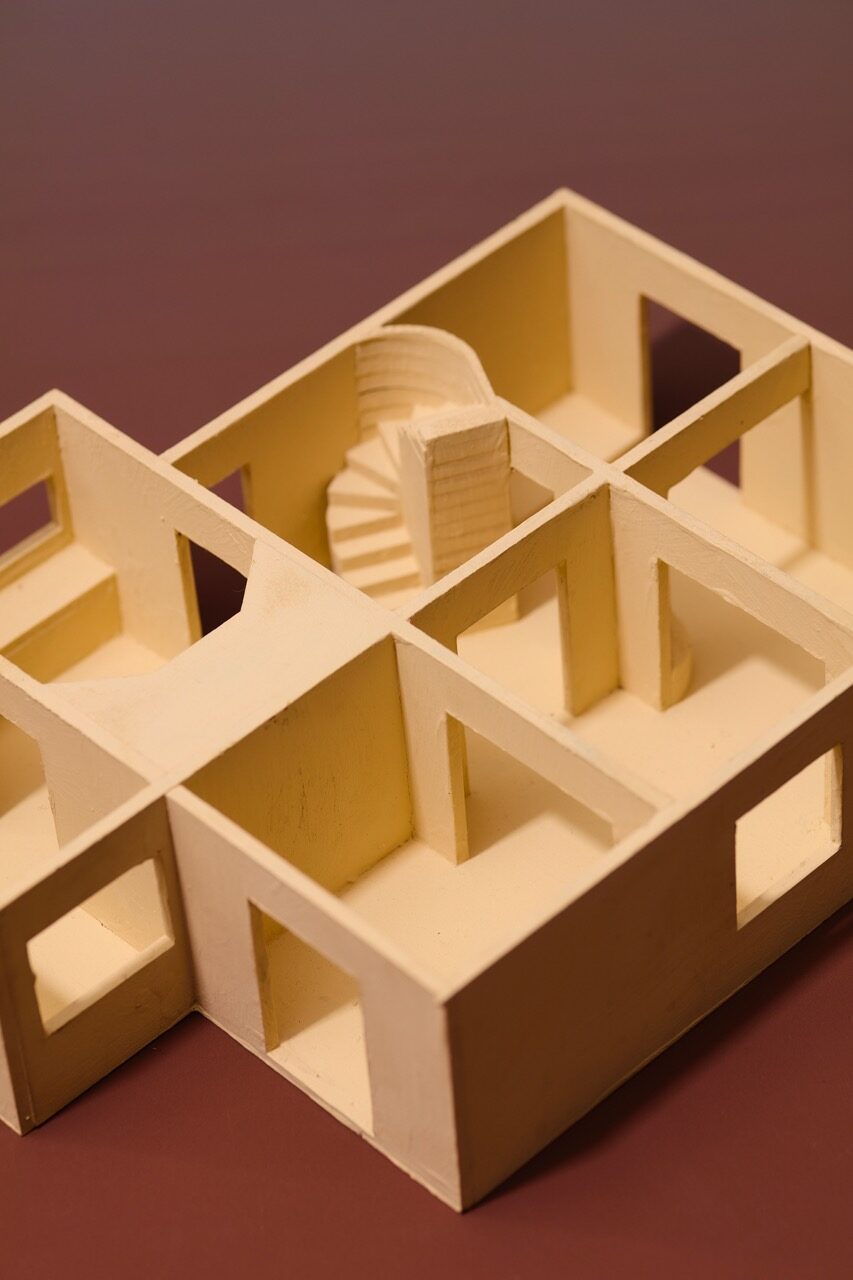
La estructura de las plantas permite organizarlas en seis habitaciones del mismo tamaño, generando un esquema de piezas en enfilada que se repite en los tres niveles. Los espacios de almacenamiento y servicio, así como la chimenea y la escalera, se insertan en la distribución ocupando perímetros, esquinas e intersticios, concibiéndose como un poché que especializa algunas de las habitaciones moldeando a la vez la forma del espacio.

Cliente: Privado
Arquitectos: OESST
Colaboradores:
Fotografías: Raul Ruz (maqueta)
Año: 2023
Lugar: La Floresta, Sant Cugat, España
Tipología: Reforma de vivienda
Estado: No construido

Pronounced with an exaggerated accent on the final “e,” “poche” is a French architectural term referring to all the elements contained within the walls between spaces.

We were asked to carry out an initial study for the rehabilitation of a detached single-family house, with the aim of converting it into two independent residences. Built with load-bearing walls and situated on a terraced site at different levels, the house has three floors, one of them semi-buried, and is organized into two bays with a central load-bearing wall and a pitched roof.

The main dwelling will occupy the two upper floors, while the second residence will occupy the semi-basement floor, whose southeast bay has very few openings. One of the main challenges is to resolve the private use of the garden surrounding the house. The first decision of the project is therefore to divide the plot into four sectors, alternating their allocation between the two residences. Following this scheme, a patio is excavated that frees the façade of the semi-buried bay, providing the house with a new exit to the exterior while ensuring privacy without the need for dividing elements.

The floor structure allows for organization into six rooms of equal size, generating a sequence of aligned spaces repeated across all three levels. Storage and service spaces, as well as the fireplace and staircase, are integrated into the layout, occupying perimeters, corners, and interstices. They are conceived as a poche, specializing certain rooms while simultaneously shaping the form of the space.

Client: Private
Architects: OESST
Collaborators:
Photography: Raul Ruz (model)
Year: 2023
Location: La Floresta, Sant Cugat, Spain
Typology: Residential renovation
Status: Not built