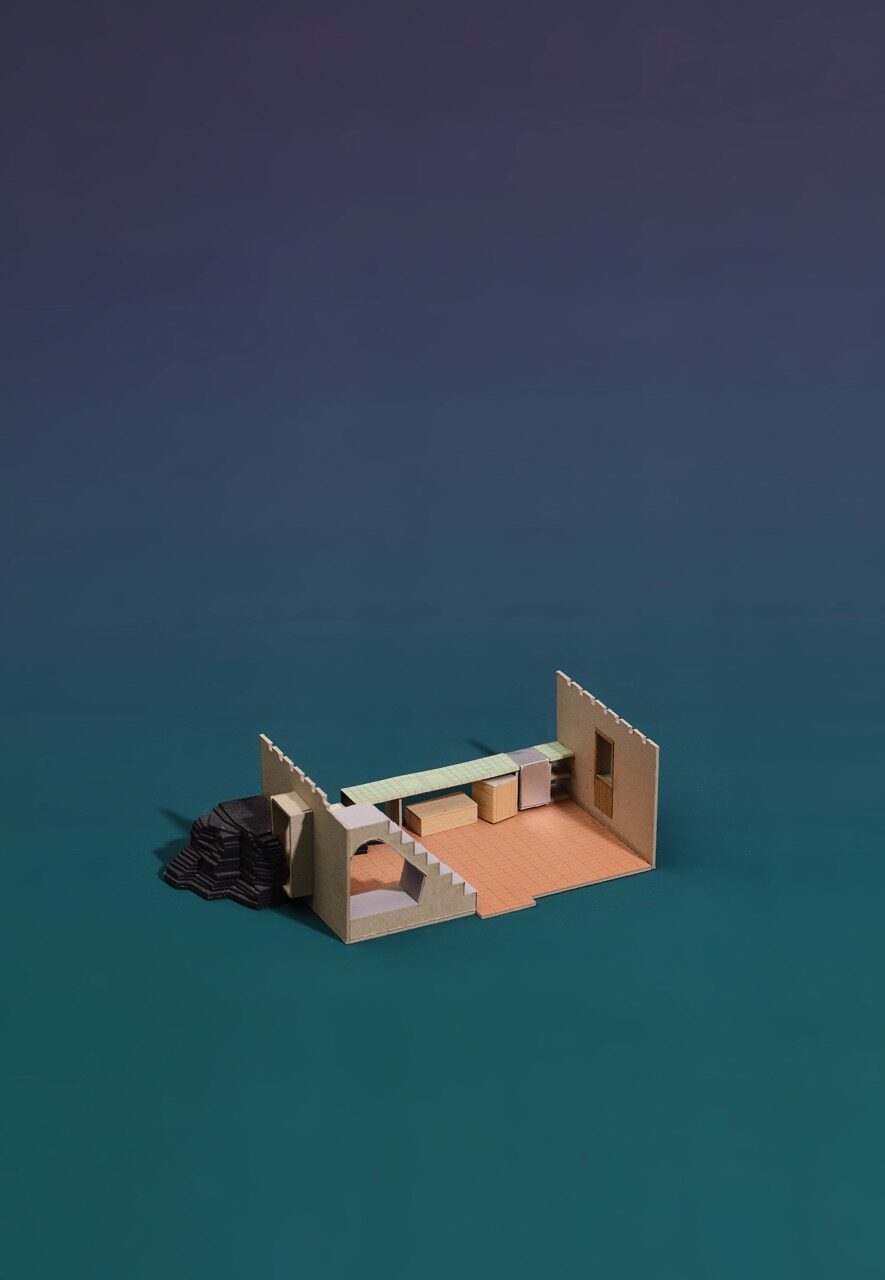
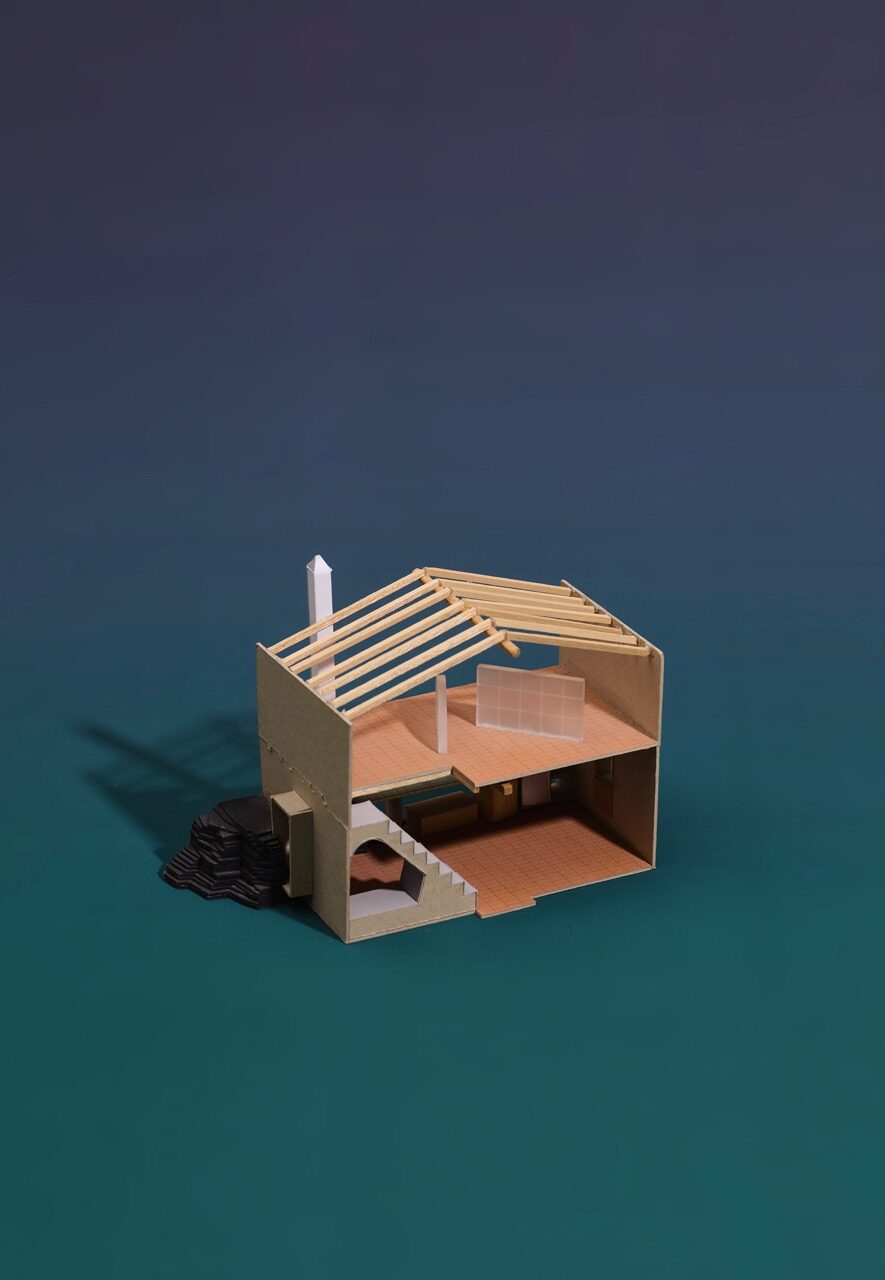
El proyecto resuelve la infraestructura mínima para habitar una construcción agrícola en la primera parcela que riega la fuente de Cavaloca, en la esquina meridional de la sierra del Montsant, en el Priorat, para unos clientes que llevaban un largo tiempo ocupando la ruina sin ningún tipo de lujo y que definieron un encargo que debía mantener, en la medida de lo posible, la austeridad con la que habían aprendido a vivirla. 

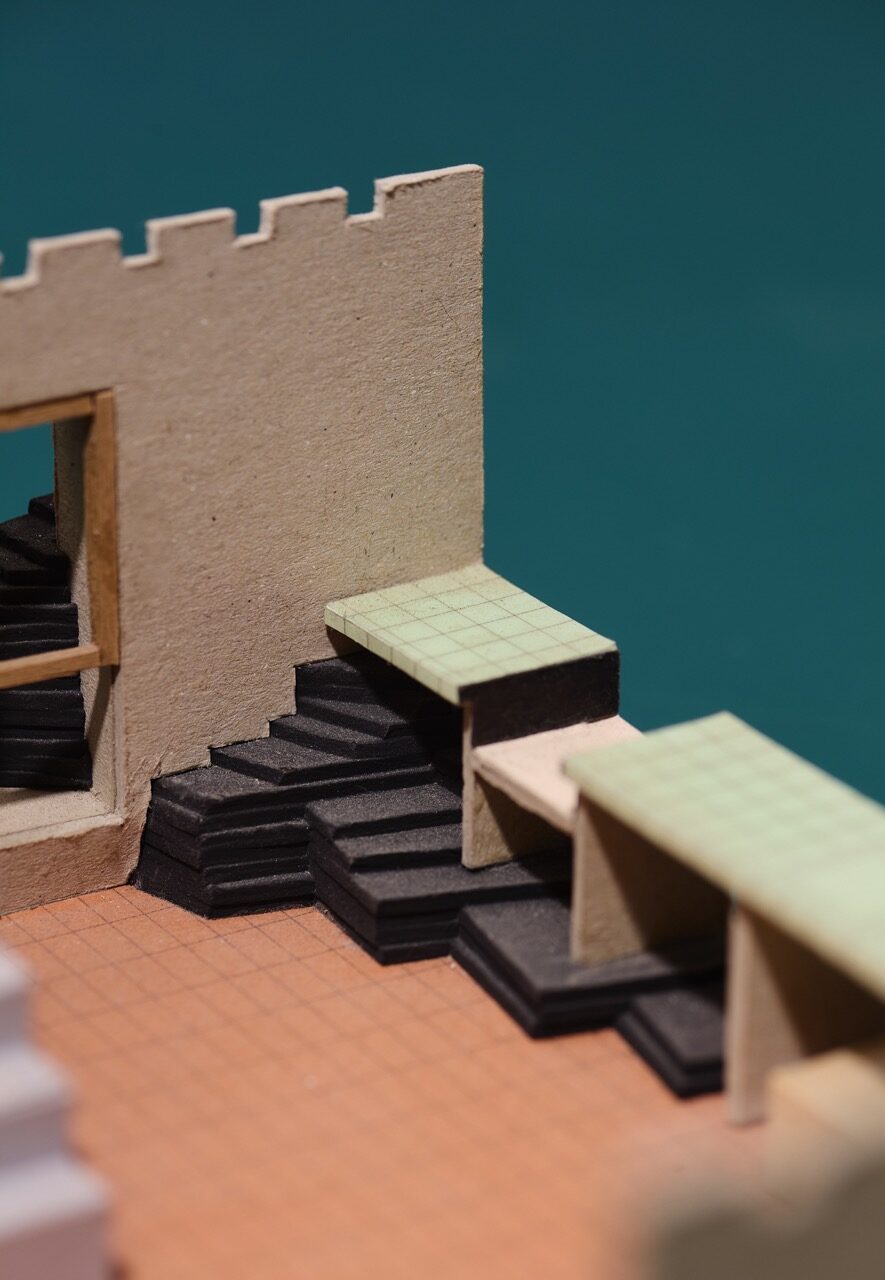
Se practica una apertura a cada orientación, quedando enfrentadas dos a dos en cada planta para asegurar la ventilación cruzada de dos espacios diáfanos y mínimamente amueblados. En la planta inferior, donde la roca en que se apoya la casa invade parte del espacio, una larga encimera organiza la chimenea/barbacoa, la bomba manual de agua y la cocina a butano. 

Cuatro objetos/armario, dos por planta, resuelven el almacenamiento de ambos espacios mientras uno se despliega para transformar el bajo escalera en sofá-cama y el otro, con el sobre inoxidable, amplía el espacio de cocina. En planta primera, construidos con metacrilato lijado a mano, permiten múltiples distribuciones de las tres camas que necesitan. El resto del almacenamiento ocupa el vacío sobre la escalera. 

Durante la primera reunión con la constructora local apreciamos un cierto rechazo al extenso dosier de planos de un proyecto ejecutivo. Se produce, entonces, un único documento DinA1 que contiene, a distintas escalas, todas las indicaciones para la construcción de la obra y que se actualizará con las variaciones que sufra el proyecto a cada nueva visita. 

Cliente: Privado
Arquitectos: OESST
Colaboradores:
Fotografías: Raúl Ruz (maqueta)
Año: 2020-2025
Lugar: Cabacés, Priorat, España
Tipología: Reforma de cabaña
Estado: Ongoing

The project addresses the minimal infrastructure required to inhabit an agricultural building on the first plot irrigated by the Cavaloca spring, at the southern corner of the Montsant range in Priorat. The clients had long been occupying the ruin without any form of luxury and defined a brief that aimed to preserve, as much as possible, the austerity with which they had learned to live there.

Openings are created on every orientation, paired two by two on each floor to ensure cross-ventilation of two open-plan, minimally furnished spaces. On the lower floor, where the rock supporting the house intrudes into part of the interior, a long countertop organizes the fireplace/barbecue, the manual water pump, and the butane stove.

Four object/cabinet units—two per floor—provide storage for both spaces. One unfolds to transform the area under the stairs into a sofa bed, while the other, with its stainless steel top, extends the kitchen workspace. On the upper floor, constructed from hand-sanded acrylic, they allow multiple arrangements for the three beds required. The remaining storage occupies the void above the staircase.

During the first meeting with the local contractor, we noticed some reluctance toward the extensive set of executive drawings. Consequently, a single DinA1 document was produced, containing all construction instructions at various scales, which is updated with any changes the project undergoes during each subsequent site visit.

Client: Private
Architects: OESST
Collaborators:
Photography: Raúl Ruz (model)
Year: 2020-2025
Location: Cabacés, Priorat, Spain
Typology: Cabin renovation
Status: Ongoing